NRC Report on San Onofre: Close Enough for Government Work

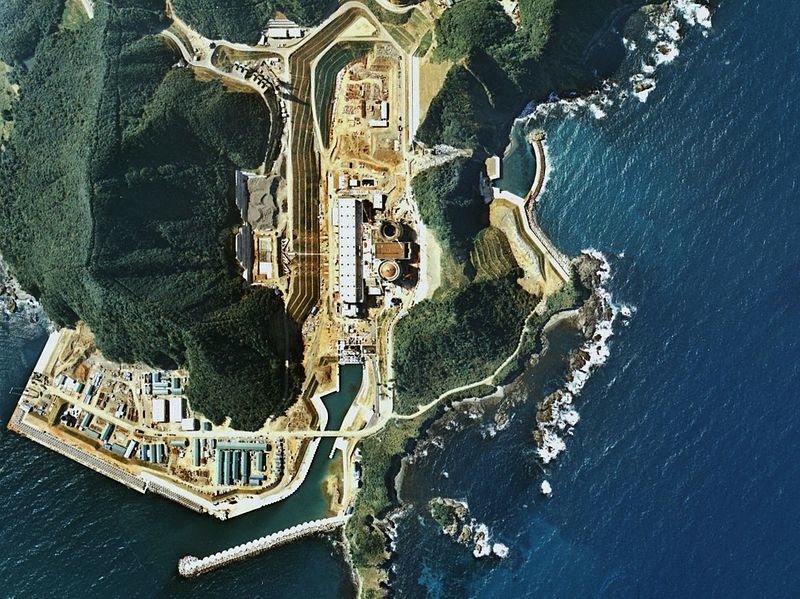
An aerial view of the San Onofre Generating Station. (photo: Jelson25 via Wikipedia)

The Nuclear Regulatory Commission released its report on recent failures at the San Onofre nuclear facility [PDF] on Thursday, stating that, as far as the government regulator was concerned, the operators of the power plant did nothing wrong when they reported major design changes as simple equipment replacement.

At issue at the San Onofre Nuclear Generating Station (SONGS) is the replacement of two giant steam generators less than two years ago. A metal heat-transfer tube in one generator ruptured in January, releasing superheated radioactive steam and triggering a shutdown. Further examination of that generator and its twin revealed unprecedented and unsettling rates of wear in hundreds of other tubes. SONGS has been completely offline ever since.

Investigation of the problem by plant operators and the NRC, as well as independent watchdogs, found that flaws in the computer modeling of the radically redesigned replacement generators lead to building and installing tubing that vibrated substantially more than was anticipated, and substantially more than the equipment could tolerate. Within 18 months of starting up the retrofitted reactors, vibration caused rapid degradation of the metal tubes, resulting in the rupture.

Still, according to the NRC, no laws were broken. Southern California Edison (a division of Edison International, the majority owner of SONGS) did not mislead regulators about the extent of the changes. Federal officials were not lax in their oversight. Things may not have gone exactly as planned, but no one on this side of the Pacific was to blame. Maybe the Japanese at Mitsubishi Heavy Industries, the folks who built the replacement parts, have some ‘splainin’ to do, but SCE and the NRC performed just like they were supposed to.

And that’s exactly the point, isn’t it?

To any outside observer (well, to any observer willing to plow through technical data and design specs), the replacement generators at San Onofre were quite obviously a major redesign–something requiring a more careful, time-consuming and, yes, costly government approval process. Mitsubishi was not the original manufacturer of the SONGS generators, and Edison was not looking to have Mitsubishi machine exact replacement parts. That would have been more expensive–much more expensive.

Instead, SCE sought out what would be the nuclear industry equivalent of “off the shelf” parts, and hoped to engineer a way to make them work with their 30-year-old reactors. Further, Edison desired to increase the output of this power plant. More power theoretically equals more profit–and, to oversimplify the technical details, more tubes could equal more power. The new generators had many times more heat-transfer tubes than the originals.

So, the major design changes at San Onofre were, to turn a phrase, very much by design. But to call them major design changes would have increased the cost, the time, and the amount of oversight required, so, as the NRC report seems to make clear, the rules are written to insure that such changes pass under the regulatory radar:

The agency staff investigation concluded that Edison “provided the NRC with all the information required under existing regulations about proposed design changes to its steam generators,” according to a statement.

But a key question remains under study: Does the agency need to change the process that was used to approve the replacement generators? At issue is whether tubing problems that eventually sidelined the reactors might have been identified by changing rules under which utilities swap equipment at nuclear power plants.

For example, the report concluded that there were “major design changes” between the original and replacement generators at San Onofre, yet they qualified as essentially identical replacements that did not require an exhaustive review by the NRC.

Show me what regulatory capture looks like; this is what regulatory capture looks like

The “letter is willing but the spirit is weak” tone of the San Onofre report seems especially poignant/disturbing coming, as it does, within a fortnight of the latest Japanese report on the Fukushima disaster. That lengthy study found that government officials colluded with the nuclear industry to avoid upgrades and evade scrutiny, resulting in a severe undermining of public safety. Summaries of that report focused on aspects described as unique to Japanese culture, but the NRC’s San Onofre findings demonstrate that this well-choreographed dance between industry and regulators crosses cultural and national boundaries.

The SONGS report also comes the same week as a party thrown by supporters of the recently deposed NRC chairman, Gregory Jaczko:

A cadre of veterans from the office of Senate Majority Leader Harry Reid (D-Nev.) are organizing an effort to pay down the legal debts taken on by Gregory Jaczko, the former chairman of the Nuclear Regulatory Commission, who stepped down amid a fierce industry-backed assault.

Jaczko, a former Reid staffer, racked up tens of thousands in legal fees defending himself. The thinking behind the fundraising effort is straightforward: High-level staffers for top senators can command high salaries in the private sector, many times more than can be earned in public service. So former Reid staffers who have spent their post-Senate years in more lucrative pursuits are coming to the aid of a colleague who made a different, and quite costly, decision.

. . . .

Jaczko’s former colleagues will gather Tuesday evening with Reid and Rep. Ed Markey (D-Mass.), another former boss of his, to thank him for his time on the nuclear panel. (No fundraising can legally take place while Reid and Markey are at the event, organizers said.)

. . . .

The industry’s two top representatives, Alex Flint and Marvin Fertel of the Nuclear Energy Institute, are planning to attend the event, said Karen Wayland, a former Reid staffer who, along with [another former Reid aid Susan] McCue, spearheaded the effort.

Tuesday’s event will also co-hosted by Jimmy Ryan, Dayle Cristinzio and Kai Anderson, high-powered corporate lobbyists who were senior aides to Reid.

Since the writing of that story, the event took place and Senator Reid’s Searchlight Foundation has made known its intention to donate $10,000 to Jaczko’s defense fund.

To be clear, what happened to Jaczko, who was forced out after he advocated for modest safety improvements at US nuclear plants and coordinated with the Department of Energy to end work on the Yucca Mountain nuclear waste project, is itself a lesson in regulatory capture. The US nuclear industry sees any new safety requirements as a threat to their bottom line, and it desperately needs the federal government to find a storage solution for their vast piles of highly radioactive spent fuel and related waste–and so Jaczko was purged and a message was sent.

But, as the guest list would tell you, it is hard to call anyone in this crowd a pure hero. When key figures behind your ouster are also guests at your farewell party and fundraiser, you have to ask yourself if you were really that tough–and everyone around you has to see that industry and government are too cozy.

Close is not good

If online etymologies are to be believed, the expression “close enough for government work” has its origins in the World War II saying, “Good enough for government work.” Back then, the saying was understood to mean that the government had exacting standards, so if the work could pass government inspection, then it could meet any benchmark.

The phrase quickly devolved, however, into its sarcastic opposite–defense contracting will have that effect–and now “close enough for government work” means barely acceptable.

And government–at least when it comes to agencies like the Nuclear Regulatory Commission–has sought to live up to that new understanding ever since.

But when it comes to nuclear power, with the ominous safety implications of substandard work and lax oversight, close enough is not good enough. And if government and industry “working closely” on a problem means what it seems to have at San Onofre, then “close” pretty much never means “good.”

Made in Japan? Fukushima Crisis Is Nuclear, Not Cultural

(photo: Steve Snodgrass)

Since the release of the Fukushima Nuclear Accident Independent Committee’s official report last week, much has been made of how it implicates Japanese culture as one of the root causes of the crisis. The committee’s chairman, Dr. Kiyoshi Kurokawa, makes the accusation quite plainly in the opening paragraphs of the executive summary [PDF]:

What must be admitted – very painfully – is that this was a disaster “Made in Japan.” Its fundamental causes are to be found in the ingrained conventions of Japanese culture: our reflexive obedience; our reluctance to question authority; our devotion to ‘sticking with the program’; our groupism; and our insularity.

That this apparently critical self-examination was seized upon by much of the western media’s coverage of the report probably does not come as a surprise–especially when you consider that this revelation falls within the first 300 words of an 88-page document. Cultural stereotypes and incomplete reads are hardly new to establishment reportage. What might come as a shock, however, is that this painful admission is only made in the English-language version of the document, and only in the chairman’s introduction is the “made in Japan” conclusion drawn so specifically.

What replaces the cultural critique in the Japanese edition and in the body of the English summary is a ringing indictment of the cozy relationship between the Japanese nuclear industry and the government agencies that were supposed to regulate it. This “regulatory capture,” as the report details, is certainly central to the committee’s findings and crucial to understanding how the Fukushima disaster is a manmade catastrophe, but it is not unique to the culture of Japan.

Indeed, observers of the United States will recognize this lax regulatory construct as part-and-parcel of problems that threaten the safety and health of its citizenry, be it in the nuclear sector, the energy sector as a whole, or across a wide variety of officially regulated industries.

No protection

The Japanese Diet’s Fukushima report includes a healthy dose of displeasure with the close ties between government regulators and the nuclear industry they were supposed to monitor. The closed, insular nature of nuclear oversight that might be attributed to Japanese culture by a superficial read is, in fact, a product of the universally familiar “revolving door” that sees industry insiders taking turns as government bureaucrats, and regulatory staff “graduating” to well-compensated positions in the private sector.

Mariko Oi, a reporter at the BBC’s Tokyo bureau, described the situation this way when discussing the Fukushima report on the World Service:

When there was a whistleblower, the first call that the government or the ministry made was to TEPCO, saying, “Hey, you’ve got a whistleblower,” instead of “Hey, you’ve got a problem at the nuclear reactor.”

A disturbing betrayal of accountability in any context, it is especially troubling with the ominous repercussions of the Fukushima disaster still metastasizing. And it is also ominously familiar.

Look, for example, just across the Pacific:

[San Onofre Nuclear Generating Station] was chastised two years ago by the U.S. Nuclear Regulatory Commission for creating an atmosphere in which employees fear retaliation if they report safety concerns.

. . . .

Edward Bussey, a former health physics technician at the plant, sued Edison in state court after he was fired in 2006 under what he said were trumped-up charges that he had falsified initials on logs documenting that certain materials had been checked for radiation. Bussey contended that he was really fired in retaliation for complaining about safety concerns to his supervisors and the NRC.

San Onofre–SONGS, if you will–has been offline since January when a radioactive steam leak led to the discovery of severely degraded copper tubing in both of the plant’s existing reactors. But here’s the real kicker: whistleblower suits at SONGS, like the one from Mr. Bussey, have routinely been summarily dismissed thanks to a little known legal loophole:

San Onofre is majority owned and operated by Southern California Edison, a private company, but it sits on land leased from the Camp Pendleton Marine Corps base.

That puts the plant in a so-called federal enclave, where courts have held that many California laws, including labor laws intended to protect whistle-blowers, do not apply.

Lawsuits filed in state court by San Onofre workers who claimed that they were fired or retaliated against for reporting safety concerns, sexual harassment and other issues have been tossed out because of the plant’s location.

The Los Angeles Times cites examples dating back to the construction of San Onofre where personnel who complained about safety or work conditions were terminated and left without many of the legal options normally afforded most California citizens. The history of SONGS is liberally peppered with accidents and safety breaches–and the lies and cover-ups from its owner-operators that go with them. Considering that San Onofre employees are regularly punished for exposing problems and have fewer whistleblower protections, is it at all surprising that SONGS is reported to have the worst safety record of all US nuclear plants?

If San Onofre’s track record isn’t evidence enough of the dangers of weak regulation, the findings and conclusions of the latest Fukushima report make it crystal clear: “safety culture” is not undermined by Japanese culture so much as it is by the more international culture of corruption born of the incestuous relationship between industry and regulators.

It’s a nuclear thing…

But the corrupt culture–be it national or universal–is itself a bit of a dodge. As noted by the Financial Times, the Japanese and their regulatory structure have managed to operate the technologically complex Shinkansen bullet trains since 1964 without a single derailment or fatal collision.

As the Diet’s report makes abundantly clear–far more clear than any talk about Japanese culture–the multiple failures at and around Fukushima Daiichi were directly related to the design of the reactors and to fatal flaws inherent in nuclear power generation.

Return for a moment to something discussed here last summer, The Light Water Paradox: “In order to safely generate a steady stream of electricity, a light water reactor needs a steady stream of electricity.” As previously noted, this is not some perpetual motion riddle–all but one of Japan’s commercial nuclear reactors and every operating reactor in the United States is of a design that requires water to be actively pumped though the reactor containment in order to keep the radioactive fuel cool enough to prevent a string of catastrophes, from hydrogen explosions and cladding fires, to core meltdowns and melt-throughs.

Most of the multiple calamities to befall Fukushima Daiichi have their roots in the paradox. As many have observed and the latest Japanese report reiterates, the Tohoku earthquake caused breaches in reactor containment and cooling structures, and damaged all of Fukushima’s electrical systems, save the diesel backup generators, which were in turn taken out by the tsunami that followed the quake. Meeting the demands of the paradox–circulating coolant in a contained system–was severely compromised after the quake, and was rendered completely impossible after the tsunami. Given Japan’s seismic history, and the need of any light water reactor for massive amounts of water, Fukushima wouldn’t really have been a surprise even if scientists hadn’t been telling plant operators and Japanese regulators about these very problems for the last two decades.

Back at San Onofre, US regulators disclosed Thursday that the damage to the metal tubes that circulate radioactive water between the reactor and the steam turbines (in other words, part of the system that takes heat away from the core) was far more extensive than had previously been disclosed by plant operators:

[Each of San Onofre’s steam generators has] 9,727 U-shaped tubes inside, each three-quarters of an inch in diameter.

The alloy tubes represent a critical safety barrier — if one breaks, there is the potential that radioactivity could escape into the atmosphere. Also, serious leaks can drain protective cooling water from a reactor.

Gradual wear is common in such tubing, but the rate of erosion at San Onofre startled officials since the equipment is relatively new. The generators were replaced in a $670 million overhaul and began operating in April 2010 in Unit 2 and February 2011 in Unit 3.

Tubes have to be taken out of service if 35 percent — roughly a third — of the wall wears away, and each of the four generators at the plant is designed to operate with a maximum of 778 retired tubes.

In one troubled generator in Unit 3, 420 tubes have been retired. The records show another 197 tubes in that generator have between 20 percent and 34 percent wear, meaning they are close to reaching the point when they would be at risk of breaking.

More than 500 others in that generator have between 10 percent and 19 percent wear in the tube wall.

“The new data reveal that there are thousands of damaged tubes in both Units 2 and 3, raising serious questions whether either unit should ever be restarted,” said Daniel Hirsch, a lecturer on nuclear policy at the University of California, Santa Cruz, who is a critic of the industry. “The problem is vastly larger than has been disclosed to date.”

And if anything, the Nuclear Regulatory Commission is underplaying the problem. A report from Fairewinds Associates, also released this week, unfavorably compared San Onofre’s situation with similar problems at other facilities:

[SONGS] has plugged 3.7 times as many steam generator tubes than the combined total of the entire number of plugged replacement steam generator tubes at all the other nuclear power plants in the US.

The report also explains that eight of the tubes failed a “pressure test” at San Onofre, while the same test at other facilities had never triggered any more than one tube breach. Fairewinds goes on to note that both units at San Onofre are equally precarious, and that neither can be restarted with any real promise of safe operation.

And while the rapid degeneration of the tubing might be peculiar to San Onofre, the dangers inherent in a system that requires constant power for constant cooling–lest a long list of possible problems triggers a toxic crisis–are evident across the entire US nuclear fleet. Cracked containment buildings, coolant leaks, transformer fires, power outages, and a vast catalogue of human errors fill the NRC’s event reports practically every month of every year for the past 40 years. To put it simply, with nuclear power, too much can go wrong when everything has to go right.

And this is to say nothing of the dangers that come with nuclear waste storage. Like with the reactors, the spent fuel pools that dot the grounds of almost every nuclear plant in America and Japan require a consistent and constantly circulating water supply to keep them from overheating (which would result in many of the same disastrous outcomes seen with damaged reactors). At Fukushima, one of the spent fuel pools is, at any given point, as much of a concern as the severely damaged reactor cores.

Ions and tigers and bears, oh my!

Even with the latest findings, however, Japanese Prime Minister Yoshihiko Noda pushed ahead with the restart of the precariously situated and similarly flawed nuclear reactor complex at Oi. It is as if the PM and the nuclear industry feared Japan surviving another summer without nuclear-generated electricity would demonstrate once and for all that the country had no reason to trade so much of its health and safety for an unnecessary return.

But the people of Japan seem to see it differently. Tens of thousands have turned out to demonstrate against their nation’s slide back into this dangerous culture of corruption. (Remember, the Oi restart comes without any safety upgrades made in response to the Fukushima disaster.)

And maybe there’s where cultural distinctions can be drawn. In Japan, the citizenry–especially women–are not demonstrating “reflexive obedience,” instead, they are demonstrating. In the United States, where 23 nuclear reactors are of the same design as Fukushima Daiichi, and 184 million people within 50 miles of a nuclear power plant, when the chairman of the Nuclear Regulatory Commission suggested requiring some modest upgrades as a response to the Fukushima disaster, the nuclear industry got its henchmen on the NRC and in Congress to push him out. . . with little public outcry.

Still, the BBC’s Mariko Oi lamented on the day the Fukushima report was released that Japanese media was paying more attention to the birth of a giant panda at a Tokyo zoo. That sort of response would seem all too familiar to any consumer of American media.

That baby panda, it should be noted, has since died. The radioactive fallout from Fukushima, however, lingers, and the crisis at Daiichi is far from over. The threat to global heath and safety that is unique to nuclear power lives on.

Fukushima Nuclear Disaster “Man-Made” Reports Japanese Panel; Quake Damaged Plant Before Tsunami

Aerial view of the Oi Nuclear Power Plant, Fukui Prefecture, Japan. (photo: Japan Ministry of Land, Infrastructure and Transport via Wikipedia)

The massive disaster at the Fukushima Daiichi nuclear facility that began with the March 11, 2011 Tohoku earthquake and tsunami could have been prevented and was likely made worse by the response of government officials and plant owners, so says a lengthy report released today by the Japanese Diet (their parliament).

The official report of The Fukushima Nuclear Accident Independent Investigation Committee [PDF] harshly criticizes the Japanese nuclear industry for avoiding safety upgrades and disaster plans that could have mitigated much of what went wrong after a massive quake struck the northeast of Japan last year. The account also includes direct evidence that Japanese regulatory agencies conspired with TEPCO (Fukushima’s owner-operator) to help them forestall improvements and evade scrutiny:

The TEPCO Fukushima Nuclear Power Plant accident was the result of collusion between the government, the regulators and TEPCO, and the lack of governance by said parties. They effectively betrayed the nation’s right to be safe from nuclear accidents.

. . . .

We found evidence that the regulatory agencies would explicitly ask about the operators’ intentions whenever a new regulation was to be implemented. For example, NISA informed the operators that they did not need to consider a possible station blackout (SBO) because the probability was small and other measures were in place. It then asked the operators to write a report that would give the appropriate rationale for why this consideration was unnecessary.

The report also pointed to Japanese cultural conventions, namely the reluctance to question authority–a common refrain in many post-Fukushima analyses.

But perhaps most damning, and most important to the future of Japan and to the future of nuclear power worldwide, is the Investigation’s finding that parts of the containment and cooling systems at Fukushima Daiichi were almost certainly damaged by the earthquake before the mammoth tsunami caused additional destruction:

We conclude that TEPCO was too quick to cite the tsunami as the cause of the nuclear accident and deny that the earthquake caused any damage.

. . . .

[I]t is impossible to limit the direct cause of the accident to the tsunami without substantive evidence. The Commission believes that this is an attempt to avoid responsibility by putting all the blame on the unexpected (the tsunami), as they wrote in their midterm report, and not on the more foreseeable earthquake.

Through our investigation, we have verified that the people involved were aware of the risk from both earthquakes and tsunami. Further, the damage to Unit 1 was caused not only by the tsunami but also by the earthquake, a conclusion made after considering the facts that: 1) the largest tremor hit after the automatic shutdown (SCRAM); 2) JNES confirmed the possibility of a small-scale LOCA (loss of coolant accident); 3) the Unit 1 operators were concerned about leakage of coolant from the valve, and 4) the safety relief valve (SR) was not operating.

Additionally, there were two causes for the loss of external power, both earthquake-related: there was no diversity or independence in the earthquake-resistant external power systems, and the Shin-Fukushima transformer station was not earthquake resistant.

As has been discussed here many times, the nuclear industry and its boosters in government like to point to the “who could have possibly imagined,” “one-two punch” scenario of quake and tsunami to both vouch for the safety of other nuclear facilities and counter any call for reexamination and upgrades of existing safety systems. Fukushima, however, has always proved the catastrophic case study that actually countered this argument–and now there is an exhaustive study to buttress the point.

First, both the quake and the tsunami were far from unpredictable. The chances of each–as well as the magnitude–were very much part of predictions made by scientists and government bureaucrats. There is documentation that Japanese regulators knew and informed their nuclear industry of these potential disasters, but then looked the other way or actively aided the cause as plant operators consistently avoided improving structures, safety systems and accident protocols.

Second, even if there had not been a tsunami, Fukushima Daiichi would have still been a disaster. While the crisis was no doubt exacerbated by the loss of the diesel generators and the influx of seawater, the evidence continues to mount that reactor containment was breached and cooling systems were damaged by the earthquake first. Further, it was the earthquake that damaged all the electrical systems and backups aside from the diesel generators, and there is no guarantee that all generators would have worked flawlessly for their projected life-spans, that the other external and internal power systems could have been restored quickly, or that enough additional portable power could have been trucked in to the facility in time to prevent further damage. In fact, much points to less than optimal resolution of all of these problems.

To repeat, there was loss of external power, loss of coolant, containment breach, and release of radiation after the quake, but before the tsunami hit the Fukushima nuclear plant.

And now for the bad news. . . .

And yet, as harsh as this new report is (and it is even more critical than was expected, which is actually saying something), on first reading, it still appears to pull a punch.

Though the failure of the nuclear reactors and their safety systems is now even further documented in this report, its focus on industry obstruction and government collusion continues in some ways to perpetuate the “culture of safety” myth. By labeling the Fukushima disaster as “Made in Japan,” “manmade” and “preventable,” the panel–as we are fond of saying here–assumes a can opener. By talking up all that government and industry did wrong in advance of March 11, 2011, by critiquing all the lies and crossed signals after the earthquake and tsunami, and by recommending new protocols and upgrades, the Japanese report fiats a best-case scenario for a technology that has consistently proven that no such perfect plan exists.

The facts were all there before 3/11/11, and all the revelations since just add to the atomic pile. Nuclear fission is a process that has to go flawlessly to consistently provide safe and economical electrical power–but the process is too complex, and relies on too many parts, too many people and too volatile a fuel for that to ever really happen. Add in the costs and hazards of uranium mining, transport, fuel milling, and waste storage, and nuclear again proves itself to be dirty, dangerous, and disgustingly expensive.

* * *

And, as if to put an exclamation point at the end of the Diet’s report (and this column), the Japanese government moved this week to restart the nuclear plant at Oi, bringing the No. 3 reactor online just hours before the release of the new Fukushima findings. The Oi facility rests on a fault line, and seismologists, nuclear experts and activists have warned that this facility is at risk much in the way Fukushima Daiichi proved to be.

Most of Japan’s reactors were taken offline following the Tohoku quake, with the last of them–the Oi plant–shut down earlier this year. In the wake of the disaster, Japan’s then-Prime Minister, Naoto Kan, suggested that it might be time for his country to turn away from nuclear power. Demonstrators across Japan seemed to agree and urged Kansai Electric Power Company and current Prime Minister Yoshihiko Noda to delay the restart of Oi. But the government seemed to be hurrying to get Oi back up, despite many questions and several technical glitches.

Noda insists the rush is because of the need for electricity during the hot summer months, but Japan managed surprisingly well last summer (when more of the country’s infrastructure was still damaged from the quake and tsunami) with better conservation and efficiency measures. Perhaps release of this new report provides a more plausible explanation for the apparent urgency.