The Party Line – December 30, 2011: The Party Line, Nuclear Style

As we close out 2011, readers of this space will likely not be surprised to hear the following:

  • The crisis at Japan’s Fukushima Daiichi nuclear facility continues and continues to poison the planet;
  • Accidents and events at nuclear reactors across the United States continue at a headshaking pace (something goes wrong somewhere pretty much weekly);
  • The nuclear industry continues its full-court press against any new safety rules that might spring from lessons learned from Fukushima or the domestic events;
  • Industry-friendly regulators continue to help slow-walk new rules while also working with allies in Congress to oust the slightly more safety-minded Nuclear Regulatory Commission chair, Gregory Jaczko;
  • Chairman Jaczko continues to hope his faith in a moderate path and a captured regulatory agency will guarantee a safe nuclear future and help save his job; and
  • All of this has happened before.

Last point first: Ryan Grim has a great follow-up on this month’s attempted coup at the NRC–where four commissioners, in coordination with members of congress and nuclear industry lobbyists, have gone public with complaints about the NRC chairman, Greg Jaczko. While the commissioners have stopped short of calling for Jaczko to step down, several GOP congressmen are pressing for just that result.

As Grim reports in the Huffington Post, the effort to oust Jaczko not only continues in the wake of two congressional hearings on the matter, the whole ugly putsch closely resembles moves in the 1990s to discredit another regulation-minded nuclear regulator. And the stories even include some of the same players.

Like with the current “scandal,” the plot is not a simple one to summarize (so please read Grim’s detailed story), but the highlights include a former National Resources Defense Council scientist, Terry Lash, who was appointed by the Clinton administration to run the Department of Energy’s Office of Nuclear Energy, his deputy, one William Magwood, and a staffer for the very nuke-industry-financed Sen. Pete Domenici (R-NM) named Alex Flint.

Thanks to an exploited possible gaffe in protocol and the coordinated work of Domenici, Magwood and Flint, Terry Lash was eventually pushed aside. And Magwood would take over the nuclear division at DOE, first as acting director, and then, under George W. Bush, as the office’s permanent head.

And yes, you’ve read two of those names here before. Bill Magwood is a commissioner at the NRC, a former consultant to the nuclear industry, and one of the most vocal critics of Chairman Jaczko. Alex Flint has run through the classic DC regulatory revolving door, moving between Senate staffer, nuclear industry lobbyist and back, most recently settling in as the top lobbyist for the Nuclear Energy Institute (NEI), the industry’s largest trade association.

The story is as troubling as it is tired. A government agency manipulated by the industry it is supposed to regulate. An industry, protected by bought politicians, avoids accountability while profiting from government largess. Some of that profit is then turned around to lobby and buy another administration’s worth of officials.

And an agency chief who is maybe too slow to realize that the industry and its surrogates will work relentlessly to undermine him and the regulatory body he tries to command.

The lessons here seem obvious and familiar. . . and yet they seem to be lost on so many.

It has been all-too-rare to see broad coverage of the US nuclear industry in the establishment press, yet, during the first week of December, nearly every news organ was Johnny-on-the-spot, repeating the industry storyline. Gregory Jaczko, it seems, was a temperamental leader, so difficult to work with that the NRC’s mission had been compromised.

Beyond the unremarked upon humor inherent in seeing Republican Senators and Representatives suddenly so concerned with nuclear safety, Jaczko himself provided under-reported frame-relief by proving so difficult to work with that he was able to secure the NRC’s unanimous approval of the new Westinghouse AP1000 reactor (despite some very serious concerns about that design and no financial support for construction without billions in federal loan guarantees). And the rest of the commission was able to out-vote Jaczko, four to one, to fast-track the construction and licensing of the new reactors, slated for plants in Georgia and South Carolina.

But perhaps most remarkable is that despite the industry push-back and power-politics, Jaczko still seems to think and act as if nuclear power can be regulated to a safe and prosperous future. The viciousness of the industry attacks and the seriousness of the events of nuclear’s annus horribilis should really disabuse him of that notion.

And the horrible year is not yet over. The last two weeks have seen the first of the debris from the Japanese tsunami hitting US shores, Pacific seals being tested after showing up in Alaska with skin lesions and other symptoms consistent with radiation poisoning, and a report from the International Journal of Health Services linking some 14,000 excess deaths in the US to the fallout from the Fukushima reactors.

Then there is the Japanese interim report on their nuclear disaster describing a regulatory agency unable and unwilling to take control of the crisis. There is the Tokyo Electric Power Company (TEPCO) contention that they are not legally responsible for fallout once it lands on someone else’s property. And here in the United States, there was a valve leak at Mass Pilgrim, a condenser leak at New York’s Fitzpatrick plant, and an event at Vermont Yankee where both of the cooling system’s backup power generators were offline at the same time.

Still, the nuclear industry pushes the notion of an impending nuclear renaissance. It wasn’t true before Fukushima, and it certainly isn’t true after, but with even their supposed nemesis on the NRC helping them build new reactors and relicense old ones, why not keep working the system?

As noted here (but few other places), the December hearing before the Senate Environment and Public Works Committee that was so dominated by the Jaczko cause célèbre was originally scheduled months earlier to track the progress of recommendations from the Fukushima taskforce. An August admonition from Sen. Barbara Boxer (D-CA) seemed to move the commissioners to put some of the recommendations on what passes for a fast track at the NRC, but even that has now been reversed by a majority of commissioners who voted themselves the ability to reject the very rules they previously ordered up. But all the attention in oversight hearings has been focused on Jaczko and his management style–learning the lessons of Fukushima and how that might improve US nuclear safety has been less than a footnote.

So, though Jaczko continues in his job with the public support of the White House, the nation’s regulatory agenda has already been altered. The nuclear industry may not yet have their head, but they’ve demonstrated they own the body.

And now a new year is upon us. The flip of the calendar will not wrap up the Fukushima disaster any more than it will end the parade of lesser events at American nuclear facilities. The nuclear industry will not decide to embrace safety upgrades and stricter regulation any more than the financial community will embrace nuclear power as a good risk. And no matter how many moves Gregory Jaczko makes in the direction of Bill Magwood or his industry masters, neither will ever like him. . . or consider calling off their well-practiced campaign to oust him.

Happy New Year.

Regulatory Meltdown Goes Nuclear: Will Attacks on NRC’s Jaczko Kill Post-Fukushima Upgrades?

NRC Chmn. Jaczko testified Wednesday before the House Committee on Oversight and Government Reform.

If you like politics as blood sport, this is great stuff. On the other hand, if you worry about people, their lives, their health, how their money is spent and how their government protects their lives, their health and how their money is spent, well, then, this sucks.

If you had been waiting for the three-month follow-up to the Senate Environment and Public Works committee hearing on the Fukushima Near-Term Task Force recommendations–the one Sen. Barbara Boxer (D-CA) promised in August at the last hearing on this issue of vital importance to US nuclear safety–well, that hearing was yesterday, Thursday, December 15. . . and whether you watched them or not, you are still waiting.

Though this hearing was, indeed, scheduled months ago, and was introduced Thursday by Boxer with the insistence that the committee should focus on the progress of post-Fukushima lessons learned, the Senators instead behaved much like some of their House brethren had the day before, spending over two-and-a-half hours debating whether Nuclear Regulatory Commission chairman Gregory Jaczko was either a bad chairman. . . or the worst chairman ever.

As has been detailed so many places, the four other NRC commissioners sent a super-complainy letter to the White House essentially accusing Jaczko of making decisions they disagreed with. . . oh, and yelling, banging his gavel, and causing three unnamed female NRC employees to cry. Not to belittle any real problems with real bullying, harassing, martinet bosses, but given the context–seeing this letter “leaked” by House Oversight and Government Reform Chairman Darrell Issa (R-CA) just before the scheduled release of a report (PDF) from Rep. Ed Markey (D-MA) accusing members of the NRC (most notably industry loyalist and Obama appointee Bill Magwood) of conspiring to slow-walk and/or submarine safety upgrades that Jaczko wanted to see adopted after the Fukushima disaster–it is hard to see this dustup as anything but a distraction and a witch hunt.

And it is hard to see the Representatives and Senators (all of them Republican) who spent the last two days berating Jaczko as anything but clumsy puppets of a nuclear industry hell-bent on seeing that nothing more is required them, memorable nuclear nightmare or no.

Look no further than Rep. Issa’s introductory statement at his Wednesday hearing, in which he so badly butchered the names of four of the five NRC commissioners seated in front of him. Issa did OK with “Magwood,” but the verbal Play-Doh that he substituted for “Jaczko,” “Svinicki,” “Apostolakis” and “Ostendorff” demonstrated either a purposeful slight of those “fereign” soundin’ names, or a complete and total ignorance of the matter at hand.

Now, I will cop to having botched the pronunciation of Chairman Jaczko’s name (I now have it on good authority that it is pronounced YAHTZ-ko), but in my defense, I was just going by what I heard on radio and television. Issa, on the other hand, should, in his role as a House member tasked with oversight of the NRC, and as a man who has pushed this apparent scandal as the single most important thing confronting nuclear regulation right now, have a familiarity if not a close working relationship with these people. His demonstration that he did not seemed to say that rather than have any deep knowledge of the matter at hand, Issa was likely just reading what had been placed in front of him by folks who had paid for the right to put words in the mouth of a US Congressman.

Now, as has been mentioned before, it is hard to find the energy to go to the mat for Chairman Jaczko, who may be the most liberal commissioner at the NRC, but is still not seizing this Fukushima moment and truly rethinking US nuclear policy. Perhaps Kevin Kamps of Beyond Nuclear put it best: “He’s not ‘our guy’ by any means, he has voted to re-license plants that should probably be shut down. But he does care about safety, in ways that the others do not.” It is hard not to wish that Jaczko were the worst commissioner at the NRC instead of the best. But it is easy to be outraged by what has happened to Jaczko, and more importantly, what has happened to the fight to improve the safety of America’s nuclear facilities.

And it was hard, while watching the House and Senate hearings within the boundaries of a TV screen, not to think you were seeing some colorized clip from the McCarthy era. The innuendo, character assassination and countless hours of self-righteous grandstanding from Republicans that all-of-the-sudden were oh-so-concerned about supportive work environments and reactor safety went beyond politics-as-usual–it was business as usual, and politics as business. A naked power play by an entrenched, privileged, presumptuous and protected industry.

But now what? This round goes to the nuclear industry–hats off–they made a week that should have been about following up on Fukushima taskforce recommendations, and made it instead about the regulator that dared to regulate. Big nuclear put reformers on their heels at a time when the literal and political fallout from Fukushima should have nuclear apologists running for the hills.

But this is far from over. Darrell Issa, Sen. James Inhofe (R-OK), commissioners Magwood, Svinicki, Ostendorff and Apostolakis, and the nuclear lobby that buttresses all of them will not stop here. The two days of hearings may have ended with a plea for a bunch of smart and dedicated public servants to “work it out,” but watching the events of the last week (and reading the emails included in Markey’s report) make it clear this is not just a war on Jaczko, this is a war on regulation. It may look on the surface like so much bread and circuses, but big nuclear’s henchmen are prepared to feed Christians to the lions all day long. Pro-nuclear forces will accept nothing short of an unobstructed path to privatized profits with socialized risks.

So, the ball’s in your court, Chairman Jaczko. Will you try to give the industry some of what it wants–go ahead with approval of the new AP1000 reactors, the restart of derelict facilities like Davis-Besse and Crystal River, and the relicensing of aged, Fukushima-class plants–in the hopes that somehow this will make the masters of the nuclear universe like you more? Or will you stand fast, indeed, stand faster–pause the relicensing, stop new construction, accelerate post-Fukushima safety upgrades–and stare down the lobbyists and wholly owned elected officials?

If they want to pose as Joe McCarthy, then you, Chairman Jaczko, channel your inner Joseph Welch: “Have you no sense of decency, sir, at long last? Have you left no sense of decency?”

Thanks to a rare alignment of personal interests and election-year politics, it appears the White House has the NRC chairman’s back (at least for now)–Jaczko should use the opportunity to look forward.

The War on Gregory Jaczko: Attempt at NRC Coup Evidence of Bigger Problems

NRC, nuclear

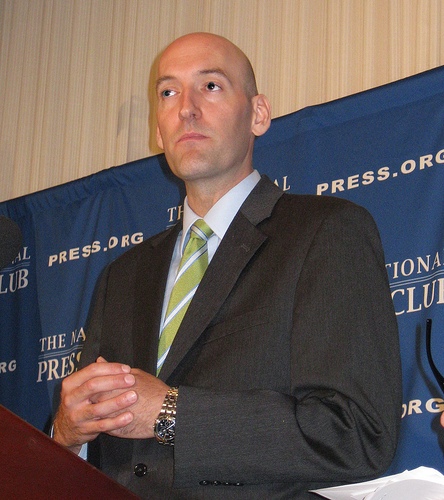
NRC Chair Gregory Jaczko (photo: Gabrielle Pffaflin/TalkMediaNews)

Readers of this space know that the pace of safety reforms for America’s nuclear facilities, especially in the aftermath of Japan’s Fukushima disaster, has been alarmingly slow. The recalcitrance–if not active hostility–exhibited by the nuclear operators and their government handmaidens borders on the criminal. So, it might sound more than a little bit shocking to hear that the chairman of the Nuclear Regulatory Commission, Gregory Jaczko, is now under attack. . . for trying to implement new safety standards too quickly.

That’s not how House Oversight and Government Reform Committee Chairman Darrell Issa (R-CA) is putting it, of course. In doublespeak that would make Orwell proud, Issa has written to the White House, issued a report, and fallen just shy of calling for Jaczko’s head:

“The current Chairman, through his blatant disregard for the Commission and its core beliefs, is testing this resolve,” the report says. “The NRC has survived thus far but the cracks are forming and all symptoms point to catastrophe.”

The report comes several days after Issa released a mid-October letter from the NRC commissioners to the White House that alleges that Jaczko is causing “serious damage” to the agency that could harm the body’s ability to protect health and safety.

The reality, of course, is that Issa–who has summoned Jaczko and fellow commissioners to appear at hearings this very day–has a vested interest in obstructing new health and safety rules, and the hubbub and hearings he is now orchestrating do not in any way focus on post-Fukushima lessons learned, unless that lesson is that the nuclear industry must engage a full-court press to preserve their privilege and profits in light of a new global awareness of the true cost and real dangers of nuclear power.

Since taking the gavel at Oversight, Issa has used his authority to disrupt government’s regulatory roll in the service of his corporate benefactors. In the case of the nuclear industry, Issa’s district includes the San Onofre Nuclear Generating Station (SONGS), and Edison International, which owns nearly 80 percent of SONGS through its subsidiary, Southern California Edison, is Issa’s third largest source of career campaign contributions:

[Edison’s] political action committee has given Issa’s campaigns $46,000 over the years, including $5,500 during the last cycle. The PAC has also given $10,000 to Issa’s own PACs.

A company–in this case a nominally public utility–paying the piper and calling the tune is, sadly, not necessarily breaking news in 21st Century American politics, but when it comes to the nuclear sector, the level of influence and the nakedness of the quid pro quo should offend everyone.

And the ties don’t stop at the electoral level. Many regulators today come with strong connections to the industries they are supposed to regulate, but few demonstrate a closer relationship or a more unsettling affinity for their private-sector counterparts than NRC commissioner William Magwood, IV.

As reported in October, Bill Magwood, an Obama appointee, spent many years in the Bush administration’s Department of Energy as director of the Office of Nuclear Energy. During that time, Magwood was alleged to have had regular private meetings with Marvin Fertel, then-Senior Vice President and now President and CEO of the Nuclear Energy Institute (NEI), the lobbying arm of the nuclear power industry. (Not, coincidently, Fertel is quoted in several of this week’s stories hostile to Greg Jaczko.) FOIA requests were filed for records of those meetings, but Magwood’s email correspondence and calendars were destroyed just one month after he left the DOE in 2005.

After leaving the Bush administration, Magwood formed a consulting firm, Advanced Energy Strategies, which had as clients many of the nuclear power companies he dealt with at the Department of Energy and is now tasked with regulating as a commissioner at the NRC. One of those clients, as was uncovered this week by The Huffington Post’s Ryan Grim, was TEPCO, the Japanese power consortium that officially still owns and operates the damaged Fukushima Daiichi nuclear facility. And that’s not all:

Magwood’s recent client list makes up a who’s who of Japanese power and nuclear companies, and included CLSA Japan Equities Division, the Federation of Electrical Power Companies in Japan (FEPC), IBT Corporation, Marubeni Corporation, Mitsubishi Heavy Industries, RW Beck, Sumitomo Corporation and the Japan Atomic Energy Agency, which was roundly criticized for its response to the crisis.

It is Jaczko’s use of his authority to push for new rules based on the post-Fukushima Near-Term Task Force (NTTF) recommendations that reportedly triggered the discord that motivated Issa’s current attack. But the controversy is deeper and more complicated.

First, Magwood and other NRC commissioners were vocally differing with Chairman Jaczko before the Fukushima nightmare started. Most notably, some of the commissioners and much of the nuclear industry were upset when Jaczko removed the unfinished Yucca Mountain nuclear waste facility from the NRC budget after President Obama announced an end to the troubled Nevada dumpsite. Magwood was a strong proponent of Yucca Mountain during his years at the DOE and after, when he worked in the private sector. US nuclear facilities face a spent-fuel disposal crisis, and desperately need the federal government to take the hazardous waste off their hands.

Second, though the commissioners’ complaint was written and delivered to the White House in October, it was only made public by Rep. Issa last Friday. A slot usually reserved for news dumps seems like bad timing if Issa and his allies wanted to create a splash, unless you consider that Rep. Ed Markey (D-MA) had planned to release a report on Monday showing how NRC commissioners had coordinated with pro-nuclear legislators to slow or stop post-Fukushima safety reforms. Markey’s report (PDF) includes emails revealing commissioner Magwood and staffers for pro-nuclear Sen. James Inhofe (R-OK) worked together to discredit Jaczko for taking the lead on the US regulatory response to Fukushima.

Magwood, it should be noted, is thought to be next in line for NRC chief, if attempts to unseat Jaczko are successful.

Still, as internecine as all this sounds, this story would be easier to grasp if it were a simple tale of strong regulators vs. industry shills. Alas, as has often been the subject of these columns, the Jaczko-led NRC is far from the zealous industry antagonist depicted in pro-nuclear critiques. While Greg Jaczko might be the most regulation-friendly member of the current commission, his positions and policies are hardly progressive.

Those post-Fukushima recommendations, while all positive moves, are still weak tea when compared with the crisis that motivated the report. The speed at which they will be adopted–if they are ever adopted–can only be described as glacial. Despite Jaczko’s expressed wish that post-Fukushima realities be considered in the design, licensing and re-licensing of US reactors, the approvals of new construction and the renewals of operating licenses for aged reactors continue without any additional, Fukushima-influenced requirements. Further, disturbing domestic nuclear power events have not been met with the level of scrutiny they deserve.

November alone saw the approval of new reactors in South Texas, the refusal to consider the Fukushima report in the proposed relicensing of Seabrook, and reactor restarts of the quake-damaged North Anna facility and of the troubled Davis-Besse plant, even after its owner was forced to admit the presence of new cracks in its reactor building.

In October interviews, Jaczko expressed an interest in increased safety, but he also hid behind a regulatory process that quite plainly was not accomplishing his stated goals. The chairman also made assertions about the lifespan of reactors and the long-term safety of on-site spent-fuel storage that seemed cavalier and contrary to both existing evidence and current science.

While Jaczko might wish to see the Fukushima taskforce recommendations become rules, his pronouncements on the need for progress were weaker than the demands made by Sen. Barbara Boxer (D-CA) before her Environment and Public Works Committee (one of the committees charged with oversight of the NRC) during August hearings on the NTTF report:

The California Democrat said that if the industry wanted to operate and expand, it had to demonstrate that it could do so safely. Boxer stressed that it was important that citizens saw regulators as their defenders, able to act quickly in response to a crisis and honestly assure the safety of nuclear facilities. It takes a trusted regulatory regime for an industry to prosper.

. . . .

Boxer, to her credit, vowed to hold hearings every 90 days to push for action on the task force report.

The decision to stop construction on the Yucca Mountain waste facility, while the right one, was as much a victory for NIMBY politics as it was for progressive values. Indeed, Nevada Sen. Harry Reid (D), long an opponent of putting a nuclear dump in his state, was once Jaczko’s boss. The end of Yucca Mountain and Jaczko’s NRC job likely owe much to Reid’s early support of Obama in 2008.

Now Reid and Obama (through his Chief of Staff, Bill Daley) have come out for Jaczko again. But is this enough to counter the nuclear industry’s attempt at a coup?

While it would not be a surprise to see “no drama” Obama–who has benefitted greatly from nuclear industry campaign contributions–abandon his NRC chief, especially in the run-up to the 2012 election, it would be more difficult if anyone outside the Beltway felt moved to fight on Jaczko’s behalf.

It’s been the same story for Democrats for years now–Jaczko’s fight is just the latest example. Democrats from the president on down have repeatedly leaned right, disheartening and alienating their activist base, while gaining no measurable concessions from Republican opponents. Nothing Jaczko has done to appease the nuclear industry (or their government surrogates) has made them like him any more–to them, any regulator is a bad regulator. The nuclear lobby wants their loan guarantees, their tax breaks, and their Price-Anderson indemnity without any strings attached.

While it is very possible that any chair that replaces Jaczko will be even friendlier to the nuclear industry, there still exists little pro-Jaczko excitement on the left. Fukushima is a signal moment (well, in actuality, it is a never-ending series of signal moments), one that demands a much broader rethink of US nuclear policy than the regulatory tweaks in the taskforce report. If Jaczko and his elected allies want to energize America’s very-energize-able anti-nuclear community, then they need to seize the Fukushima moment with more than a proposal that better backup power systems be in place at some nuclear plants by 2016.

In the wake of the Japanese earthquake, the nuclear industry mobilized to secure their bottom line. Before there were recommendations to oppose, the industry had a plan in place to oppose them. If Jaczko and his backers want to see a mobilized response to this industry putsch, then they have to give people something to fight for. They can’t just make a few ripples and hope pro-nuclear forces will let it go; Jaczko, and Markey, and Boxer–and any others in government that grasp the meaning of nuclear’s “annus horribilis“–have to make waves.

Gregory Jaczko Has a Cold

NRC Chairman Gregory Jaczko (photo: pennstatelive)

In April 1966, Esquire Magazine published a story by Gay Talese that is still considered one of the greatest magazine articles of all time; the article, the cover story, was titled “Frank Sinatra Has a Cold.”

The piece, still very much worth the read, says much about celebrity, journalism, and, of course, celebrity journalism, but germane here is a point Talese makes early on: for most people, having a cold is a trivial matter–after all, it’s called the “common” cold–but when a man, a cultural icon, a giant of stage and screen like Sinatra (remember, this is 1966) has a cold, well. . . .

Frank Sinatra with a cold is a big deal. It affects him, his mood, his ability to perform, and so it affects his friends, his entourage, his personal staff of 75, his audience, and perhaps a part of the greater popular culture. In other words, as Talese wants you to understand, in this case, a cold is anything but trivial.

Gregory Jaczko, the chairman of the United States Nuclear Regulatory Commission, made some comments to the press earlier this week. Jaczko, it seems, is worried. He believes, as noted in an Associated Press story, that “U.S. nuclear plant operators have become complacent, just nine months after the nuclear disaster in Japan.” The NRC head thinks that a slew of events at over a dozen domestic nuclear facilities reveal the safety of America’s reactors to be something less than optimal.

To be clear, safety concerns at any kind of plant, be it a soda bottler or a microchip manufacturer, are probably not trivial, but when the safe and secure operation of a nuclear facility comes into question–as the aftermath of Chernobyl or the ongoing crisis in Japan will tell you–it ratchets up concern to a whole different level. So, when the man who more or less serves as the chief safety officer for the entirety of the nation’s nuclear infrastructure says he’s worried, many, many other people should be worried, too.

To put it another way, Greg Jaczko has a cold.

But that’s not the scariest part.

When Frank Sinatra had a cold, he knew he had a cold–pretty much everyone knew he had a cold. It was unpleasant for all of them, but forewarned is forearmed. Jaczko, though, doesn’t know–or won’t acknowledge–he’s sick. As relayed by the AP:

Jaczko said he was not ready to declare a decline in safety performance at U.S. plants, but said problems were serious enough to indicate a “precursor” to a performance decline.

Pardon my acronym, but WTF does “‘precursor’ to a performance decline” mean?

It sounds like a way to talk about erectile dysfunction, but perhaps a more accurate analogy is to say that Greg Jaczko has just told us that, yes, actually, you can be a little bit pregnant.

Of course, that is not true. Either safety–with regards to protocols, equipment and people–is up to snuff, or it is not. As Jaczko observes–and the many “unusual events” he has had to deal with this year make clear–the safety of America’s nuclear reactors is not where it needs to be:

Mr. Jaczko said the NRC has noticed an increase in “possible declines in performance” at some U.S. nuclear facilities, including instances of human error that almost exposed workers to high levels of radiation. He said a number of nuclear plants have experienced safety challenges in recent months, and that two of the plants were having significant issues.

The chairman’s classic understatement here is magnified by the Wall Street Journal. Beyond the fact that “possible declines in performance” means flat-out “declines in performance,” the human error referred to here didn’t “almost” expose workers to high levels of radiation–the accidents at Cooper Nuclear Station in Nebraska and the Perry Nuclear Power Plant in Ohio most definitively exposed workers to high (and possibly dangerously high) levels of radiation.

And the two plants having significant issues–which would those be? Would they be Crystal River in Florida, where news of a third major crack in the containment building recently came to light, and Nebraska’s Fort Calhoun, which is still shut down after flooding earlier this year? Or might they be New Hampshire’s Seabrook, where crumbling concrete was discovered in November, a month after the plant had to shut down because of low water levels, and Vermont Yankee, where radioactive tritium continues to leak into the Connecticut River?

Or maybe Jaczko was referencing North Anna, which of course scrammed when the Mineral Springs, VA, earthquake shook the reactors well in excess of their designed tolerances. Or maybe he’s including Calvert Cliffs in Maryland, where a piece of siding blown off by Hurricane Irene shorted a transformer, and the resulting loss of power to safety systems caused its reactor to scram. And who can forget Michigan’s Palisades nuclear power plant, which had to vent radioactive steam when it scrammed after worker error triggered a series of electrical issues?

Is it possible the NRC head was thinking of the constantly troubled Davis-Besse plant near Toledo, Ohio? Probably not–since the Commission just (as in 4:40 PM on Friday, December 2) okayed a restart there, despite serious concerns about numerous cracks in its shield building. But perhaps Jaczko should think again–on December 7, one day after the reactor restart, FirstEnergy, Davis-Besse’s operator, admitted that they had withheld news of new cracks on a different part of the structure, which were discovered in November. (FirstEnergy says that they only withheld the information from the public, and that they did report it to regulators–which raises grave questions about the honesty, independence and competency of the NRC and how it could approve a restart.)

Representative Dennis Kucinich, by the way, is thinking of Davis-Besse. The Ohio Democrat had called for public hearings in advance of the restart, and is now criticizing both FirstEnergy and the NRC for their lack of candor about the new cracking.

Kucinich appears to understand something that Jaczko does not: when it comes to oversight of the nuclear industry, there is no room for even the germ of a doubt.

To extend the illness-as-metaphor metaphor a little further, there is a construction often used to imply the broadly felt repercussions of a single action or a major actor: When “x” sneezes, “y” catches a cold. The phrase is believed to have started during the worldwide depression that spread after the U.S. stock market crash of 1929–as in, “When America sneezes, the whole world catches cold.” The cliché has come back into vogue during the last three years of global economic tumult, but it could easily be adapted to the ongoing perils of nuclear power.

On November 26, the Asahi Shimbun gave the world another measure of just how big a disaster the ongoing crisis at the Fukushima Daiichi nuclear facility has become:

Radioactive substances from the crippled Fukushima No. 1 nuclear power plant have now been confirmed in all prefectures, including Uruma, Okinawa Prefecture, about 1,700 kilometers from the plant, according to the science ministry.

The ministry said it concluded the radioactive substances came from the stricken nuclear plant because, in all cases, they contained cesium-134, which has short half-life of two years.

Before the March 11 Great East Japan Earthquake, radioactive substance were barely detectable in most areas.

Or, it could be said, when Fukushima sneezed, all of Japan caught a cold.

And not just Japan, of course. Fallout from Fukushima has drifted halfway around the world. Radioactive isotopes directly linked to Japan’s crippled reactors have been detected in milk and vegetables across the U.S. and Canada. And the Pacific Ocean, too, has been contaminated–and continues to be more so. December brings news of new leaks sending more radioactive runoff from the Japanese reactors into the sea. Tens of thousands of tons of overspill have already flowed into the waters around Japan’s northeastern coast–bringing levels of radioactivity to thousands of times what is considered acceptable–and TEPCO, still nominally the Fukushima’s operator, just had to scrap plans to dump untold tons more after protests from Japanese, Chinese, and Korean fishing concerns. (The contaminated water, still collecting at the plant at a rate of 200 to 500 tons a day, will exceed the facility’s 155,000-ton storage capacity by March.)

The effects of bioaccumulation–as dangerous isotopes move with global tides, and contaminated fish (and their contaminated predators) migrate–presents scientists with a long-term research project where much of the world’s population will serve as unwilling subjects.

And, as has been noted here many times, the crisis is far from over. Even TEPCO’s own conservative (or is that “dishonest?”) models now confirm a core melt-through in reactor 1. TEPCO officials insist that somehow they will cool the surrounding steel or concrete enough to stop the molten corium from going further, but the architect of Fukushima Daiichi Reactor 3, Uehara Haruo, sees things very differently. As relayed by Kevin Kamps of Beyond Nuclear, Haruo says:

It is only a matter of time before the molten core, at least of Unit 1–if not Units 2 and 3–does reach ground water, and if it hits it right. . . you’re going to have a powerful steam explosion.

And, as Kamps explains, that steam explosion will again send massive amounts of radiation into the atmosphere. As longtime nuclear activists Paul Gunter recently put it, “It’s pins and needles time,” implying that while much is unknown about what is going on inside the destroyed reactors, nothing indicates TEPCO is gaining the upper hand on this dire situation.

Yet, with all this–with the spreading fallout, the continuing radioactive water leaks, and the real threat of what so many refer to as a “China Syndrome” event–NRC Chair Jaczko worries that the U.S. nuclear industry has become complacent about the safety gaps highlighted by the Fukushima disaster. Given the evidence–and given that the NRC itself spent all summer studying the crisis and drafting recommendations based on “lessons learned”–it is hard to believe complacency is really the problem. It is probably even too generous to say that the industry suffers from willful ignorance. No, when considering the contagion spreading from Japan and the coughs and hiccups that are practically weekly here in the United States, it is probably more accurate to say that the profit-driven, government-protected nuclear sector is actively callous.

The risks, after all, of the nuclear business model are not borne by power companies. In the U.S., federal loan guarantees, state tax breaks and utility rate hikes insulate nuclear operators from the costs of slipshod construction, poor training, and malign management. Even without that, perhaps the only lesson the domestic nuclear industry will choose to learn from Fukushima is that when a catastrophe like this happens, the government is given no choice but to step in. (Beyond the price of the cleanup, and the healthcare and relocation of those in severely contaminated regions, note how TEPCO’s stock price fell all week after word leaked that the Japanese Government would buy $13 billion worth of new shares.)

So, what’s a chief regulator to do? Given the overwhelming evidence of industry arrogance in the face of real danger, Jaczko could have an “I am Hamlet, Prince of Denmark” moment, seize his birthright, as it were, and actually demand compliance from the industry he has been tasked to oversee–but, judging from his tone in many interviews, and the continuing approvals of new and renewed operating licenses, it seems more like the NRC chief will remain the Hamlet of the first four acts of the play.

WWSD–What Would Sinatra Do? Read through the Esquire piece and see how, despite his froggy throat and foul mood, Sinatra takes control of his world. In the end, as Sinatra drives his Karmann Ghia down a sunny LA street, a pedestrian sees him through the windshield and stares, wondering, “Could it be? Is it?” Sinatra, knowing he has done what needed to be done–and done it well–stares back, as if to confidently say, “Yes, it is.”

Gregory Jaczko would do well to read (or maybe re-read–who knows?) “Frank Sinatra Has a Cold.” Even if his nuclear rat pack won’t learn the lessons of Fukushima, the NRC chairman could learn a thing or two from the Chairman of the Board. Let’s hope Jaczko does so before his cold gets worse–because the possibility of another Fukushima, here in the United States, is nothing to sneeze at.

Greenpeace Activists Enter French Nuclear Plant, Hang Banner to Highlight Lax Security

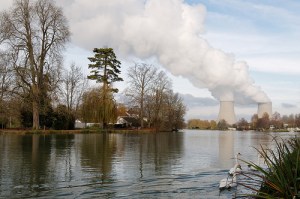
EDF's nuclear plant at Nogent-sur-Seine, France (photo: Aramis1955)

You Just Can’t Find Good Help These Days.

Not only were members of Greenpeace able to get past the security guarding at least one, and possibly three, nuclear facilities in France, they were able to plan and execute this operation less than a month after the plant operator, French energy giant EDF, was fined 1.5 million Euros ($2 million) for hacking into Greenpeace computers.

So, how bad is security at France’s 58 nuclear power plants? You be the judge:

Activists from environmental group Greenpeace managed to sneak into a nuclear power plant near Paris Monday in a move they said highlighted the dangers posed by France’s reliance on atomic energy.

. . . .

In a statement, Greenpeace said some members had entered the nuclear site at Nogent-sur-Seine, 95 kilometers southeast of Paris, to “spread the message that there is no such thing as safe nuclear power.”

“A group of militants managed to climb on to the dome of one of the reactors, where they unfurled a banner saying ‘Safe Nuclear Power Doesn’t Exist,’” said Greenpeace spokesman Axel Renaudin.

“The aim is to show the vulnerability of French nuclear installations, and how easy it is to get to the heart of a reactor,” said Sophia Majnoni, a Greenpeace nuclear expert.

Greenpeace activists also hung banners at two other EDF plants (EDF–or Electricite de France SA–runs all of France’s nuclear power stations), but as of this writing it is not yet clear whether those banners were unfurled in- or outside of security gates.

The government of Nicolas Sarkozy has demonstrated a full-throated commitment to nuclear energy–despite popular calls in the wake of the Fukushima crisis for a reexamination of the dominant role nuclear plays in generating France’s electricity. Just last month, thousands of French protestors delayed a convoy of nuclear waste from being transported to Germany (the hazardous waste has since made it across the border). Germany’s Prime Minister Angela Merkel has signaled her country will phase out nuclear power in the next ten years.

The Party Line – December 2, 2011: Nuclear’s “Annus Horribilis” Confirms Its Future Is in the Past

In the immediate aftermath of the Japanese earthquake and tsunami that triggered the horrific and ongoing disaster at the Fukushima Daiichi nuclear power generating station, President Barack Obama went out on a bit of a limb, striking a tone markedly different from his fellow leaders in the industrialized world. Speaking about Japan and its effect on America’s energy future–once within days of the quake, and again later in March–the president made a point of reassuring Americans that his commitment to nuclear power would stay strong. While countries like Germany and Japan–both more dependent on nuclear power than the US–took Fukushima as a sign that it was time to move away from nuclear, Obama wanted to win the future with the same entrenched industry that so generously donated to his winning the 2008 election.

But a funny thing happened on the way to winning our energy future–namely, our energy present.

As November drew to a close, an article on AOL Energy (yes, it seems AOL has an energy page) declared 2011 to be “nuclear’s annus horribilis“:

March 2011 brought the 9.0 magnitude earthquake off northeastern Japan that sparked a tsunami whose waves may have exceeded 45 feet. Tokyo Electric Power Company’s oldest nuclear station, Fukushima Daiichi, apparently survived the earthquake, but its four oldest reactors didn’t survive that wall of water. Nuclear experts are still figuring out what all went wrong, and tens of thousands still haven’t returned home as Japanese authorities try to decontaminate radioactive hot spots.

In April, massive tornadoes that devastated the southeast swept near the Tennessee Valley Authority’s Browns Ferry plant.

In June, droughts sparked wildfires across the Southwest, including one that threatened the Los Alamos National Laboratory, where nuclear weapons materials are stored.

June also brought record floods across the upper Midwest. For weeks Omaha Public Power District’s Fort Calhoun nuclear plant was essentially an island.

August saw the 5.8 magnitude Virginia earthquake just 11 miles from Dominion Energy’s North Anna plant. The plant shut safely, and returned to service mid-November after extensive checks found no damage even though ground motion briefly exceeded the plant’s design.

That list, as readers of this space will no doubt note, is far from complete. This year has also seen serious events at nuclear plants in California, Maryland, Michigan, New Hampshire and Ohio. But, perhaps even more troubling is the strangely positive tone of the piece.

Despite its ominous headline, it seems the message is: “Yeah, lots of nasty business in 2011, but 2011 is almost over. We got through it and no one died (at least no one in the US), so. . . problem solved!” It’s an attitude absurd on its face, of course, the passage of time is not the friend of America’s aging nuclear infrastructure–quite the opposite–but it is also a point that can’t survive the week in which it was made.

Take North Anna, for example. Yes, it is true that the NRC signed off on a restart in the waning hours of November 11, but the two generators at Dominion’s plant were not back at full power till November 28 because there was indeed damage–some of which was not discovered until after the restart process began.

A week earlier, a fire at Ohio’s crippled Davis-Besse facility cut ventilation to the reactor control room. A faulty valve in a pipe sending water to the reactor core leaked on an electrical switchbox, triggering an electrical arc, which started the fire. This could have been a potentially catastrophic emergency. . . had the reactor not been shut down seven weeks earlier to replace an already once previously replaced, corroded, 82-ton reactor lid. This “transplant operation” revealed a 30-foot crack in the concrete shield building that will require a separate repair program. . . which will in no way be completed before the end of the year.

The day after that fire, November 20, the St. Petersburg Times reported that Progress Energy’s Crystal River nuclear power plant in Citrus County, Florida, had discovered a 12-foot by 4-foot crack and crumbled concrete in its containment building in late July, but failed to notify the Nuclear Regulatory Commission. This was a patently intentional omission, as Progress Energy was already reporting to the NRC about repairs to two other major cracks in the same building dating back to October 2009 and March 2011.

The Crystal River story is long and sordid. The containment building cracked first during its construction in 1976. That crack was in the dome, and was linked to a lack of steel reinforcement. Most nuclear plants use four layers of steel reinforcement; Crystal River used only one. The walls were built as shoddily as the dome.

The latest problems started when Crystal River needed to replace the steam generator inside the containment building. Rather than use an engineering firm like Bechtel or SGT–the companies that had done the previous 34 such replacements in the US–Progress decided it would save a few bucks and do the job itself.

Over the objections of on-site workers, Progress used a different method than the industry standard to cut into the containment building. . . and that’s when this new cracking began. It appears that every attempt since to repair the cracks has only led to new “delamination” (as the industry calls it).

At this point, most have determined that the best plan going forward is to tear down the substandard structure and build a properly reinforced new one, but Progress thinks they have a better idea. Crystal River’s operator is trying to replace the wall panels–all six of them–one by one.

Funny enough, the cost of this never-before-tried retrofit is about the same as the cost of a whole new building. But the full rebuild would take more time–and there’s the rub.

Every day that Crystal River is offline costs Progress money because they have to buy energy to replace what they agreed to provide to the region from this nuclear facility. Each year that the plant is offline is said to cost $300 million. The price tag on this little cracking problem so far–not counting the actual costs of the repair–is $670 million.

Who will pay that bill? Well, if you live in Florida, the answer is: you:

Customers will pay $140 million next year so Progress Energy Florida can buy electricity from other sources while a nuclear plant remains shut down for repairs.

Consumer advocates opposed the power replacement charge, which will take effect Jan. 1, but it won unanimous approval Tuesday from the five-member Florida Public Service Commission.

The panel’s decision is a prelude to a determination next year whether a portion of the repair costs should be passed on to customers or paid in full by the company’s investors owing to problems that have delayed the work. The Crystal River plant was closed for repairs in 2009 but now isn’t expected to reopen until 2014. That’s about three years later than initially expected.

The repair bill is expected to total $2.5 billion. The utility wants customers to pay $670 million, or about a quarter of that amount.

Interesting how that $670 million exactly mirrors the replacement energy costs through today. Students of the Florida Public Service Commission would probably be skeptical that the bailout will really stop there–remember, Florida residents already pay a surcharge on their utility bills for possible (but in no way guaranteed) future nuclear power construction.

And to say that it’s all about the money would not be pure speculation. As the St. Petersburg Times reports, while the good people at Crystal River failed to notify the NRC (or the Public Service Commission) about their latest troubles in a timely fashion, Progress Energy didn’t dare keep secrets from the US Securities and Exchange Commission. On August 8, the same day it neglected to mention the new cracks in a report to the PSC, Progress filed its annual report to the SEC and stated “additional cracking or delaminations may have occurred or could occur during the repair process.”

Given the many revelations of just how casual SEC enforcement can be, it is disturbing to think a nuclear provider had more to worry about from the SEC than from the NRC, the agency given direct oversight of nuclear plant licensing and safety.

Disturbing, but not surprising. This year has also revealed the cozy relationship between the nuclear industry and the NRC. An AP exposé made that clear over the summer, but one need look no further than the AOL Energy story:

[Nuclear Energy Institute CEO Marvin] Fertel said the industry and NRC are “in very good alignment” on the issues raised by 2011 events. The concern for utilities is the “cumulative impact” of new rules, he said, and making sure they’re ranked so plant staffs attack those with the most safety benefit first and the cost is manageable.

The government and the industry agree–safety must be addressed with an eye toward cost. And the tens of millions of Americans living in the shadow of a nuclear reactor will see just what this means as the watered-down post-Fukushima recommendations are slowly proposed and implemented–with little fully required of plant operators before 2016.

Indeed, the global nuclear industry is proceeding not just as if it is business as usual–when it comes to the United States, manufacturers of nuclear plant components are already betting on a new wave of reactor construction. Over the Thanksgiving weekend, Yomiuri Shimbun reported that Toshiba Corp. is preparing to export turbine equipment to the US.

The turbines are for Toshiba-owned Westinghouse Electric Company-designed AP1000 reactors proposed for sites in Georgia and South Carolina. As previously reported, the AP1000 is a new reactor design–a new design that has not yet officially been approved by the Nuclear Regulatory Commission. Still, the operators of the plants have already started to procure the equipment.

All of which raises the question, how is it that, in an age when credit is so hard to come by, an industry so focused on the bottom line feels secure in moving forward with commitments on a plan that is still officially going through the regulatory pipeline?

The assurances come from the top, and so does the money.

In contrast to pledges to, say, close Guantanamo or give Americans a public health insurance option, when it comes to nuclear power, Barack Obama is as good as his word. In February, Obama pledged $8.33 billion in federal loan guarantees to Southern Co., the operator of Georgia’s Plant Vogtle, the proposed home of two new AP1000 reactors. Again, this pledge came in advance of any approval of the design or licensing of the construction.

So, perhaps the nuclear industry is right to feel their “annus horribilis” is behind them, at least when it comes to their business plans. And with the all-too-common “privatize the profits, socialize the risks” way the utilities are allowed to do business, one might even doubt this last annus was really that horribilis for them at all.

But for the rest of us, the extant and potential problems of nuclear power are not limited to any particular period of time. The dangers of nuclear waste, of course, are measured in tens of thousands of years, the Fukushima crisis is lived by millions every minute, and the natural disasters, “events” and accidents that plague an aging, expensive and insufficiently regulated American nuclear industry are an anytime, anywhere reminder that future cannot be won by repeating the mistakes of the past.

NRC Gives OK for Restart of Damaged North Anna Nuclear Plant

North Anna Nuclear Generating Station (photo: dougward)

In what feels like a Friday news dump that goes to 11, the US Nuclear Regulatory Commission has given its approval to restart Dominion Virginia Power’s North Anna nuclear power facility. The decision came late in the day on a holiday–Veterans Day, 11/11/11.

As previously noted, the reactors at North Anna scrammed during the Mineral, VA earthquake of August 23. It was later shown the power plant sustained shaking well beyond its design criteria. Several spent fuel storage casks moved one to four inches, and other storage containers showed what was termed cosmetic damage (namely, cracks), but plant operators contend that the nuclear reactors sustained no “functional” damage.

What constitutes “functional” now remains to be seen. The fact is there was no official protocol–no “checklist”–for evaluating a nuclear facility after it experienced a seismic event such as this. The NRC’s inspectors have essentially been inventing that inspection regime on the fly as they surveyed the North Anna plant. Dominion has been pressing for permission to restart since shortly after the quake.

Of concern, beyond the cracks and dancing dry casks, has been the integrity of the containment buildings and, more specifically, the pipes and couplings that ensure that the reactors can be properly cooled once the cores are allowed to again heat up. Questions about the state of underground pipes were expressed right after the earthquake by watchdogs such as Paul Gunter, and those same buried pipes were cited as recently as last week when explaining the ongoing delay to the restart OK.

North Anna’s reactors were initially thought to have shut down when the cooling systems lost power from the electrical grid, soon after the Virginia quake. Three backup diesel generators provided power to the safety systems until power could be restored (a fourth generator failed). Later, however, it was discovered that the shaking itself caused the reactors to scram–a fast emergency shutdown sometimes compared to slamming the brakes on a speeding car.

How the NRC and its inspectors resolved questions about what constituted a passing grade after a never-before-seen event remains to be seen. Until then, it appears the NRC will do the regulatory equivalent of keeping its fingers crossed:

Eric Leeds, director of the NRC’s Office of Nuclear Reactor Regulation, said in a statement. “We’re satisfied the plant meets our requirements to restart safely, and we’ll monitor Dominion’s ongoing tests and inspections during startup of both reactors.”

Let’s hope inspectors work holidays.

The Party Line – November 4, 2011: Self-Styled Clean Energy President Embraces Future That’s Dirty, Dangerous, and Expensive

“Reeling from months of protests, President Barack Obama’s advisors are worried. . . .”

So begins a November 3rd story from Reuters assessing the potential political fallout from an administration decision to green-light the Keystone XL pipeline, TransCanada Corp’s plan to move crude oil from the tar sands of Alberta to refineries in Texas. Reading the whole piece, one can’t help but feel that Obama is still of a mind to go ahead and OK this dangerous and much-derided plan, it is just the Obama 2012 campaign that’s agonizing over how to spin it.

Back in 2008, Obama the candidate seemed to understand the threat posed by global warming, and he spoke often of moving away from carbon-heavy fuel sources like tar sands. Now, a good part of what is considered the president’s “base,” it seems, understands that the transcontinental pipeline is not only a danger to farmlands and aquifers, but also a betrayal of a campaign promise.

Don’t think this is the dynamic at play? Look at recent administration boasts about such “green” initiatives as raising the Corporate Average Fuel Economy (CAFE) standards, or just read Obama campaign spokesman Ben LaBolt in the abovementioned Reuters story:

“The president has done more to wean us off of foreign oil and transition the nation to a clean energy economy than any other,” he said. “When Americans compare the president’s record promoting clean energy and America’s energy security to those of the leading Republican candidates, who don’t even believe that climate change is an issue that we need to address and would cede the clean energy market to China, there will be no question about who will continue our progress.”

Moving beyond the observation that this is the same “We suck less” positioning that performed so poorly for Democrats in 2010, there are indeed many questions raised by Obama’s apparent take on our energy future.

LaBolt’s claim, “The president has done more to wean us off of foreign oil and transition the nation to a clean energy economy than any other,” first begs the obvious fact-check: Alberta is not in the US, and tar sands crude is no one’s idea of clean energy. But it is not a big leap to read this statement as something more inclusive, something meant to refer to all of the Obama administration’s moves in the energy sector. Indeed, with references to clean energy, climate change and China, the Obama campaign is probably hoping for some to hear a commitment to solar power, while others might understand it as an embrace of nuclear fission.

Intent notwithstanding, administration moves have underscored the latter–a White House enraptured with nuclear power–just as events continue to lay bare the lie that US nuclear power generation could fit anywhere into a tale of clean, domestic energy advocacy.

A new stupid way to boil water?

On November 1, the Nuclear Regulatory Commission approved a new design of what is called an Advanced Boiling Water Reactor (ABWR) slated for construction in South Texas. The plan to build two 1,350-megawatt reactors was originally pitched five years ago, with the original plant operator, NRG Energy (so nice they named it twice!), requesting design certification for Toshiba’s version of ABWRs in 2007.

But in 2009, the NRC made mandatory what had previously been a voluntary requirement that plants would be able to withstand a 9/11-style aircraft attack and continue to cool the reactor and spent fuel pools. The ABWR design, and its certification, had to be amended. This amended design is what just received the NRC’s thumbs-up.

A funny thing, however, happened since the original request: NRG stopped investing in the project. NRG was the prime investor in the “South Texas Project Nuclear Power Co.,” which is the name of the body that originally submitted the amended design. Without NRG, Toshiba has been shepherding the certification request, the one just approved by the Nuclear Regulatory Commission. Just one hitch, though, foreign companies are not allowed to operate nuclear power plants in the United States–a point that seems to have been missed by the NRC (and by most establishment news reports about the certification).

This design certification without funding or domestic management in place provides an almost comic counterpoint to the funding-without-certification approach taken by the Obama administration for the AP1000 reactors proposed for Georgia’s Plant Vogtle.

The AP1000, a riff on a Pressurized Water Reactor design, is supposed to provide passive cooling inside a reactor in the event of a loss of power to the active cooling system. There are many questions about the AP1000, and it too had to be altered to comply with the 2009 9/11 rules, but the most recent delay in certification comes at least in part from concerns that the design should also account for a Fukushima-like seismic event. At this point, Vogtle’s operator, The Southern Company, and the NRC have not come to a meeting of the minds.

But these concerns–or, at least, delays–did nothing to dampen the enthusiasm of the White House. In February of 2010, without any design certification in place, none other than Barak Obama himself announced $8.33 billion in loan guarantees for Southern. This was done with fanfare at a public event (there’s even a YouTube of the announcement).

So, certification with no funding, or funding with no certification–to the US federal government, it doesn’t matter. And it spells out two points in bold type: The Obama administration stands squarely behind nuclear power. . . and the marketplace does not. Without help from what the campaign would have voters believe is the all-time greatest champion of clean, green, domestic energy, new nuclear reactors would not be built in the United States.

Uranium extraction is not clean and never has been. The US is still paying to clean up from mining in the southwest that ended half a century ago. And today, uranium is not really a domestic fuel source, either. A list of the world’s top uranium producers looks like this: 1) Kazakhstan, 2) Canada, 3) Australia, 4) Namibia, 5) Russia, 6) Niger, 7) Uzbekistan. The US comes in eighth, accounting for just 2.9 percent of the world’s uranium production. By contrast, the US ranks third in global oil production, extracting almost 11 percent of the world’s crude.

And uranium doesn’t jump out of the ground ready to go for a nuclear reactor. The processing of uranium ore into useable fuel is a dirty, costly and energy intensive endeavor requiring loan guarantees, waste storage and safety protocols all its own. (And as if to underscore this, House Speaker John Boehner has recently requested federal loan guarantees to build a new nuclear processing plant in his home state of Ohio.)

Fukushima: a case study

A pair of new stories out of Japan provide all the evidence any president would need to honestly evaluate the role of nuclear power in America’s supposedly clean, green energy future.

Fukushima isn’t a single event, it is an ongoing, ever-evolving, always metastasizing crisis. In case anyone thought otherwise, the detection of radioactive xenon in Fukushima Daiichi reactor 2 provided a chance to again pay heed to just how serious things remain at the crippled Japanese nuclear facility.

Though Tokyo Electric Power Company (TEPCO), the nominal owners Fukushima Daiichi, contend that the trace of xenon gas does not represent evidence of a nuclear chain reaction inside the reactor previously thought closest to a so-called “cold shutdown,” they still pumped in boric acid–a substance used to mitigate nuclear fission.

Tokyo Electric may or may not be telling the whole truth in this instance, but evidence from throughout this disaster dictates skepticism. For example, scientists have again revised upwards their estimates of total radiation released from the plant, and a new study explodes TEPCO’s minimalist fairytale:

France’s l’Institut de Radioprotection et de Surete Nucleaire (Institute for Radiological Protection and Nuclear Safety, or IRSN) has issued a recent report stating that the amount of radioactive cesium-137 that entered the Pacific after 11 March was probably nearly 30 times the amount stated by Tokyo Electric Power Co. in May.

According to IRSN, the amount of the radioactive isotope cesium-137 that flowed into the ocean from the Fukushima Daiichi nuclear plant between March 21 and mid-July reached an estimated 27.1 quadrillion becquerels.

Quadrillion is not a number that often comes up in polite conversation, but suffice it to say, it’s a lot. . . even for becquerels. Soon after the March 11 earthquake, Japan revised acceptable levels of radioactive cesium upward. . . to 500 becquerels per kilogram. Though even the 27.1 quadrillion number sort of redefines the phrase “a drop in the ocean,” the really disturbing notion is that with a relatively long half-life, the pattern of Pacific currents, and the principles of bio-accumulation and bio-concentration at play, it is possible that everyone who includes Pacific Ocean fish in his or her diet is now part of an informal, long-term experiment on the effects of low-level radioactive contamination. Or, as the same story as above snidely puts it:

The radioactive silver lining? Radioactive cesium-137 has a half life of roughly 30 years, so if the IRSN estimates are accurate, then [b]y 2041 the Pacific’s aquatic life will only be subjected to a mere 13.55 quadrillion becquerels of radiation.

But long half-lives and long-term health effects require long-range thinking, not to mention arguments about the relative value of human life. Perhaps another fresh release from Japan tells the nuclear story in numbers a deficit-obsessed DC elite can more easily comprehend:

Tokyo Electric Power Co. won approval for a 900 billion yen ($11.5 billion) bailout from the government after the Fukushima nuclear catastrophe to avert bankruptcy and start paying compensation for the crisis.

Trade and Industry Minister Yukio Edano approved the support after the company known as Tepco committed to cutting 7,400 jobs and 2.5 trillion yen in costs. The utility forecast an annual loss of 600 billion yen, its second since the March earthquake and tsunami wrecked its Fukushima nuclear plant.

Eleven-and-one-half-billion dollars–and that only takes TEPCO through March 2013. Who here thinks the crisis will be over by then? It almost makes Obama’s $8.33 billion loan guarantee to Southern look like a bargain.

Almost.

Except that the loan guarantee is just for construction of a yet unapproved reactor design–should Southern, or whatever entity might eventually operate Plant Vogtle, experience an accident, that would likely be a whole other ball of bailout.

But what could possibly go wrong? Well, as repeatedly documented in this column, a lot. Beyond the level-7 sinkhole that is Fukushima, in the US, 2011 alone has seen manmade accidents and natural disasters that have scrammed and/or damaged more than a half-dozen reactors. And with each event, a process of shutdown, repair, inspection, authorization and startup costs time and money that does nothing to provide America with clean, safe, renewable, affordable energy.

Each event does, however, add costs to a variety of segments of the economy. Energy production and utility bills are obvious, but this nuclear obsession also drives up costs for healthcare, food safety, air and water quality, the yet-to-be-solved problem of long-term waste storage, and don’t forget the additional tax burden required to support all the bailouts, tax breaks and loan guarantees for the nuclear industry. The Center for Strategic and International Studies, a US think tank, has also called for a global study of the health effects of long-term radiation exposure as part of an international response to the Fukushima disaster. That, too, is an expense that should be factored into the real cost of nuclear power.

One thing, however, has gotten cheaper since the Japanese earthquake and tsunami gave the world its third top-level nuclear accident since 1979, and that would be uranium. Since March, world uranium prices have fallen some thirty percent. In fact, demand is so low, the French company Areva has decided to suspend its uranium mining in the Central African Republic–for two years.

The market is again speaking, but to those predisposed to cherish the siren song of nuclear power, cheap uranium could easily become the excuse to dash greener, safer alternative energy development.

Since the earliest days of nuclear power, that siren song has gone something like this: clean, safe, and too cheap to meter. Obviously, 2011 has proven none of that rings true, but when an administration believes it can greenwash away the political fallout from a tar sands pipeline, is it such a stretch to see them ignoring the financial and radioactive fallout of nuclear power in their attempt to package Obama as the cleanest, greenest energy president ever?

* * *

I am always happy to see the issues discussed in this column get attention from a broader audience, so I was thrilled to see Rachel Maddow take nine minutes out of her Wednesday show to call attention to what she sees as a scandal no one finds sexy enough to get excited about–namely the dangerous state of nuclear power plants across the US. But her contention that no one is paying attention irks me, at least a little. I have lost count of the number of posts I have devoted to this very subject this year, and I think, throughout, most would say I find much about this subject quite scandalous. So, Rachel, next time you want to talk about this stuff, the next time you want to share your excitement about this scandal, call me.

The Party Line – October 28, 2011: NRC Moves to Adopt Fukushima Recommendations “Without Delay”

The US Nuclear Regulatory Commission voted last week to implement recommendations from the Near-Term Task Force Review of Insights from the Fukushima Daiichi Accident (PDF), and to do so “without delay.” Coming over seven months after the earthquake and tsunami that started the crisis in Japan, and over four months after the Near-Term Task Force (NTTF) issued its report, the move highlights what might be accomplished when attention is paid, but also illustrates systemic flaws in the US nuclear regulatory regime.

The NRC identified a set of top-tier recommendations that focus on:

  • Re-evaluation of seismic and flood hazards;
  • Inspections after earthquakes and floods;
  • New regulations for “station blackouts” (the loss of all AC power at a reactor);
  • Reliability of vents on Mark I and Mark II containments; and
  • Better instrumentation for monitoring spent fuel pools.

This list does not represent the entirety of NTTF recommendations, just the ones the NRC wishes to see fast tracked (you know, “without delay”)–which, when it comes to nuclear regulation in the United States, means years. The NRC said its staff “should strive to complete and implement” these changes by 2016 (though Commission Chairman Gregory Jaczko said he thinks the station blackout rule can be adopted by April 2014 (PDF), so fasten your seatbelts).

Now, these recommendations (as opposed to actual rules, which still have to be drafted) do address some of the specific weaknesses exposed by the Japanese disaster–multiple external threats, power interruptions, hydrogen buildup, failing spent fuel storage systems–and that’s a positive step because these problems are quite real and quite possible at many of America’s nuclear power plants. But these fast-tracked proposals make up only seven of the 12 or 13 recommendations in the NTTF report–which, itself, is several points short of a truly comprehensive response to the threats Fukushima brought to the fore–and the process (much beloved by Chairman Jaczko) relies heavily on the cooperation of other government agencies, the good faith of the nuclear industry, and a seemingly magical belief that manmade or geologic events on a level with the March earthquake and tsunami will not happen here until after everything is brought up to code.

So, yes, there is a process for identifying problems (at least after they happen) and proposing some fixes with something approximating alacrity–which raises the question of why the system has not been more responsive over the last 50 years–but history and experience make it clear that process does not equate with performance.

During an interview earlier this month, NRC Chair Greg Jaczko was asked about one of his biggest efforts before the Fukushima crisis (PDF & Flash)–improving fire safety at nuclear facilities. Jaczko reflected on it this way:

[A]fter the Browns Ferry fire, we came up with a new set of regulations. Those regulations ultimately I think were very, very challenging to implement, so we’ve been struggling really for several decades to really implement those in an efficient and effective way. That’s not to say we don’t have strong fire protection programs, but we don’t have the most effective way to do it.

The Browns Ferry Fire happened in 1975. Jaczko has been an NRC commissioner since 2005; he has been chairman since 2009. And yet, here, now, in October 2011, 36 years after a guy checking for air leaks with a candle started a fire considered to be the second most frightening accident at a US nuclear plant (next to Three Mile Island), six years after Jaczko joined the NRC, Jaczko says that fire safety–a cause he has championed–is a “struggle,” “challenging to implement” and still not at its “most effective.”

In the same discussions, Jaczko also referenced safety upgrades suggested in response to the terrorist attacks of September 11, 2001, and how those are not yet fully implemented. Indeed, a recent story on security at the Indian Point power station underscored just how far the industry still has to go:

[W]hile the NRC came out with new security guidelines in 2003, these were largely voluntary in keeping with the Bush administration’s anti-regulatory policy. They were made mandatory in 2009, but Indian Point, New Jersey’s Salem, Hope Creek and Oyster Creek plants, and about 60 others around the country were granted waivers so they did not have to incur immediate expenses.

If a major domestic accident or a terrorist attack that, frankly, has colored practically every government action over the last decade cannot motivate full and fast compliance with NRC rules, why should the 65% of Americans who live within 50 miles of a nuclear plant believe that the Fukushima recommendations will be handled any better?

Already, events say that they shouldn’t. Within a day of the NRC voting to fast track some NTTF recommendations, the Atomic Safety and Licensing Board, the body responsible for renewing or extending the operating licenses of existing facilities, declared that it would not consider the proposed post-Fukushima requirements when evaluating an extension for the Seabrook Station nuclear plant, nor would it delay consideration of the license till new rules were in place. This is despite NRC Chair Jaczko’s stated preference to the contrary:

I would like to see some type of license condition that provides a commitment or a requirement for implementation of those [Fukushima] lessons before the plants would operate.

It should also be noted that even with Jaczko’s predilection on record, his term as chairman is set to expire in 2013–over a year before he expects any of the NTTF recommendations to be implemented. Jaczko’s desire to serve another term not withstanding, the question of whether he will be asked–even if President Obama is re-elected–or whether he can get reconfirmed is an open one. Despite originally being appointed by George W. Bush, Jaczko has come under fire from other NRC commissioners and from Republicans on the Hill. And it should be pointed out that Obama’s own appointee to the NRC, William Magwood, IV, is a veteran of the Bush administration’s Department of Energy and has been roundly criticized for his cozy relations with the nuclear industry.

And, of course, the planet also seems to have little regard for Jaczko’s inclinations. As repeatedly noted here, numerous US nuclear reactors have had to scram this year, courtesy of Mother Nature’s tornadoes, floods, earthquakes and hurricanes. (Again, that was all this year.)

So, what’s a country to do? Cross some fingers and hope for the best from a deep-pocketed industry and its weak, captured regulators? Or hit “pause” on license renewals and new plant construction–and even some restarts of sub-standard facilities–until the lessons of nuclear power’s most recent catastrophes are truly learned, and instead spend the time, money and effort on energy sources that don’t require such elaborate safety regimes?

In time, the Rockies may crumble, Gibraltar may tumble. . . but so many of the problems and byproducts of nuclear power are here to stay. Instead of accepting this eternal and fatalist frame for learning lessons and making changes, perhaps this latest case study in regulation should teach a broader lesson: transition to cleaner, safer, and more sustainable energy sources. . . without delay.

NRC Chair Jaczko: Events Like Fukushima Too Rare to Require Immediate Changes

NRC, nuclear

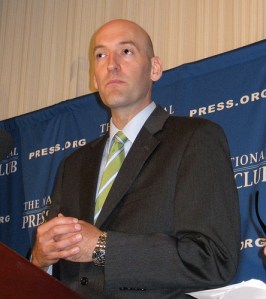
NRC Chair Gregory Jaczko (photo: Gabrielle Pffaflin/TalkMediaNews)

For those that think nothing has changed in United States regulation since the Japanese earthquake and tsunami started the ongoing crisis at the Fukushima Daiichi nuclear facility, think again. The pre-disaster mentality of “What could possibly go wrong?” has been replaced with reassurances that “Stuff like that hardly ever happens!”

At least that is the impression conveyed by the current chairman of the US Nuclear Regulatory Commission, Gregory Jaczko, in a pair of early October interviews. During two NRC-sponsored events, Jaczko fielded questions first from nuclear industry professionals and those considered friendly to the expansion of nuclear power, and then, in a separate session two days later, responded to representatives from public interest groups and other individuals generally seen as opposed to nuclear energy.

While the tone of the questions differed somewhat predictably in the two sessions, Chairman Jaczko’s attitude did not. Jaczko took several opportunities to praise the NRC staff and the processes and protocols used by the commission, repeating in both panels that the primary duty of his agency is ensuring the safety of nuclear facilities in the United States.

Beyond his broad assurances and patient, capable demeanor, however, many of the chairman’s assertions about both the NRC process and the progress being made toward his stated safety goals highlighted notable contradictions and troubling biases inherent in America’s nuclear regulatory regime.

To be fair, the pre-Fukushima outlook was not exactly “What could possibly go wrong?” In terms of the types of accidents and the repercussions of contamination, containment breaches, radioactive releases, meltdowns, melt-throughs, and a host of other undesirable situations, regulators and industry insiders alike were probably quite aware of what could go wrong. But as US nuclear proponents and profiteers strove to convey the impression of an informed industry, they also moved to downplay the threats to public safety and made sure to stress that, when it came to disaster scenarios, they had it covered.

If the disaster in Japan has proven one thing, though, it is that plant operators and nuclear regulators didn’t have it covered. Events (or combinations of events) that were either not foreseen or not acknowledged leave Japan scrambling to this day to understand and mitigate an ever-evolving catastrophe that has contaminated land and sea, and exposed yet-untallied thousands of Japanese to dangerous levels of radiation. “As we saw in Fukushima,” said Jaczko, “accidents still do happen in this industry. If we are thinking that they can’t, we are in a dangerous place.”

But for US nuclear regulators, there needn’t be any sense of urgency–or so believes the NRC chair. When asked why the agency doesn’t hold up plant relicensing until new standards that include lessons learned from the Japanese disaster are in place, Jaczko expressed confidence in the current system:

Bottom line is that changes get made at a plant. . . some changes will be made quickly, some may take years. It doesn’t matter where a plant is [in the process]–what is the licensing phase–but that changes get made. These are low frequency events, so we have some leeway.

It is a posture Jaczko took again and again in what totaled over two-and-a-half hours of Q&A–accidents are very, very rare. Given the history of nuclear power, especially the very recent history, his attitude is as surprising as it is disturbing. Beyond the depressingly obvious major disasters in nuclear’s short history, unusual events and external challenges now manifest almost weekly in America’s ageing nuclear infrastructure. The tornado that scrammed Browns Ferry, the flooding at Fort Calhoun, the earthquake that scrammed the reactors and moved storage casks at North Anna and posed problems for ten other facilities, and Hurricane Irene, which required a number of plants to take precautions and scrammed Calvert Cliffs when a transformer blew due to flying debris–all are external hazards that affected US facilities in 2011. Add to that two leaks and an electrical accident at Palisades, stuck valves at Diablo Canyon, and failures in the reactor head at oft-troubled Davis Besse, and the notion that dangerous events at nuclear facilities are few and far between doesn’t pass the laugh test.

That these “lesser” events have not resulted in any meltdowns or dirty explosions does nothing to minimize the potential harm of a more serious accident, as has been all too vividly demonstrated in Japan. The frequency or infrequency of “Level 7” disasters (the most severe event rating–so far given to both Chernobyl and Fukushima) cannot be used to paper-over inadequate safeguards when the repercussions of these catastrophes are so great and last for generations.

Storage concerns don’t concern

Chairman Jaczko’s seeming ease with passing current problems on to future generations was also in evidence as he discussed mid- and long-term storage of spent nuclear fuel. Though previously a proponent of an accelerated transfer of spent fuel from pools to dry casks, Jaczko now says, post-Fukushima, he has “no scientific evidence that one method is safer than the other.” The chairman made a point of noting that some dry casks at Virginia’s North Anna plant moved during the August earthquake, but said that it will be well over a year before we can evaluate what happened to wet and dry storage systems at Fukushima.

While it is true a full understanding will have to wait until after Daiichi is stabilized and decontaminated, it is already apparent that the spent fuel pools, which require a power source to actively circulate water and keep the stored fuel cool, posed dangers that in some ways rivaled the problems with the reactors. (So far, no Japanese plants have reported any problems with their dry casks.) So obvious was this shortcoming, that the NRC’s own staff review actually added a proposal to the Fukushima taskforce report, recommending that US plants take more fuel out of wet storage and move it to dry.

Jaczko’s newfound indifference is also odd in light of his own comments about dry casks as an alternative to a central nuclear waste repository. Asked in both sessions about the closing of Yucca Mountain (the proposed US site for spent nuclear fuel), the chairman buoyantly championed the possibility of using on-site dry casks for hundreds of years:

The commission is taking the appropriate action to address the storage of spent fuel. We have come to the conclusion that, over the short- and medium-term, safe storage is possible. We are taking a look at what is the finite limit on current [dry] storage. . . 200, 300, 400 years. Is there a time we have to move the fuel? . . . Nothing tells us we shouldn’t generate the [radioactive] material. We don’t see a safety concern out 100 years, or anything that says at 101 years, everything changes.

Chairman Jaczko then added that while the nuclear industry is generating waste that will require “long, long term storage or isolation,” it is not unprecedented to assume this problem can be taken care of by “future generations.”

It is good that Jaczko has such faith in the future, because his depiction of the present is not actually that impressive. While the NRC chief repeatedly touted their “process” for evaluating risks, problems, and proposals, he also painted a picture of a bureaucracy that has so far failed to fully act on the initiatives he has considered most important. Neither the fire-safety improvements Jaczko has championed since he came to the commission in 2005, nor the security enhancements required after 9/11/2001 have as yet been fully implemented.

Process is everything

Time and again, whether he was directly challenged by a question or simply asked for clarification, Gregory Jaczko referred to the NRC’s “process.” “We have a relicensing process,” “there is an existing process [for evaluating seismic risk],” there is a process for determining evacuation zones, there is a process for incorporating lessons learned from Fukushima, and there is a process for evaluating new reactor designs. Process, of course, is not a bad thing–in fact, it is good to have codified protocols for evaluating safety and compliance–but stating that there is a process is not the same thing as addressing the result. Too often, what might have sounded like a reasonable answer from the chairman was, in reality, a deflection. “The process knows all; trust in the process. I cannot say what will happen, and what I want to happen does not matter–there is a process.” (This, of course, is a dramatization, not a direct quote.) Form over functionary.

But Jaczko had barely started his second session when his reliance on process suffered an “unusual event,” as it were.

Asked about why the NRC seemed to be moving full-speed ahead with relicensing, rather than pausing to wait for Fukushima taskforce recommendations to be formalized, the agency chief first said, “There is an existing program, there are processes.” But within a breath, Jaczko then said, when it comes to lessons learned from Fukushima being some sort of prerequisite for final license approval, “We are going to look on a case-by-case basis.”

Is deciding whether to apply new requirements on a “case-by-case basis” actually a process? Many would say it pretty much defines the opposite.

The counter-intuitive also took a star turn when it came time to consider new externalities and pending environmental impact surveys. Shouldn’t the Fukushima taskforce findings be considered as part of a series of new environmental impact studies? Well. . . “It is clearly new information, but does it affect the environmental impact survey? Because they are very, very low likelihood events, it is not part of the environmental impact survey.” Jaczko here seems to be saying that unless you know in advance of the new study that the new information will alter the findings, you do not need to consider new information.

Shocked, shocked

With such confidence in the commission and its process, would it be safe to assume that Greg Jaczko is comfortable with the current state of nuclear safety in the United States? Perhaps surprisingly, and to his credit, the NRC head seems to say “no.”

As previously discussed, Jaczko expected faster action on fire safety and security upgrades. He also defended his going public with complaints about design problems with the AP1000 reactors proposed for Plant Vogtle:

We had been going back and forth with [AP1000 designer] Westinghouse for two years. I felt [a lack of] openness; felt if you aired the issues, they get addressed. Now, I feel it was. . . addressed. It ultimately forced these issues to get resolved.

Chairman Jaczko was also asked what tech issues keep him up at night:

Those components that are not replaceable, not easily inspectable. Those subjected to repeated exposure to high radiation, stresses that cause high degradation.

Jaczko said he felt the commission had a handle on what radiation does to the concrete in the containment vessel, but he was less sure about the effect of “shock,” which he defined as “repeated power trips” or scrams. Jaczko acknowledged that this increases stress on the containment vessels, and added, “Some places will not have 20 years [left] on pressure vessels. We get into an unknown piece of regulation on pressure vessel repair.”

That is a pretty stark revelation from a man so passionate about his agency’s ability to, uh, process new data, but it highlights another facet of Jaczko’s approach to regulation.

Noting that New Jersey’s Oyster Creek reactor was granted a renewed operating license for 20 years, but its operator later negotiated with the state to shut it down in 10 years, Jaczko said, “Extension is an authorization to operate, not a requirement to operate.” Relicensing, he said, might come with requirements for modifications or orders that they “monitor aging.”

Jaczko also said that states or facilities might decide it is not economically viable to keep a plant running for the full length of its license, “Like if you have a car and the clutch goes and you make a decision not to replace it.”

How to regulate, even without the Regulatory Commission

Yes, another deeply flawed automobile analogy, but note that Jaczko allows for, and maybe even expects, limits to a plant’s life that are not regulated by the NRC. And in detailing such, the chief regulator of the US nuclear industry shows where citizens might exercise leverage when his NRC fails.

First, there is that issue of economic viability. As previously discussed, the market has already rendered its verdict on nuclear power. In fact, it would be absolutely impossible to build or operate a nuclear plant without loan guarantees, tax breaks, and subsidies from the federal government. The new construction at Vogtle is projected to cost nearly $15 billion (and these plants always go way over budget), and the Obama administration has had to pledge $8.33 billion in loan guarantees to get the ball rolling. Without that federal backstop, there would be no licensing battle because there wouldn’t be the possibility of the reactors getting built.

In fact, in this time of questionable nuclear safety, deficit peacockery and phony Solyndra outrage, it is illustrative to note:

. . . in FY2010 alone, $2.82 billion went to natural gas and petroleum interests (through direct expenditures, tax expenditures, research and development funds, and loan guarantees), $2.49 billion to nuclear energy interests and $1.13 billion to solar interests.

Would any of the relicensing and new construction applications be before Jaczko’s NRC if the energy-sector playing field were leveled?

Second, at many points in the interview, federal regulator Jaczko referenced the power of the states. Early in the “pro” nuclear session, an anxious question expressed worry that states such as Vermont could play a role in the relicensing of reactors. While stating it was yet to be determined whether Vermont’s authority overlapped with the NRC, its chairman stated plainly that states do play a role. “States decide what kind of generating sources they use,” Jaczko said, “especially if the state has a public utility.”

When asked in the second panel if the NRC considers whether new rules or licensing delays will cause rate hikes for consumers, Jaczko said the final determination on rates was the purview of a state’s public utilities commission:

If the PUC denies charges, then they won’t get our approval to go forward–but if the PUC denies a rate change, they [the plant operators] still have to make the improvement required.

And when discussing how the NRC draws evacuation zones, Chairman Jaczko said that in the end, it was the responsibility of the state and local governments, acting on data from the utilities and advice from the NRC, to determine where, when and how to evacuate in case of a nuclear accident.

And, yes, that does sound again like some of the buck-passing that marked too much of these interviews, but it is also a roadmap for a possible detour around a recalcitrant or captured federal agency. If activists feel shut out of the regulatory process, they can attack the funding. If federal elected officials are not responsive (because they, too, have been captured by a deep-pocketed nuclear industry), concerned citizens can hit closer to home. As Jaczko says, states can choose their power sources, and states can define evacuation protocols that either better insure public safety or reveal continued operation of nuclear facilities to be untenable.

Such action would not be easy–state and local officials have their own interests and conflicts–but it might prove easier than a broad federal play. Recent successes by those seeking to close aging coal-fired generators show that action at the individual plant level is possible.

Open to openness

For anything to happen, of course, it is important that a dedicated and passionate citizenry organize around a tactic, or, if they prefer, a process. But it will also require a level of openness on the part of government. Sometimes that openness is offered, sometimes it is hard won, but without transparency, progress is hard to make and hard to measure.

Gregory Jaczko repeatedly stated that he is a big advocate of openness, and he offered these interviews in that spirit. These two events obviously didn’t go all the way in that direction–not even close–but the sessions had merit. Chairman Jaczko, despite all the problems detailed above, can still be admired for exhibiting something rather rare in today’s political climate, a regulator that actually believes in regulation. He, in fact, conveys a passion for it. That some of that regulation is based on flawed assumptions, and that much of it is weak or never enforced, cannot be ignored, but if the head of the Nuclear Regulatory Commission advocates for the regulatory process (even when hiding behind it), then there is at least a process to improve.

* * *

A version of this story was previously posted on Truthout.