New Fukushima Report: “Devil’s Chain Reaction” Could Wipe Out Tokyo

Map of the east coast of Japan showing the distance between Tokyo and Fukushima Daiichi, 150 miles to the north.

A new independent report on the Fukushima Daiichi Nuclear disaster reveals that Japan’s Prime Minister Naoto Kan feared events following the March 11, 2011 Tohoku earthquake and tsunami would require the evacuation of Tokyo. The report, conducted by the Rebuild Japan Foundation, a new policy organization comprised of college professors, journalists and lawyers, sheds new light on just how in-the-dark many were in the wake of natural disasters that left the Fukushima nuclear facility with damaged safety systems and without internal or external power.

The investigation underscores the conflicting interests of the Japanese government, the directors of Tokyo Electric Power Company (TEPCO–Fukushima’s owner and operator), and those on the scene at the crippled nuclear plant. Masataka Shimizu, president of TEPCO, is said to have ordered all of Fukushima Daiichi’s employees to evacuate the facility in the days after March 11, but Daiichi’s plant manager, Massao Yoshida, argued that he could get the damaged reactors under control if he and nuclear workers remained. PM Kan eventually ordered a skeleton crew to stay at the plant, fearing that Fukushima Daiichi, the nearby Fukushima Daini and a third nuclear facility could spiral out of control and start what has been translated as a “devil’s chain reaction” or a “demonic chain reaction” that would necessitate evacuation of the nation’s capital, a city of 13 million people, 150 miles south of Fukushima prefecture.

Given this new window on internal deliberations (far too nice a word–these were likely frantic, heated arguments) in Japan, the decision made by US Nuclear Regulatory Commission Chairman Gregory Jaczko within days of the quake to recommend evacuating American citizens from an area 50 miles around Fukushima seems downright conservative. In recent days, nuclear power proponents have used this action as their latest volley in their ongoing push to oust Jaczko and replace him with a more servile chief regulator.

Interesting, too, the objections of TEPCO’s president to the plan to pour seawater on the melting Fukushima reactors and boiling spent fuel storage pools. This last-gasp measure, apparently the idea of Yoshida, the Daiichi manager, is believed to have somewhat cooled the reactors and at least kept the fuel pools from completely emptying–which would have resulted in a much more serious outcome (hard to believe, but true)–though it should be noted that the radioactive runoff is now contaminating the ground, groundwater, rivers and the ocean around Fukushima. TEPCO brass no doubt did not want to use seawater because its corrosive effects would make it impossible to ever restart any of the Daiichi reactors (again, ridiculous in hindsight, but not hard to imagine inside the profit-above-people distortion bubble that exists at companies like TEPCO). (UPDATE: Japan Times reports Kan was reticent to use anything but fresh water, but Yoshida ignored him and went ahead with the use of seawater.)

Other recent revelations–about how close Fukushima Daini came to a meltdown of its own, about how the Fukushima region is now more seismically unstable, and that the government had dire assessments of the disaster that it worked hard to keep secret–serve to buttress Naoto Kan’s fears that a string of nuclear disasters was a distinct possibility. And it should also serve as a warning that those fears are still a possibility if the region’s nuclear plants–whether or not they are still functioning–are not decommissioned and contained.

And all this information, and the new details on the lack of trust between the Japanese government and TEPCO, also paints a more nuanced–and, honestly, disturbing–picture of the environment in which US officials had to make decisions.

But, perhaps most importantly, this latest report is yet another data point against the absurd assertion that Fukushima Daiichi somehow proves nuclear power’s “defense in depth” safety systems work. The assertion that Fukushima isn’t a massive disaster, just as it stands today, is ridiculous, but reading about the lack of good information in the early days of the crisis, the internal fights and the government’s fears makes it clear that things could have easily been much, much worse. While there are still real concerns about just how much radiation residents throughout Japan will be expected to absorb, and there are still many technical questions that remain unanswered, it now appears that it was only a combination of an occasionally assertive PM, the heroism of about fifty Daiichi workers and maybe some dumb luck that gave the world the relative luxury of calling Fukushima an ever-metastasizing disaster, rather than an almost-instant hell on earth.

Nuclear “Renaissance” Meets Economic Reality, But Who Gets the Bill?

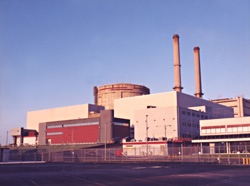
Crystal River Nuclear Generating Plant, Unit 3, 80 miles north of Tampa, FL. (photo: U.S. NRC)

Crystal River is back in the news. Regular readers will recall when last we visited Progress Energy Florida’s (PEF) troubled nuclear reactor it was, shall we say, hooked on crack:

The Crystal River story is long and sordid. The containment building cracked first during its construction in 1976. That crack was in the dome, and was linked to a lack of steel reinforcement. Most nuclear plants use four layers of steel reinforcement; Crystal River used only one. The walls were built as shoddily as the dome.

The latest problems started when Crystal River needed to replace the steam generator inside the containment building. Rather than use an engineering firm like Bechtel or SGT–the companies that had done the previous 34 such replacements in the US–Progress decided it would save a few bucks and do the job itself.

Over the objections of on-site workers, Progress used a different method than the industry standard to cut into the containment building. . . and that’s when this new cracking began. It appears that every attempt since to repair the cracks has only led to new “delamination” (as the industry calls it).

Sara Barczak of CleanEnergy Footprints provides more detail on the last couple of years:

The Crystal River reactor has been plagued with problems ever since PEF self-managed a steam generation replacement project in September 2009. The replacement project was intended to last 3 months, until PEF informed the Commission that it had cracked the containment structure during the detensioning phase of the project. PEF subsequently announced that the CR3 reactor would be repaired and back in service by the 3rd quarter of 2010…then by the 4th quarter of 2010…and then by the first quarter of 2011. On March 15, 2011 PEF informed the Commission that it had cracked the reactor again during the retensioning process and subsequently told the Commission that it estimated repair costs of $1.3 billion and a return to service in 2014. Shortly thereafter, the Humpty Dumpty Crystal River reactor suffered yet another crack on July 26, 2011.

That July crack was later revealed to be 12-feet long and 4-feet wide–and here, at least when it came to notifying the Nuclear Regulatory Commission, “later” means much later. . . like four months later.

The issue, of course–as anyone with a lifetime crack habit will tell you–is that this all gets very expensive. Not only is there the cost of the repairs. . . and the repairs to the repairs. . . and the repairs to the repairs to the repairs. . . there is the cost of replacing the energy that was supposed to be supplied to PEF customers by the crippled reactor.

And then there is the cost of the new reactors. . . .

Wait, what?

Yes, based on the amazing success they have had managing Crystal River–and something called a “determination of need,” which was granted in 2008–Progress Energy holds out hope of someday building two of those trendy new AP1000 nuclear reactors at another Florida site, this one in Levy County.

And who is expected to pick up the tab? Who is on the hook, not just for repairs and replacement energy at Crystal River, but for PEF keeping its options open at Levy? Well, not surprisingly in “privatize profits, socialize risk” America, the plan was to stick Florida ratepayers with the bill (again Footprints provides the numbers):

Customer bills for instance, were expected to increase by $16/mo. in 2016; $26/mo. in 2017 and a whopping $49/mo. in 2020. Initially, Progress expected the proposed reactors to cost $4-6 billion each, coming online beginning in 2016. Just a few years later, the estimated costs have skyrocketed to over $22 billion and the online date, if the reactors ever even come online, has bumped back to 2021 and 2022. And the Office of Public Counsel believes that PEF may not intend to complete the reactors until 2027, if at all. The company has spent over $1 billion dollars on the Levy nuclear reactors and has yet to commit to build them. And the company is entitled to recover all its preconstruction and carrying costs from its customers before even a kilowatt of electricity is produced. In fact, even if the project is never completed PEF can recover all its construction costs from customers courtesy of the 2006 anti-consumer “early cost recovery” state law…essentially a nuclear tax scheme.

But now, as of this week, there is a new plan. . . stick Florida ratepayers with the bill:

The state Public Service Commission on Wednesday unanimously approved an agreement that will increase the power bills of Progress Energy Florida customers — who already pay among the highest rates in the state.

It is supposed to be a win for consumers.

The deal includes a $288 million “refund” of money customers were to pay to replace power from the crippled Crystal River nuclear plant, which has been offline since fall 2009 and might never return to service.

PSC staff concluded that customer rates still would increase. The average Progress customer’s bill on Jan. 1 is expected to increase $4.93 a month per 1,000 kilowatt hours of usage, from $123.19 to $128.12, subject to adjustments for fuel costs.

That’s a “win” for Floridians, it seems, because they are paying out something less for Progress Energy’s mistakes–at least in the near term. But even that caveat is subject to scrutiny:

While the agreement provides a replacement power cost refund over 3 years of $288 million to PEF customers (due to the CR3 outage) – it comes packaged with a base rate increase of $150 million and it precludes the parties from challenging up to $1.9 billion (yes, billion) fuel and replacement power costs from 2009 to 2016.

And that’s not all. Also in the agreement is a requirement that PEF start (yes, that is start) the latest repairs on Crystal River by the end of 2012; if they do not, Progress has to “refund” an additional $100 million to consumers. Missing, however, from the agreement is any new estimate (given the latest revelations, not to mention any post-Fukushima upgrades required) of the cost should PEF actually try to remedy all of Crystal River’s problems–and perhaps even more glaring, questions remain as to who will pay (and how much it will cost) should PEF decide to stop throwing good money after bad and decommission Crystal River reactor 3.

Also missing from the calculation is any determination of what PEF’s insurance will cover–Crystal River’s insurer stopped paying out in early 2011, and they have yet to decide if they will pay anything more. . . at all.

The agreement also fails to put an end to what is now becoming a regular part of the nuclear power finance scam–collecting public money for plants that will never be built. As the Southern Alliance for Clean Energy (SACE, which is affiliated with CleanEnergy Footprints) observed when it opted not to sign on to the Florida rate agreement:

PEF hasn’t committed to actually building the Levy Co. reactors. Having customers pay for the company just to maintain the “option” at a later date to build reactors is unfair to today’s customers – and runs counter to the Commission’s “intent to build” standard. The agreement allows the company to collect another $350 million from customers, presumably for pursuing their Nuclear Regulatory Commission license (without any prudency review) for reactors it hasn’t committed to build? In fact, the agreement contemplates that the company will cancel its engineering and procurement contracts as well, further demonstrating the unlikelihood of project completion.

If something sounds familiar here, it should. Southern Company has been using heaping helpings of Georgia ratepayer money to do all kinds of preliminary work on their Vogtle site, purportedly the future home of two new AP1000 reactors, just granted a combined construction and operating license by the NRC in January.

The big difference so far between Levy and Vogtle has been Southern’s ability to line up some financing for its Georgia construction–thanks to $8.33 billion in federal loan guarantees granted the project by the Obama administration almost two years in advance of the NRC approval.

PEF does not have this kind of guarantee, but that did not stop them from trading on the possibility:

Progress Energy Florida officials said Thursday that President Obama’s plan to offer federal loan guarantees to encourage investment in nuclear power plant construction will be a strong incentive to move forward with the company’s proposed Levy County plant.

The project, however, is facing delays of between 20 to 36 months due to economic and regulatory problems, making the plant’s future uncertain despite the company’s insistence the project isn’t cancelled.

“It (the loan guarantee program) will definitely play a role in that decision (whether to continue with the project). It is one of many, but a very important one,” said Progress Energy spokesman Mike Hughes.

That was in 2010, right after President Obama announced the new Department of Energy loan program–but two years later, PEF has not secured a federal guarantee, and so has not secured any financing. . . and thus has also not committed to ever building the Levy plant. But none of that has stopped Progress from collecting money from Florida consumers just to keep hope alive, as it were. And none of that has apparently stopped any of Florida’s public service commissioners from telling PEF that this practice is just jake with them.

Even with NRC approval and some federally guaranteed money, it is still not a sure bet that the Vogtle AP1000 reactors will ever come on line. PEF’s Levy project has no license and no loan guarantee.

The folks at Progress Energy are not stupid–at least not when it comes to short-term financial gain–they know how very slim their chances are of ever pushing even a single kilowatt out of Levy County, but they also know where the profit is in the nuclear power game. It is not, quite obviously, in the construction of nuclear power plants–rife as that process is with lengthy delays and massive cost overruns–and it is not, some might be surprised to learn, so much in electric generation, given that plants in the US are now suffering “unusual events” that force one or more of them offline pretty much every week. Unusual events cost money–in parts and labor, and in time lost to repairs and inspections–and, as has been demonstrated at Crystal River, there is the cost of replacement energy.

No, the real profits in the nuclear racket come from the ability to collect on services not rendered and a product not delivered, or at least not delivered regularly. Because the system backstops the financing of nuclear facilities while also allowing plant operators to pass both real and anticipated costs onto ratepayers, many American taxpayers are poised to pay twice for nuclear power plants that don’t produce power.

And it would be remiss to close without adding a few more points.

Much has been made of the failure of solar panel manufacturer Solyndra, which also received aid from the federal government in the form of loan guarantees. Solyndra ultimately got $527 million from the government; contrast that with what has been granted to Southern for Vogtle. Or, starker still, look at the entire alternative energy loan program, now projected to cost out at under $3 billion, and then look back to 2010, when Barack Obama pledged $54.5 billion to the DOE loan guarantee program designed to foster investment in nuclear power.

In addition, while the government will actually recoup most of the money lost on Solyndra when the factory and inventory are auctioned off, the “leftovers” from a failed nuclear plant–even the parts that are not contaminated with radioactivity–are much harder (if not impossible) to move.

The focus of this story has been on the costs–because the case of Progress Energy Florida is such a glaring example of how nuclear operators fleece America–but the fact that a company so focused on the bottom line, regardless of its effect on public safety, is still allowed to play with something as dangerous as a damaged nuclear power plant should not be overlooked. Alas, as was exposed last year, nuclear regulators and the nuclear industry seem to agree that safety should be addressed with an eye toward cost. So, while Crystal River is a scary mess, the reactor in question is actually offline right now. The same cannot be said, for example, about Ohio’s Davis-Besse plant, which has cracking problems of its own, but was allowed by the NRC to restart in January–over the vociferous objections of industry watchdogs, engineers, and Rep. Dennis Kucinich (D-OH).

And then there is Palisades, on the shores of Lake Michigan, where numerous events and releases of radioactivity in the last year caused the Nuclear Regulatory Commission to issue a downgrade of the plant’s safety rating–but the NRC did not order the plant to shut down. Palisades is owned by Entergy Nuclear, who was recently cited for “buying reactors cheap, then running them into the ground.” In addition to Palisades, Entergy owns nine other plants–Arkansas Nuclear One, Nebraska’s Cooper Nuclear Station, Fitzpatrick in upstate New York, Grand Gulf in Mississippi, Indian Point, just north of New York City, Pilgrim, outside of Boston, River Bend and Waterford, both in Louisiana, and Vermont Yankee.

The case of Vermont Yankee is especially upsetting. Yankee is a GE boiling water reactor, similar to the model that failed so catastrophically at Fukushima–but the NRC voted to extend its operating license just days after the Tohoku quake. The state of Vermont had a better idea, declaring that the nuclear plant should shut down by March 21, 2012. However, in January, federal district court judge J. Garvan Murtha ruled Entergy could ignore Vermont’s order and continue operating. The state is appealing the ruling, but in the meantime, Yankee continues to operate. . . and continues to leak tritium into the groundwater, and into the Connecticut River.

It is not clear who will be paying for any attempt to clean up the Vermont Yankee leak–though one can guess–nor is it clear what will happen to new nuclear waste produced after March 21, since the Vermont statehouse has forbidden any new waste storage on the site. Indeed, storing used nuclear fuel is a nationwide problem that poses real dangers in the near term, and will likely cost billions of public dollars in the long term.

And that’s the bottom line–the real bottom line–for the industry’s oft-ballyhooed “nuclear renaissance.” Plant operators and captured regulators can try to obscure the safety concerns with diversionary dustups and magical thinking, but economic realities, like facts, are stubborn. Without huge injections of public money, nuclear power simply cannot continue to function–and the public is in no mood for another multi-billion dollar government bailout.

Subsidize This: US Eyes Tariffs on Chinese Solar Panels, But What Gets Protected?

Inside SolarWorld's Oregon manufacturing plant. (photo: OregonDOT)

While trade is often a bone of contention between the United States and China, this week’s visit by Chinese Vice President Xi Jinping threw the spotlight on one subset of that battle that could have far-reaching effects well in excess of the raw dollar amounts at stake.

At issue is a complaint filed by a solar industry trade group, the Coalition for American Solar Manufacturing, or CASM, asking that the US government impose tariffs on Chinese solar panels. CASM wants the duties for what it claims are unfair subsidies by China that make Chinese solar products substantially cheaper than those offered by many US competitors.

Language in President Obama’s State of the Union, along with comments made during Xi’s visit, would seem to indicate that the federal government is set to weigh in on the side of US solar energy companies in this brewing trade war, and so make a stand for domestic green energy manufacturing and good-paying American jobs.

It seems like a political slam-dunk. The president, after all, campaigned in 2008 on the promise of a growing alternative energy sector, and protecting jobs from being off-shored appears to be the perfect play at a time when unemployment is still unacceptably high. But the reality is, to put it in diplomatic speak, more nuanced.

First, that solar trade group, the Coalition for American Solar Manufacturing, claims to represent seven solar manufacturers, but the only company publicly identified as a CASM member is SolarWorld. SolarWorld is actually not a US company, but a German one, though it does employ about 1,000 at its Hillsboro, Oregon factory.

And even that number is nuanced. SolarWorld is considered the largest producer of solar panels in the US, and so it is used as a sort of case study in this trade dispute. Several stories on the topic note that SolarWorld shuttered its Camarillo, California plant, and with it went 100 jobs. The implication is that Chinese pricing caused the California closure, but a quick step through the Google looking glass will reveal that SolarWorld moved all its manufacturing to Oregon after that state offered it millions of dollars in tax breaks.

There is nothing inherently wrong with what Oregon did (unless you are one of the newly unemployed in California), but it should be part of the discussion. Not all jobs lost are part of the international trade war; in a low-growth economy, state governments are increasingly generous with the private sector as they try to secure precious jobs.

And not all “American” solar manufacturers actually do their manufacturing in America. SunPower, a San Jose-based solar company that has said it is “neutral” in this trade row, manufactures most of its solar panels in the Philippines.

Measuring the US solar sector by manufacturing alone is also a faulty yardstick. A majority of domestic solar-sector jobs–52%–are actually in installation. . . and there’s the rub. . . well, a rub. . . potentially, a really big rub.

Oregon’s two Democratic Senators, Ron Wyden and Jeff Merkley, are obviously quick to jump in on the side of a company that provides their state with 1,000 jobs (and solar manufacturing across all companies might provide Oregonians with something like twice that number). US Representatives, like Democrats Jackie Speier, Barbara Lee and Pete Stark, who have solar startups in their California districts, have also called for the federal government to investigate Chinese trade practices.

The Department of Commerce is scheduled to rule on CASM’s complaint by March 5, but if it takes what looks like the politically smoother path and sides with SolarWorld and their invisible friends, the next step would be for the US to impose tariffs on Chinese-made solar components, thus halting the rapid downward trend in prices for solar panels, and quite possibly driving prices up again here in the United States.

And that could actually spell big problems for America’s solar sector. Though it is hard to find an “expert” without some vested interest in some side of this dispute, there seems to be consensus that the recent substantial drops in the price of solar equipment have spurred a vast expansion in the numbers of homes, schools, businesses and government buildings that have installed solar cells to meet some or all of their electric power needs. Those installations, as noted above, mean jobs, and they also mean energy savings–both immediate and sustainable–for both individuals and municipalities. And while there are tax breaks for retrofitting buildings with solar panels, those breaks are mostly available for private buildings (not public schools and municipal buildings, where alternative energy could make a quick and substantial impact), and the savings do not make up for the price difference between Chinese- and American-manufactured products. The tax breaks are also scheduled to expire in 2016.

And there’s a multiplier effect that makes the basic savings seem small in comparison. Every home, hospital or school using solar power is that much demand that is not being placed on the conventional electrical grid. Depending on the region, that means less demand for coal-, gas, or nuclear-powered generation. And that means less demand for disappearing resources and less need to build costly, new power plants. It could also mean lower costs to society in the form of fewer pollution- and radiation-related health problems.

Then there is the obvious metric: Carbon-based power generation is guaranteed to grow more expensive as time marches on; the same has proven true for nuclear power. Solar prices are on a steady downward path, and solar power, if allowed to grow in market share, will continue to grow cheaper and more competitive.

And competition is what this is all supposed to be about, right? CASM has accused China of unfair trade practices that make it impossible for American manufacturers to compete. Proponents of 19th and 20th Century power-generating technologies love to remind advocates of alternative energy that fossil and fissile fuels are just “more competitive.” All things being equal. . . the market will decide. . . if there is a level playing field. . . or so the argument goes.

Fair enough, let’s look at that playing field.

Right now, without trying to estimate any possible solar tariffs, the alternative energy sector does get some help. According to a study from the Environmental Law Institute, renewables received $29 billion in federal subsidies from 2002 to 2008. Remove ethanol form that number, and you are down to $12.2 billion.

But during that same period, fossil fuel production received $72.5 billion in subsidies. That number excludes general energy sector subsidies–and it also excludes nuclear. The amount that nuclear receives is harder to calculate in the aggregate–loan guarantees are just guarantees until there is a default, and the Price-Anderson indemnity act has a value, but quantifiable payouts only come with disasters–but it is believed that for the second half of the 20th Century, nuclear consumed 10 percent of all US subsidies to the energy sector, something well in excess of $100 billion since the industry’s start.

But the numbers for fossil fuel and nuclear power are ridiculously low-ball. Not included there, what the federal government has to spend to clean up a polluted river or an oil spill in the gulf; nor does it include what the US has and will have to spend on behalf of the nuclear industry to transport and store its dangerous radioactive waste for as far forward as anyone can imagine.

Still, a “level playing field” sounds inherently fair, so why should domestic solar manufacturing have to suffer for the sins of legacy energy production?

Indeed. Wouldn’t it be amazingly convenient for gas producers or nuclear power concerns if the downward move in solar panel prices were arrested by a US tariff?

Instead, what if the federal government leveled that playing field by increasing its subsidies to domestic solar production?

Do more subsidies somehow sound too extravagant in these times of supposedly tight budgets? OK, then maybe the gas industry should be made to pick up the tab for trucking in fresh water to communities that have had their natural water supplies poisoned by hydro-fracking. Maybe the oil industry would like to pay to register its offshore rigs in the United States when they are drilling in US waters. Or maybe the nuclear industry should be required to find their financing without federal loan guarantees.

That last point is of special interest here. Take, for example, the two Chinese companies said to be providing the most competition for US solar manufacturers. According to SolarWorld representatives, “Trina Solar received a $4.4 billion loan from the China Development Bank, and Jinko Solar got a $7.6 billion loan from the Bank of China.” As regular readers of this space probably recognize, both of those figures are eclipsed by the $8.3 billion loan guarantee given by the Obama administration to the Southern Company for two recently approved nuclear reactors in Georgia.

So, fair is fair, level that playing field, but level it all over. If the US wants to move to make its solar companies more competitive with Chinese manufacturers, then make other energy sectors have to compete on similar terms. Rather than protect entrenched, disappearing, dangerous and dirty sources with duties that will render the entire solar sector less competitive, grant solar and other promising renewable alternatives the same level of help the US has habitually handed to fossil and fissile fuels. Rather than constrain domestic job growth by making solar power more expensive, pave the way for more good jobs with greater subsidies for both solar manufacturers and consumers. Rather than blow current and future resources on fuels that will only grow more expensive, spend now to expand the contribution of energy that continues to improve its cost-to-kilowatt ratio. Rather than use taxpayer dollars to pay for more pollution, more global warming, more cleanups and more adverse health outcomes, invest in clean, green technologies that not only pay immediate dividends but also have the potential to place America at the forefront of the next economic revolution.

If the Commerce Department does move toward imposing tariffs on Chinese solar manufacturers, the Obama administration and others in the government–as well as parts of the solar industry here–will now doubt call it a move on behalf of American manufacturing and the American worker. But will it be a move on behalf of America? The government might very well need to get involved to further the growth of this renewable energy sector, but if they do, manufacturers, workers and consumers should all insist that the intervention is done in a way that is truly in the public interest.

NRC Vogtle Reactor Approval Should Blow Lid Off Nuclear Finance Scam

Work is well underway on the Vogtle Unit 4 turbine building. The bottom of the Unit 3 containment vessel can be seen in the background. (photo via the Southern Company)

The Nuclear Regulatory Commission’s Thursday vote to approve the combined construction and operating license application (COLA) for Southern Company’s Plant Vogtle cleared the way for adding two AP1000 nuclear reactors to the two existing units near Augusta, Georgia, but it should also shine a light on the elaborate shell game that masquerades as nuclear-powered electrical generation.

Coming almost exactly two years after the Obama administration granted the project $8.33 billion in federal loan guarantees, the NRC’s OK for the project did not signal a groundbreaking at Vogtle. Thanks to a redefinition of what constitutes construction, drafted under a former NRC commissioner who now works for the nuclear industry, Southern started building on the site long before the AP1000 reactor design was finally approved by the NRC last December. And foundations were poured into the Georgia earth before environmental impact surveys were even required to be filed. So, Thursday’s move did not actually start construction, but it did start the roulette wheel turning on a massive financial gamble where Southern Company is pretty much assured of winning, and US taxpayers and Georgia utility customers are guaranteed to lose.

How much those Americans who don’t happen to own a power company will lose is an issue of some question–a question that the Department of Energy and Southern Company is making very hard to answer.

As this month marks two years since the government agreed to the loan guarantees, it will mark almost as long a time since the Southern Alliance for Clean Energy (SACE) filed a Freedom of Information Act (FOIA) request for the details of the deal the DOE struck with Southern Co., and thus it also marks almost two years of stonewalling by the Obama administration and the energy consortium:

To date, DOE has produced heavily censored documents that have provided little or no information in an effort to frustrate any analysis that would be useful to taxpayers. Based on the limited information produced to date, it appears that the power companies had to put almost no “skin in the game,” only promising to pay a token credit subsidy fee of what could be as little as 0.5 or 1.5 percent of the total loan principal.

Perhaps the once-pledged-to-be-the-most-open-in-history-but-now-proving-to-be-just-as-secretive administration thinks it can hide behind the idea that it is only a guarantee, and, at that, a guarantee of a private business plan, but that would be doubly troubling.

The DOE has indeed tried to use the confidential business argument, but Mindy Goldstein, acting director, Turner Environmental Law Clinic at Emory University School of Law, who is representing SACE in its FOIA case, explains just how disturbing that argument is:

DOE claims that the loan guarantee terms and credit subsidy fee estimates are confidential and may only be viewed by Georgia Power and its utility partners. Let’s hope DOE is wrong. For such information to be withheld as confidential, it must have been obtained from the utilities themselves. If the power companies are literally writing their own guarantees and credit subsidy fee estimates, the Loan Guarantee Program is more flawed than anyone could have imagined.

Alas, given the long history of industry representatives “helping” the DOE and NRC draft their regulations, Goldstein’s legal conundrum isn’t hard to imagine as the actual state of affairs.

And neither the government nor the taxpayer should take comfort from the guarantee angle:

Private lenders have declined to finance new reactors because of the enormously high cost of new nuclear power and the substantial risk that any such investment will fail. In 2003, the Congressional Budget Office (CBO) estimated that the chance of a loan for new nuclear reactor construction resulting in default would be “very high – well over 50 percent.”

And for the folks at Vogtle, the risk is likely much higher. The two reactors now at the Georgia site took over 15 years to complete, came in 1,200 percent over budget, and resulted in an enormous rate hike for Georgia power consumers.

The fact that even with taxpayers already shouldering the risk ratepayers are also on the hook is the remarkable second slap in the face that comes with the nuclear power con:

[Southern’s subsidiary and largest utility, Georgia Power] customers already are paying down the [Vogtle] project’s financing costs through a fee that will increase to $8.74 a month by 2015. The fee will end once reactors start producing power in 2016 and 2017.

Well, the fee is supposed to end when the reactors start producing power, which is supposed to be in 2016 and 2017. But no nuclear project comes in on time or on budget–and as was just noted, history is not Vogtle’s friend here–and not only will ratepayers continue to cough up cash while construction drags on, it is certainly not unprecedented to see them continue to get fleeced for overruns after the plants are finished (just ask the good citizens of Florida).

These, of course, are just the costs incurred if everything goes more or less right. And these, of course, are just the costs of building the reactors–it has nothing to do with the fueling, the maintenance, the waste removal and clean up should anything get, you know, “unusual.” But since the taxpayers and ratepayers pretty much built the new reactors for them, those costs should come out of Southern Co/Georgia Power’s profits once they start charging for the actual power, right?

Uh. . . wrong. As George W. Bush was headed out the door, he made sure that the Department of Energy would be liable for all costs from any high-level radioactive waste generated at the new Vogtle units. And, of course, as is true for all facilities in the US, the Price-Anderson Act indemnifies the industry against claims arising nuclear accidents.

And the Nuclear Regulatory Commission’s approval–coming when it does–does nothing to make those accidents less likely. The NRC voted for Vogtle’s COLA over the objections of its chairman, Greg Jaczko, who thought safety rules that should come from the post-Fukushima recommendations should have been stipulated as essential to any new license. And the AP1000’s design, which Toshiba-Westinghouse likes to tout as safer than its close cousin, the pressurized water reactor, is suspected to be anything but.

Meanwhile, trouble at nuclear reactors worldwide continues apace. At Japan’s Fukushima Daiichi, unit two, which was said to have been brought to a “cold shutdown” in December, has experienced what is called a “re-criticality”–in other words, the temperature inside the ruptured containment vessel has begun to rise again, up more than 20 degrees Celsius since February 1. Officials from Japanese power company TEPCO have done a poor job of explaining why this might be happening or what it might mean for the future, but they do admit to the necessity of increasing the amount of water and boric acid pumped into the damaged reactor to counteract the warming. And, since there are holes and cracks in the reactor vessel, that means more radioactive waste water pouring out of the building and into the basements and surrounding plant grounds–more water on top of the 95,000 cubic meters already believed to be there, and on top of the 220,000 cubic meters that TEPCO has claimed they “processed” (and then dumped back into the environment).

And something else quite troubling has been observed in Japan–bird populations in Fukushima prefecture have taken a bigger dip than was expected from studies of similar species around Chernobyl after that nuclear disaster.

Speaking of the former Soviet Union, there was a fire last weekend at the Alikhanov Institute of Theoretical and Experimental Physics in southwestern Moscow. The building contains an atomic collider and is home to Russia’s very first heavy water reactor, built in the 1940s, and now decommissioned. Government officials said there was no danger of a radiation leak, but others, like Greenpeace Russia, beg to differ.

Back in the USA, the San Onofre plant remains completely shutdown after one reactor was found to be leaking tritium on January 31. Meanwhile, the other reactor, offline for refueling and repairs since January 9, was discovered to have alarmingly excessive wear inside its almost new turbine tubes.

And at Prairie Island, a nuclear facility in southeastern Minnesota, Xcel Energy has copped to two separate toxic chemical and radiological spills. One happened last November, but Xcel did not alert residents of the Prairie Island Indian Community–a whopping 600 yards from the power plant–till last week. The second happened just last Friday, February 3, but Xcel waited to give notice till Monday because the leak happened “‘after business hours’ just before the weekend.”

This is but a small sample–less than a week’s worth–of the nuclear world the NRC has now voted to expand. With each of these items should come a list of questions and a cavalcade of caution, but the NRC’s rulings on the AP1000 have defied the facts on the ground. Meanwhile, the entire federal government seems hell-bent on ignoring the fiscal realities, instead choosing to guarantee that money flow from the pockets of taxpayers into the coffers of nuclear energy corporations, whether or not those corporations ever provide a kilowatt of power to those taxpayers.

It is a sad state of affairs–that almost goes without saying–but perhaps sadder is the relative silence around such a multi-layered scandal.

Political activists were rightfully outraged when the Bush administration fought tooth-and-nail to keep the minutes of Vice President Dick Cheney’s energy task force secret. Now, aside from the good people at SACE, who else is working to uncloak an equally secretive–and equally offensive–Obama energy deal?

Some look to leverage a scandal off the failure of Solyndra–but the loan guarantees to Southern Company are over 15 times larger than those made to the small solar manufacturer, and frankly, even today, more risky. (Solyndra may have failed, but its assets can and will be sold, and its plant will be repurposed. Very little of that potential exists for a failed nuclear endeavor.)

Many who are outraged by the bailouts of the banks should see each of these nuclear facilities as a little version of the same “socialize the risk, privatize the profit” model. A nuclear facility might only lose billions of dollars instead of trillions, but as Everett Dirksen observed in a cheaper era, “A billion here, a billion there, pretty soon you’re talking real money.”

And, of course, nuclear failures aren’t just toxic to the economy, they are toxic to the environment, too.

And for those that think this week’s $25 billion settlement with the five big financial institutions guilty of mortgage fraud is somehow a grand amount–just remember that you can’t get two new nuclear power stations for that. . . and after typical delays and cost overruns, $25 billion likely won’t even get you one.

So, take a good look at what is happening in Georgia–even if the Obama administration and the Nuclear Regulatory Commission won’t. . . even if the Obama administration and the NRC don’t want you to. The nuclear industry, its acolytes, its lackeys, its supplicants and subordinates want to make the Vogtle reactors the first of many, the first of an irresistible nuclear renaissance, the start of a hard-charging, government-subsidized pushback–against activists and environmentalists, sure, but in reality, against the truth.

The truth, of course, is that without the lobbyists and the grease they spread, without the captured regulators and the purchased elected officials, the nuclear industry would be relegated to the past, right alongside its antiquated technology. The truth is that nuclear power is not clean, nor safe, nor too cheap to meter–it is dirty, dangerous, and a financial sinkhole of epic proportions. Banks and investment houses know it, ratepayers in Georgia and Florida know it, many of the residents of Japan know it, and even the government of Germany knows it–and now you know it, too. Now is the time to make sure your representatives in government–your president, your members of Congress, your state and local officials–know that you know it. Now is the time to stop this boondoggle and bailout, and then get to the business of safely uncoiling the nuclear serpent’s grip on our leaders and our imaginations. The AP1000 is not a first glimpse of the future, it is the last gasp of the past–and the sooner we stop subsidizing the old ideas, the sooner we can start investing in some new ones.

Nuclear Regulatory Commission Ignores Fukushima, Green-Lights First New Reactors in 34 Years

Current containment buildings and cooling towers at the Vogtle Electric Generating Plant in Burke County, GA. (photo: NRC)

The Nuclear Regulatory Commission has granted a construction and operating license to Southern Co. for two reactors to be added to its Plant Vogtle facility in Georgia. The OK is the first granted by the US regulator since 1978.

The NRC approved the license over the objections of its chairman, Gregory Jaczko, who wanted the license to stipulate that the units would meet new standards recommended by the agency’s Fukushima Near-Term Task Force (NTTF) report:

“I think this license needed something that ensured that the changes as a result of Fukushima would be implemented,” Jaczko said in an interview after the vote. “It’s like when you go to buy a house and the home inspector identifies things that should be fixed. You don’t go to closing before those things are fixed.”

The NTTF recommendations, geared toward improving safety and preventing another disaster like the one still evolving at Japan’s Fukushima Daiichi nuclear power facility, have still not become official government rules–some are projected to take up to five years to draft and implement–and so, for now, the new reactor construction will get to pretend the Tohoku quake and tsunami, and the resulting core meltdowns and widespread radioactive contamination, never happened.

The Vogtle reactors are of a new (or, let’s call it “new-ish”) design. The AP1000 reactor was just approved by the NRC in December, over the objections of numerous scientists and engineers, who saw claims of innovation insufficient to counter the dangers native to any Pressurized Water Reactor (PWR) design. Upon examination, many of the “improvements” to the AP1000 look more like ways to cut construction costs. Even so, a single new AP1000 is expected to cost anywhere from $8 billion to $14 billion dollars–and, it should be noted, no US nuclear facility has ever come in anywhere close to on time or on budget. The US government has already pledged over $8 billion in federal loan guarantees to cover construction of the Georgia reactors, since without the government backstop, no private financial institutions will invest in such a high-cost, high-risk project. Southern Co. has already spent $4 billion preparing the Vogtle site for the anticipated new construction.

I cannot support this licensing as if Fukushima never happened,” said Gregory Jaczko after the Thursday vote–but thanks to the four other commissioners of his captured agency, licensing as if Fukushima never happened is exactly what the NRC did.

San Onofre: One Leaks, the Other Doesn’t… Yet

For those who thought that, with the new year, nuclear power had turned a page and put its “annus horribilis” behind it–as if the calendar were somehow the friend America’s aging reactors–let’s take a quick look at January 2012.

First, a glance across the Pacific, where the month began with the revelation that the Japanese government purposely downplayed their assessments of the Fukushima disaster–hiding the worst projected scenarios from the public from soon after the March earthquake by classifying the documents as personal correspondence–and ended with discovery of yet another large leak of radioactive water from one of the crippled reactors.

Closer to home, the lone reactor at Wolf Creek, Kansas, was shutdown on January 13 after the failure of a main generator breaker was followed by a still-unexplained loss of power to an electrical transformer. Diesel generators kicked in to run the safety systems until external power was restored, but the plant remains offline while a Nuclear Regulatory Commission inspection team tries to figure out what went wrong.

On the morning of January 30, a power failure caused a reactor at Exelon’s Byron Generating Station to scram, which in turn required a wee bit of venting:

[At] Exelon Nuclear’s Byron Unit 2 atomic reactor near Rockford, IL, primary electrical grid power was lost and safety and cooling systems had to run from emergency backup diesel generators when smoke was seen coming from a switchyard transformer. However, when the plant’s fire brigade responded, they could not find the fire. . . .

As revealed by Exelon’s “Event Report,” offsite firefighters were called in, Unit 1 is still at full power, and Unit 2’s cool down “steam [is] leaving via atmospheric relief valves.”

An initial AP report on the incident stated: “The steam contains low levels of tritium, a radioactive form of hydrogen, but federal and plant officials insisted the levels were safe for workers and the public…[NRC] officials also said the release of tritium was expected. . . .

Because, you know, a scram without some steam is like a coffee with out some cream. Or, as noted in the past, these emergency shutdowns are not subtle, quiet events. They are like slamming the breaks on a speeding car, and they cause all kinds of stresses and strains on reactor systems. Even when backup power kicks in, the process can require the venting of steam to relieve pressure in various parts of the reactor (where depends on the type of reactor and the kind of “unusual event”)–and that steam will often contain tritium, which has molecules so small they can pass from the closed loop that runs through the reactor into the secondary loop (in the case of pressurized water reactors) that powers the turbines.

So, lots of places in the system with varying levels of tritium, which, as Beyond Nuclear points out, is in no way “safe”:

[T]he linear no threshold theory, endorsed by the U.S. National Academies of Science for decades, holds that any exposure to radioactivity, no matter how small, still carries a health risk, and such risks are cumulative over a lifetime. It would be more honest for NRC officials to states that the tritium releases from Byron are “acceptably risky,” in their judgment, but not “safe.” After all, tritium is a potent radionuclide, a clinically proven cause of cancer, mutations, and birth defects, and if inhaled, ingested, or absorbed through the skin, can integrate anywhere in the human body, right down to the DNA level.

And to add insult to the dishonestly undersold injury, the NRC says it can’t yet calculate just how much tritium escaped in this event.

But Wolf Creek and Byron were really just steamy warm ups (as it were) for January’s main event–the Grand-Guignol-meets-the-Keystone-Kops tragic-comedy commonly referred to as SONGS, or the San Onofre Nuclear Generating Station.

San Onofre sits on the California coast, about halfway between San Diego and Los Angeles, and has a long, infamous history of construction screw-ups, safety breaches, lax reporting, falsified records and unusual events. Unit 1 was brought online in 1968–and decommissioned 25 years later; Units 2 and 3 started up in the early ’80s, and are still operating today. . . .

Well, uh, about that. . . .

Officials at the San Onofre nuclear power plant shut down one of the facility’s two units Tuesday evening [January 31] after a sensor detected a possible leak in a steam generator tube.

The potential leak was detected about 4:30 p.m., and the unit was completely shut down about an hour later, Southern California Edison said.

The next day, SCE revealed that yes, indeed, it was a leak that caused them to scram Unit 3, and that they were dealing with it by “reducing pressure“. . . which other people might call “venting.” SONGS is also a PWR, and this leak was also in the loop that spins the turbines and not the one that runs through the reactor, but as noted above, that system still contains some radionuclides. Edison does admit to the release of some radiation, though they make the same “no threat/no harm” assertions common to the other unusual events.

Beyond the usual pushback on that “no harm” claim, it should also be noted here that the leak did no occur in the reactor’s sealed containment building, but in an auxiliary building. . . with doors. . . and people that go in and out through those doors. . . so the question is not whether some radiation escaped into the atmosphere, but “how much?”

But that’s not the scary part.

The leak occurred in Unit 3, and so that had to be shut down, but Unit 2 was already down–offline for two months of refueling and repair. However, the accident in Unit 3 prompted quite the revelation about Unit 2:

Unusual wear has been found on hundreds of tubes that carry radioactive water at Southern California’s San Onofre Unit 2 nuclear plant, raising questions about the integrity of equipment the company installed in a multimillion-dollar makeover in 2009.

. . . .

The problems at Unit 2 were discovered during inspections of a steam generator, after the plant 45 miles north of San Diego was taken off-line for maintenance and refueling. The two huge steam generators at Unit 2, each containing 9,700 tubes, were replaced in fall 2009, and a year later in its twin plant, Unit 3, as part of a $670 million overhaul.

According to the Nuclear Regulatory Commission, more than a third of the wall had been worn away in two tubes at Unit 2, which will require them to be plugged and taken out of service. At least 20 percent of the tube wall was worn away in 69 other tubes, and in more than 800, the thinning was at least 10 percent.

This level of wear might be typical to systems in use for several decades–still not comforting, considering the age of America’s nuclear plants–but to see this degradation in virtually new tubes gives one pause. . . especially one Joram Hopenfeld, retired NRC engineer and researcher:

“I’ve never heard of anything like that over so short a period of time,” Hopenfeld said.

“The safety implications could be very, very severe,” Hopenfeld added. “Usually the concern is in older steam generators, when they have cracks all over the place.”

According to the regulatory commission, the tubes have an important safety role because they represent one of the primary barriers with the radioactive side of the plant. If a tube breaks, there is the potential that radioactivity from the system that pumps water through the reactor could escape into the atmosphere.

About two-thirds of US reactors are of similar design to those at SONGS.

That’s the scary part.

It is scary, of course, because it raises questions about the manufacturing, the installation, and the maintenance of the $670 million rehab at San Onofre–but it also should raise concerns about the repairs, refurbishments and retrofits at dozens of other domestic facilities.

And it also provides another object lesson on the real costs of nuclear power. To put it in context, the San Onofre makeover cost $135 million more than the much-maligned federal loan guarantee extended in 2009 to the now-defunct solar panel manufacturer Solyndra Corporation. (And, unlike it could ever be for a nuclear loan guarantee, the federal government will recoup most of the Solyndra money when company assets are sold.)

Atomic energy advocates will argue that while construction costs are high, once built, nuclear plants run pretty much round-the-clock–24/7/365, as they say.

Except, of course, as the events just described or any of the dozens of other incidents documented here over the last year show, they don’t. Right now, SONGS is generating zero power. None. The same can be said for Wolf Creek, and one of the two reactors at Byron. The Palisades plant in Michigan was shut down five times last year. Ohio’s Davis-Besse facility, offline much of 2011 because of major repairs and a series of questions about cracks in the reactor building, was just given the green light to restart by the NRC, despite the objections of many nuclear watchdogs and US Rep. Dennis Kucinich (D-OH).

Reactors at North Anna, VA, Calvert Cliffs, MD, and Fort Calhoun, NE, were all offline for substantial amounts of time in 2011. A swarm of jellyfish took out Florida’s St. Lucie nuclear plant for several days last summer, and Crystal River, also in Florida, has not produced so much as a single kilowatt in almost two-and-a-half years. And it likely won’t produce any more until 2014 at the earliest, assuming Florida ratepayers pony up another $2.5 billion for repairs.

All of which again underscores that nuclear power is not just phenomenally expensive in every phase of its life, it is an expense always born by ratepayers and taxpayers. And that, of course, just refers to the financial costs.

Those tritium leaks will take some toll on the health of residents in regions near Byron and SONGS, though it will debated just how much. Less debatable now–thanks to a French study released, yes, in January–the everyday dangers of having a nuclear facility in your general area:

In a report certain to cause fear and loathing in the global nuclear industry, an eminent French research institute published a study in the International Journal of Cancer, which notes increased rates of leukemia in children living close to French nuclear power plants (NPPs.)

How much greater?

The study by the Institut National de la Sante et de la Recherche Medicale (French Institute of Health and Medical Research, or INSERM) found a leukemia rate twice as high among children under the age of 15 living within a 3.1-mile radius of France’s 19 nuclear power plants.

France, of course, has a universal health plan, so those costs will directly hit their national budget. The US does not embrace a similar level of responsibility for the health of its citizens, but the costs of increased numbers of childhood cancers will ripple through the economy all the same (well, in reality, even more then all the same).

Still feeling nuclear power’s worst year is behind it?

But, wait, there’s more–a sort of microcosmic calamity to put a grace note on nuclear’s macro-farce: A few days before the leak and the revelations about tube decay, an Edison employee at San Onofre fell into a fuel storage pool while trying to retrieve a dropped flashlight. The worker was not injured in the fall, though he did ingest some unspecified amount of radioactive water–but (and you know what’s coming here. . . wait for it. . . wait for it) SCE said the man “did not suffer harmful radiation exposure.”

Welcome to 2012. One mensis horribilis down, 11 to go.

Occupy Innovation

Actress Anne Hathaway marches with demonstrators on the two-month anniversary of Occupy Wall Street. (Photo: Elana Levin)

Two days after thousands of police broke up the around-the-clock occupation of New York’s Zuccotti Park, tens of thousands of demonstrators converged downtown to celebrate the two-month anniversary of Occupy Wall Street and stress that with or without Zuccotti, the protest and its message remained strong and relevant.

One of those in the march, the actress Anne Hathaway, carried a sign that read “Blackboards not Bullets,” and though much attention was predictably paid to the 29-year-old star’s presence, the message she carried that day shouldn’t be ignored.

A month earlier, shortly after a company called Boston Dynamics unveiled a prototype of its “Legged Squad Support System” AlphaDog, a walking robot financed by DARPA, the Defense Advanced Research Projects Agency, Rachel Maddow featured the technological marvel in a segment contrasting current advances in military hardware with what is currently on offer for consumers.

Her featured guest in that segment was US Rep. Rush Holt (D-NJ). Holt had, a month earlier still, gone on record in the midst of Washington’s deficit hysteria arguing that the government should actually spend more on scientific research, writing that the framing of the budget debate set up a false choice between basic science and elementary education.

Nothing demonstrates the effectiveness of the young Occupy movement more than the rapid shift in frames. The “cut, cut, cut” of the manufactured deficit crisis that Holt had to fight against has been largely drowned out by the chant of “banks got bailed out; we got sold out” and the reevaluation of spending priorities that came with nationwide demands for an accountable government acting in the service of the 99 percent.

But, to state the obvious, four months of Occupy has not been enough to really transform the way the federal government prioritizes spending, nor has the movement yet transformed the way the country evaluates real progress.

For instance, with December’s formal end of US military operations in Iraq, and a promised drawdown coming in Afghanistan, as well, has anyone in official Washington (or in the commentariat, for that matter) started talking about what America will do with its “peace dividend?”

In fact, the beneficiaries of profligate wartime spending are marshaling their surrogates to warn that cuts in Pentagon spending will actually subtract valuable research dollars from the economy. Citing large contractors like SAIC, Computer Sciences Corporation, and CACI International, a recent New York Times story tried to make the case that massive military spending in the last decade has been an important catalyst for the economy and for innovation in the broader marketplace. If these companies–all three of which have been involved in major scandals over the last several years–stand for anything, however, it is that the unchecked expansion of the defense budget is a catalyst for shameless corruption. (An observation glaringly absent from the Times piece.)

Indeed, for all the sincere excitement that might spring up around robot dogs, or a stream of other “war dividends” that might find some purpose in the consumer marketplace–from high-resolution cameras to improved prosthetic limbs–the wow factor not only obscures the full cost of the innovation, but distorts the measure of innovation itself.

A marketplace of ideas?

Many conservatives (and neo-liberals) love to argue that the marketplace is the best judge of winners and losers. Competition is the key to innovation, they argue. But in the consumer market, innovation isn’t always about providing a better product. Just as often, “innovation” means exploiting a leverageable point of difference or streamlining the manufacturing process in pursuit of better profit margins.

Was Coke Zero an innovation over Diet Coke? Was Nexium an innovation over Prilosec? Certainly, marketing said “yes,” but the research, at least in the case of the pharmaceuticals, stated otherwise:

It’s expensive to produce an innovative drug. On average, the bill runs to more than $400 million. So drug companies often take a less costly route to create a new product. They chemically rejigger an oldie but goodie, craft a new name, mount a massive advertising campaign and sell the retread as the latest innovative breakthrough.

This strategy has shown great success for turning profits. Nexium, a “me-too” drug for stomach acid, has earned $3.9 billion for its maker, AstraZeneca, since it went on the market in 2001. The U.S. Food and Drug Administration classified three-fourths of the 119 drugs it approved last year as similar to existing ones in chemical makeup or therapeutic value.
….

Nexium illustrates the drug makers’ strategy. Many chemicals come in two versions, each a mirror image of the other: an L-isomer and an R-isomer. (The “L” is for left, the “R” is for right.) Nexium’s predecessor Prilosec is a mixture of both isomers. When Prilosec’s patent expired in 2001, the drug maker was ready with Nexium, which contains only the L-isomer.

Is Nexium better? So far, there’s no convincing evidence that it is. . . .

The study goes on to point out that the money spent on developing and marketing a “me too” drug is money not spent researching truly new treatments.

The energy sector practically turns the notion of marketplace innovation on its head. From underpriced leases for drilling on federal land to underwritten loans for construction of new nuclear reactors, “innovation” has been about finding ways to preserve the status quo.

Take, for example, a so-called “next generation” reactor design, known as the AP1000, certified by the Nuclear Regulatory Commission just before Christmas. Though touted as a “radical” new design, in reality, the new model represents little more than a riff on 50-year-old pressurized water reactors. While manufacturers contend the AP1000 offers improved options for backup reactor cooling in an emergency, the real “innovations” for plant owners are the number of systems and components that do not differ from what has already been licensed and manufactured – shortening the approval process – and the promise that the new model requires fewer components, far less concrete and rebar, and smaller staffs to operate, thus saving on construction and labor costs.

Nothing about the new reactor design has actually impressed “the marketplace” one iota. No bank will indulge the risk – without billions in federal loan guarantees, none of the reactors now approved and fast-tracked for construction and operating licenses would ever come close to getting built. In addition, the federal government is still paying to clean up after mid-20th Century uranium mining, decades of nuclear fuel processing, and numerous radiation leaks of varying size, and will remain saddled with the burden of providing a long-term storage solution for nuclear waste. The Price-Anderson Act also shields the nuclear industry from the full liability of any accident. None of these costly government investments supports innovation – indeed, it could be argued they prevent it.

The military innovation complex

But as costly as it is to backstop the nuclear industry, it pales in comparison to the military model for innovation. Far from being tested in the “marketplace,” military innovations seem to go through a “spaghetti test” – throw multiple options at the wall, and see if any stick. This is a phenomenally expensive model, and can also cost dearly in terms of lives, but it is a system born of the “cost is no object” approach encouraged by the shock of war, and sustained by the Military Industrial Complex and its enablers.

As a result, as Rep. Holt observed, “The military spends a lot more on development than research. More on the ‘D’ than the ‘R.'” Tax dollars spent in this sector contribute little to primary research, the kind that has the potential to radically shift paradigms. Instead, military innovation focuses on incremental improvements, usable in theater as soon as possible.

And the incremental approach is notably desirable for military contractors. There is so much more profit in producing an assortment of tweaked prototypes and modest upgrades than there is in having a few scientists or engineers work on models. A war–and the war frame for thinking about innovation–might get you many relative improvements, but it rarely produces radical inventions.

In addition, Holt points out that military R&D is often less fruitful for the greater economy because much of the research is kept secret.

Military spending is also much more capital intensive than investments in other vital sectors – and a new study from the Political Economy Research Institute (PERI) quantifies just how much more.

The study, titled “The US Employment Effects of Military and Domestic Spending Priorities” (PDF), calculates the number of jobs created by a set amount of military spending, and then contrasts that with what the exact same amount would do when invested in four non-military alternatives: tax cuts for personal consumption, clean energy and efficiency, health care, and public education. The differences are staggering.

PERI found that $1 billion in military spending produced 11,200 jobs, which sounds impressive until it is placed next to the alternatives. Tax cuts, no reputable economist’s favorite way to create jobs, still outpaced military spending – $1 billion in tax cuts would create an estimated 15,100 jobs. But even that looks weak when compared with more direct government investment in crucial alternative sectors. A billion dollars spent on clean energy and improved efficiency would result in 16,800 new jobs. The same amount in the health care sector would mean 17,200 jobs. And $1 billion of government investment in education would create 26,700 jobs – well over twice the jobs created by the same amount spent on the military.

It is often argued that military jobs are better compensated than others – mostly because of the superior health benefits – however, the money spent in the private sector is so much more efficient at job creation that more jobs are created across the spectrum, even in the upper tiers. (Indeed, for jobs in the upper brackets, clean energy investment leaps ahead of health care – though, in every category, education is the leader in dollars-for-jobs effectiveness.)

Such numbers have major and obvious implications at a time when, in Washington, anyway, leaders talk of the need to cut government spending, but paradoxically also warn of the consequences – especially with regard to employment – of cutting the military.

Innovation and its discontents

So, while it is probably human nature – and an admirable part of it – to get excited about an agile and intuitive robot, the rapid improvements in mechanical dog technology raise important questions: What if the US had the same level of commitment to innovation outside the military? What if the government took just a fraction of the money it poured into Iraq and Afghanistan – wars arguably fought to help preserve America’s access to cheap oil – and instead invested it in renewable energy innovations and improvements in energy efficiency? What if some of the $2,200 spent by every resident in the United States on the military in 2010 (to use the most recently available figures) had been repurposed for education? How much lower would the jobless rate be? How many innovations and improvements equal to or better than AlphaDog would now be receiving the oohs and aahs of an amazed public?

Or is it, as Ezra Klein observed in a response to the Times story, that military R&D is “economically inefficient but politically efficient“–that there might be better ways to spend a research dollar, but the one that Beltway thinking can sustain goes through the Pentagon? Not only is that construct what Klein calls “depressing,” it makes several assumptions about the values of extravagant wartime budgets while ignoring the known and numerous downsides. (The Times piece itself includes two professors who posit without any apparent irony that the biggest economic benefit of inflated defense spending is “what it prevents”–presumably, war and other threats to domestic security.) But, worst of all, Klein’s take on realpolitik is myopic and shortsighted.

If the US fought for the post-carbon economy the way it fights for nebulous state-building goals in foreign wars, the future would be brighter, cleaner, safer and cheaper, with more jobs and perhaps – because it would need to secure less of that foreign oil -fewer wars. If the country built new classrooms with the same urgency it built armored vehicles, more American teens could be choosing between colleges instead of choosing between minimum and sub-minimum wage jobs – and fewer would eventually need public assistance. If the government spent more on blackboards and less on bullets, it would create more jobs today and more innovation in the future.

Neither the military nor the marketplace has proven to be the great incubator of innovation that proponents of defense spending and free markets wish to believe. Instead, both facilitate what author Malcolm Gladwell calls “tinkering” – refinements that might improve upon a big invention, rather than the big invention itself. This is not to slight tinkering: Edison’s light bulb and Apple’s iPod represent the kind of tinkering that can markedly affect everyday life. But those were improvements on earlier discoveries, not the world-changing discoveries, themselves (and, as has been demonstrated, not every tinkering innovation is for the benefit of the end-user).

No, if the United States truly wants to “think different” (as Apple’s advertising once implored), it needs to once again embrace the innovations upon which the country was founded: Real representative democracy, transparency, accountability, checks and balances of three co-equal branches of government, no taxation without representation, trial by jury, a wariness of foreign military entanglements, and, as was added soon after Independence, access to free public education as a right. They are ideals remarkably similar to those embraced by the Occupy movement – if not assumed by most Americans to be part of their national identity.

But they are precepts that have been tarnished by the masters of the marketplace and the adherents of the military industrial complex. Perhaps they don’t need re-invention, but it appears some serious re-dedication is in order. If the innovation in public discourse known as Occupy Wall Street can continue to re-frame the crisis, rethink the role of government and reinvigorate the democracy, then maybe America can re-occupy itself.

* * *

(A version of this story previously appeared on Truthout under the headline Occupy Innovation: Neither the Military Nor the Market Does)

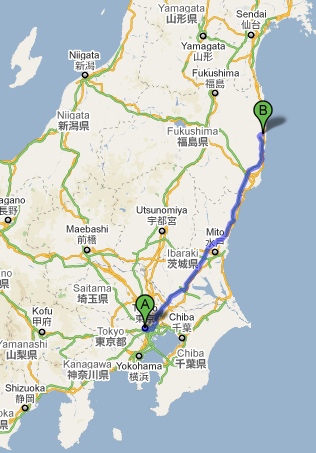
Energy Innovation: Obama’s State of the Union a Frothy Mix of Promise and Prattle

It’s an election year, another presidential campaign is upon us, and since it is going to be so very much upon us every day from now until November, it would be nice to find something about which to get excited.

There is nothing to get excited about on the Republican side of the aisle. The knock-down, drag-out contest between the stupid, the rude, and the just plain offensive may provide the Democrats with the best gift since, oh, you know, the last Republican president, but for the American people, none of the GOP contenders is a prize. It will be truly hellish to have to listen to any one of them for the duration of the campaign.

So, when I turned on the TV last night, I wanted to stand up and cheer. While watching President Obama’s State of the Union address, I felt much like I did when I watched his 2008 acceptance speech at Mile High Stadium in Denver. OK, that’s not true–not hardly. Reality has not been kind to Obama’s rhetoric, after all. But when Obama got to the energy section of the speech, I found much to applaud, not unlike in 2008. . . with some obvious caveats for his praise of dirty, dangerous, failed or flat-out fictional forms of energy production.

During the 2008 campaign, candidate Obama always made a point of touting “clean coal” in his energy policy stump speech. As president, he included this nonsense phrase in both his 2010 and 2011 State of the Union speeches. This year, however, though Obama extolled an “All of the above” energy mix, and then went into some detail about what that “all” should include, there was no reference to coal, “clean” or otherwise (AKA “dirty,” AKA “the way coal actually is”).

The ’08 campaign contained frequent references to nuclear power, too. Obama also would clean those up, often by calling for “safe nuclear.” It was, to my ear, just as imaginary–and just as dishonest–as “clean coal,” and it made me wary of a candidate that I already knew was heavily dependent on nuclear industry contributions to fund his campaign. But last night, “nuclear” only came up three times–twice while talking about Iran, and once more when discussing nuclear proliferation, in general. There was no reference to nuclear power.

Funny that. I guess with 44 domestic coal mine fatalities since Obama took office, and with approximately 20 percent of US coal-fired power plants failing to meet clean air standards, maybe coal doesn’t sound so much like “winning the future.” And after nuclear power’s 2011–with Japan’s Fukushima disaster still metastasizing and dozens of smaller events at aging plants here raising important questions about safety–touting atomic energy is not how you fuel “an America built to last.”

And therein lies the big, flashing yellow caution. For while Obama’s speech did much, again, to sing the praises of investment in clean, green, renewable energy sources, I know that whatever the president allots to alternatives in his next budget (we still do budgets, right? not just hostage-taking, continuing resolution kabuki stand-offs), it will be but a tiny fraction of what he has already given to and will continue to shower upon the fossil and fissile fuel lobbies.

There are several examples of this rhetorical shell game in the State of the Union speech. While Obama did make this admirable call:

We have subsidized oil companies for a century. That’s long enough. It’s time to end the taxpayer giveaways to an industry that’s rarely been more profitable, and double-down on a clean energy industry that’s never been more promising.

It was only moments after the president said:

Over the last three years, we’ve opened millions of new acres for oil and gas exploration, and tonight, I’m directing my Administration to open more than 75 percent of our potential offshore oil and gas resources.

I worry, too, that when Obama says, “I will sign an Executive Order clearing away the red tape that slows down too many construction projects,” that what he means by “red tape” is what many call “environmental protections.” Or “workplace safety rules.” Or “worker rights.” Just as I worry that when I hear, “I’m directing my Administration to allow the development of clean energy on enough public land to power three million homes,” it is opening a door to more private development on public lands.

Is this cynical? Perhaps, but it is hard not to be when you hear the president claim, as he did last night, “I will not back down from making sure an oil company can contain the kind of oil spill we saw in the Gulf two years ago,” when just a day earlier it was revealed that the Obama administration actively worked to downplay the size of the BP spill.

And so what is the public to make of Obama’s section on natural gas?

We have a supply of natural gas that can last America nearly one hundred years, and my Administration will take every possible action to safely develop this energy. Experts believe this will support more than 600,000 jobs by the end of the decade. And I’m requiring all companies that drill for gas on public lands to disclose the chemicals they use. America will develop this resource without putting the health and safety of our citizens at risk.

So many questions. First off, it is important to note that Obama is talking about fracking without ever using the word. That’s what it means when the president says he will require drillers to disclose the chemicals they use–these are the chemicals that make the “hydro” in hydrofracking heavy enough to do its job. And these are the chemicals that have likely poisoned some aquifers and promise to befoul even more.

But the poisonous and all-too-secret chemical composition of the injection liquid is only one of many problems with fracked natural gas. There is mounting evidence that fracking is responsible for increased seismic activity in the US and abroad. And, of course, there is the $64 question of whether we should be investing in and smoothing the way for a finite resource that will contribute to CO2 emissions at a time when the world is fast approaching irreversible climate change.

But push that aside, and the president’s fulsome gas promises are still mostly hot air. That name-your-chemicals rule? It only applies to drilling on public lands. And the president doesn’t say if it will apply to projects already approved, or just future leases. And those 600,000 jobs? I need the administration to show its work, for that number sound suspiciously like the trumped up job figures floated in the push for the Keystone XL pipeline–where it turned out that every year of a job counted as a separate job, and that many positions were low wage or instantly redundant.

With so much so easily picked apart, it is hard not to hear “America will develop this resource without putting the health and safety of our citizens at risk,” as the 2012 edition of “I promise this won’t hurt a bit,” or “the check is in the mail”. . . or “clean coal.”

But, as I said, I want to stand up and cheer, and so let me close by cheering this:

Innovation also demands basic research. Today, the discoveries taking place in our federally-financed labs and universities could lead to new treatments that kill cancer cells but leave healthy ones untouched. New lightweight vests for cops and soldiers that can stop any bullet. Don’t gut these investments in our budget. Don’t let other countries win the race for the future. Support the same kind of research and innovation that led to the computer chip and the Internet; to new American jobs and new American industries.

Nowhere is the promise of innovation greater than in American-made energy.

. . . .

Take the money we’re no longer spending at war, use half of it to pay down our debt, and use the rest to do some nation-building right here at home.

Yes, I will admit, that internal ellipsis mark covers many, many paragraphs, but though the execution laid out within is mixed, the overarching sentiment should be one of the clarion calls of this election year. As I recently explained at some length, real innovation is essential to America’s future, and basic research is essential to real innovation. And government money spent on basic research provides much more bang for the buck than money spent on propping up out-dated energy sources and the military industrial complex.

Obama doesn’t say “peace dividend,” but that is what he is talking about. It is a dividend that could grow if the president follows through with his drawdown of forces in Afghanistan, and it is time to start building into the discussion the idea that this money will be repurposed to spur innovation, rebuild our infrastructure and invest in education. This is a wealthy nation, and the US should spend its wealth on programs and projects that benefit the vast majority of its people–say, 99 percent of them–and not just use the current lull in foreign incursions to fund more tax cuts for the richest one percent.

For reinforcing that frame, and for at least sowing the seeds of a re-prioritized economy, I applaud the president. Now it is up to him to play on the pitch he has planted. Given the scores of disappointments that have trailed after so many of Obama’s lofty speeches in the past, I am wary that this is little more than another field of dreams–but guess what, with alternative energy, education investment, and a modernized infrastructure, if you build it, “an America built to last” will quite possibly come.

Too hopey-changey? Well, at least he’s stopped shilling for “clean coal.”

Aftershocking: Frontline’s Fukushima Doc a Lazy Apologia for the Nuclear Industry

There is much to say about this week’s Frontline documentary, “Nuclear Aftershocks,” and some of it would even be good. For the casual follower of nuclear news in the ten months since an earthquake and tsunami triggered the massive and ongoing disaster at Japan’s Fukushima Daiichi nuclear power station, it is illuminating to see the wreckage that once was a trio of active nuclear reactors, and the devastation and desolation that has replaced town after town inside the 20-kilometer evacuation zone. And it is eye-opening to experience at ground level the inadequacy of the Indian Point nuclear plant evacuation plan. It is also helpful to learn that citizens in Japan and Germany have seen enough and are demanding their countries phase out nuclear energy.

But if you are only a casual observer of this particular segment of the news, then the Frontline broadcast also left you with a mountain of misinformation and big bowl-full of unquestioned bias.

Take, for example, Frontline correspondent Miles O’Brien’s cavalier treatment of the potential increase in Japanese cancer deaths, courtesy of the former property of the Tokyo Electric Power Company (TEPCO):

MILES O’BRIEN: When Japanese authorities set radiation levels for evacuation, they were conservative, 20 millisieverts per year. That’s the equivalent of two or three abdominal CAT scans in the same period. I asked Dr. Gen Suzuki about this.

[on camera] So at 20 millisieverts over the course of a long period of time, what is the increased cancer risk?

GEN SUZUKI, Radiation specialist, Nuclear Safety Comm.: Yeah, it’s 0.2— 0.2 percent increase in lifetime.

MILES O’BRIEN: [on camera] 0.2 percent over the course of a lifetime?

GEN SUZUKI: Yeah.

MILES O’BRIEN: So your normal risk of cancer in Japan is?

GEN SUZUKI: Is 30 percent.

MILES O’BRIEN: So what is the increased cancer rate?

GEN SUZUKI: 30.2 percent, so the increment is quite small.

MILES O’BRIEN: And yet the fear is quite high.

GEN SUZUKI: Yes, that’s true.

MILES O’BRIEN: [voice-over] People are even concerned here, in Fukushima City, outside the evacuation zone, where radiation contamination is officially below any danger level.

There was no countervailing opinion offered after this segment–which is kind of disgraceful because there is a myriad of informed, countervailing opinions out there.

Is 20 millisieverts (mSv) a year a conservative limit on exposure? Well, the Nuclear Regulatory Commission says the average annual dose for those living in the United States is 6.2 mSv, half of which is background, with the other half expected to come from diagnostic medical procedures. And according to the International Atomic Energy Agency (IAEA), the maximum additional dose for an adult before it is considered an “unacceptable risk” is one millisievert per year.

Then, to assess the cancer risk, O’Brien, practically in the same breath, changes exposure over a single year to “over the course of a long period of time”–an inexcusable muddying of the facts. One year for those who must live out their lives in northern Japan might wind up seeming like a long period of time, but it would actually be a small fraction of their lifetimes, and so would present them with only a fraction of their exposure.

So, is Dr. Gen Suzuki assessing the increased cancer risk for 20 mSv over a lifetime, a long time, or just one year? It is hard to say for sure, though, based on his estimates, it seems more like he is using a much longer timeframe than a single year. But even if his estimate really is the total expected increase in cancer deaths from the Fukushima disaster, what is he talking about? Miles O’Brien seems almost incredulous that anyone would be showing concern over a .2 percent increase, but in Japan, a .2 percent increase in cancer deaths means 2,000 more deaths. How many modern nations would find any disaster–natural or manmade–that resulted in 2,000 deaths to be negligible? For that matter, how many of the reporters, producers or crew of Frontline would feel good about rolling the dice and moving their family into an area that expects 2,000 additional fatalities?

Further, the exchange doesn’t say anything about the person who is supposed to casually endure the equivalent of three abdominal CAT scans a year (something no respectable professional would recommend without some very serious cause). The effects of radiation exposure on children are quite a bit different from the effects of the same exposure on adults–and quite a bit more troubling. And young girls are more at risk than young boys. Though the Frontline episode features many pictures of children–for instance, playing little league baseball–it never mentions their higher risks.

Also missing here, any mention that in a country now blanketed north to south in varying levels of radioactive fallout, radiation exposure is not purely external. The estimates discussed above are based on an increase in background radiation, but radioactive isotopes are inhaled with fallout-laden dust and dirt, and consumed with food from contaminated farmlands and fisheries. Outcomes will depend on the isotopes and who consumes them–radioactive Iodine concentrates in the Thyroid and has a half life of a couple of weeks; Cesium 137 tends to gravitate toward muscle and has a half-life of about 30 years. Strontium 90, which concentrates in bones, lasts almost as long. The affect of all of this needs to be factored in to any estimates of post-Fukushima morbidity.

So, as one might imagine, Dr. Suzuki’s cancer estimate, be it from his own deliberate downplay or O’Brien’s sloppy framing, is widely disputed. In fact, a quick survey of the literature might call the estimate in Frontline an absurdly low outlier.

By way of example, take findings compiled by Fairwinds Associates, an engineering and environmental consulting firm often critical of the nuclear industry. Using data from the National Academy of Science’s report on the Biological Effects of Ionizing Radiation (BEIR), Fairwinds explains that one in every 100 girls will develop cancer for every year they are exposed to that “conservative” 20 mSv of radiation. But Fairwinds believes the BEIR also underestimates the risk. Fairwinds introduces additional analysis to show that “at least one out of every 20 young girls (5%) living in an area where the radiological exposure is 20 millisieverts for five years will develop cancer in their lifetime.”

It should be noted here that five years of 20 mSv per year would equal 100 mSv lifetime exposure–the newly revised lifetime maximum set by Japan after the start of the Fukushima nuclear disaster. And some cities in northern Japan, uncomfortable with this blanket prescription, have set limits for children at one millisievert per year.

None of this information was hard to find, and all of it stems from data provided by large, respected institutions, yet, for some reason, O’Brien and Frontline felt content to let their single source set a tone of “no big deal.” Worried Japanese residents featured just after the interview with Dr. Suzuki are portrayed as broadly irrational, if not borderline hysterical.

The dismissive tenor of the medical segment carries over to several other parts of “Nuclear Aftershocks.” Take Frontline’s assessment of the German reaction to the meltdowns at Fukushima Daiichi. Chancellor Angela Merkel’s government has pledged to entirely phase out their reliance on nuclear power within the next decade. O’Brien call this decision “rash” and “hasty,” and he doesn’t qualify those adjectives as the viewpoint of one expert or another; instead, he uses them matter-of-factly, as if everyone knows that Germany is a nation of jittery, irresponsible children. The political reality–that the German government is actually pursuing a policy that is the will of the people–is treated as some sort of abomination.

Japanese anti-nuclear protestors get similar treatment from Frontline. That large demonstrations like those seen over the last ten months are a rare and special occurrence in Japan is not considered. Instead, the documentary, time and again, hints at a shadowy doomsday somewhere in the near future, a sort of end-of-civilization scenario caused by an almost instant cessation of nuclear power generation. Indeed, as the program ends, O’Brien declares that every nuclear plant in Japan will be shut down by May–and as he says this, the camera peers out the window of a slow-moving elevated train. The view is a darkened Japanese city, and as O’Brien finishes his monologue, the train grinds to a halt.

Ooh, skeddy. Was this Frontline, or Monster Chiller Horror Theater?

Yes, the end seemed that absurd. “Nuclear Aftershocks” paints a picture many members of both the nuclear and fossil fuels lobbies would love to have you believe: a sort of zero-sum, vaguely binary, cake-or-death world where every possible future holds only the oldest, dirtiest and most dangerous options for electrical power generation. You get coal, you get gas, or you get nuclear–make up your mind!

But the show, like the handmaidens of those out-dated technologies, perverts the argument by glossing over the present and omitting choices for the future. As much as many concerned citizens would like to see nuclear power disappear overnight, it will not. Germany is giving itself a decade, the US is looking to run its aging reactors for another twenty years, and even Japan, dream though they might, will likely not decommission every reactor in the next four months. There is a window–big or small depending on your point of view–but a decided period of time to shift energy priorities.

Even the nuclear advocates who appear on Frontline call nuclear power “a bridge”–but if their lobby and their fossil fuel-loving brethren have their way, it will likely be a bridge to nowhere.

“Nuclear Aftershocks” does mention Germany’s increased investment in a wind- and solar-powered future, but the show calls that shift “a bold bet” and “a risk.”

Likely the producers will argue they did not have time for a deeper exploration, but by allowing fissile and fossil fuel advocates to argue that renewables cannot meet “base load” requirements, while failing to discuss recent leaps forward in solar and wind technology, or how well Japan’s wind turbines weathered the Tohoku quake and tsunami–or, for that matter, how much Japanese citizens have been able to reduce their electrical consumption since then through basic conservation–Frontline’s creators are guilty of flat-earth-inspired editing.

Indeed, missing from almost every discussion of the future of power generation is how much we could slow the growth in demand through what is called efficiencies–conservation, passive design, changes in construction techniques, and the replacement and upgrading of an aging electric infrastructure. The Frontline documentary highlights some of the potential risks of an accident at New York’s Indian Point nuclear generating station, but it contrasts that concern with nearby New York City’s unquenchable thirst for electricity. Missing entirely from the discussion: that New York could make up for all of Indian Point’s actual output by conserving a modest amount and replacing the transmission lines that bring hydroelectric power from the north with newer, more efficient cable.

No single solution is a panacea for every region of the globe, but many alternatives need to be on the table, and they certainly ought to be in any discussion about the “aftershocks” of nuclear’s annus horribilis. It should be seen as impossible to evaluate nuclear energy without considering the alternatives–and not just the CO2-creating, hydrofracking alternatives that are the standby bugbear of those infatuated with atomic power. Coal, gas, and nuclear are our links to the past; renewables and increased efficiency are our real bridge to the future. Just as it is dishonest to evaluate the cost of any of the old-school energy technologies without also considering environmental impact and enormous government subsidies–and now, too, the costs of relocating hundreds of thousands or millions of people and treating untold numbers of future health problems–it is also misleading to treat energy funds as permanently allocated to entrenched fuels.

The billions pledged to the nuclear industry by the Obama administration dwarf the budgets and tax incentives for conservation, alternative fuels, and green technology innovation combined. Factor in the government-shouldered costs of cleanup and waste storage, not to mention the sweetheart deals granted to the hydrocarbon crowd, and you could put together a program for next-generation generation that would make the Manhattan Project look like an Our Gang play (“My dad has an old barn!” “My mom can sew curtains!”).

It is a grave disappointment that Frontline couldn’t take the same broad view. The producers will no doubt argue that they could only say so much in 50 minutes, but like Japan, Germany, and the United States, they had choices. For the governments of these industrialized nations, the choices involve their energy futures and the safety of their citizens; for the Frontline crew, their choices can either help or hinder those citizens when they need to make informed choices of their own. For all concerned, the time to make those choices is now.

It is a shame that “Nuclear Aftershocks” instead used its time to run interference for a dirty, dangerous and costly industry.

Too Cheap to Meter, Too Expensive to Compete

“Clean, safe, and too cheap to meter.” This sunny tagline from the early days of atomic energy has more recently become the quickest way to sum up how dark and dismal its prospects are today–as in, nuclear power has proven itself to be unclean, unsafe, and prohibitively expensive. “Clean, safe and too cheap to meter” now sounds less like boastful marketing, and more like a schoolyard taunt.

The numbers of ways nuclear power plants have betrayed their Madison Avenue mantra has pretty much been the backbeat of this column for nearly ten months now, and 2012 keeps up the cadence.

Exelon Corporation, the nation’s largest owner of nuclear facilities, has already hit a sour note. . . or two.

First, Exelon and Constellation Energy, another major nuclear operator that Exelon agreed to buy last April, have just seen Citigroup downgrade their stock from “buy” to “neutral.” The reason this time, it seems, is not due to the shaky future of nuclear holdings, but instead due to the falling price of natural gas. Gas prices have hit a two-year low thanks to the glut of gas from a nation gone frack-happy.

But why should a Citigroup not worry about the value of nuclear stocks when current problems have required costly shutdowns and repairs, and future improvements that might (might) be required post-Fukushima will necessitate more capital outflow? One need look no further than the same Exelon portfolio, as reflected in a separate story out just one week later:

The U.S. Nuclear Regulatory Commission wants Exelon Corporation to detail its plan regarding a decommissioning fund shortfall for the Limerick Unit 1 nuclear power plant in Pottstown.

“Once we receive the (request for additional information) response, we will make a determination regarding reasonable assurance of adequate decommissioning funding for the plant,” said Neil Sheehan, NRC Public Affairs, via email on Wednesday.

Sheehan said Exelon planned to request rate relief from the Pennsylvania Public Utilities Commission later this year to address the deficit.

“The relief, if approved, would take effect at the beginning of 2013,” Sheehan said.

In other words, a nuclear facility isn’t only ridiculously expensive while it is up and running, generating some power–and so, in theory, some revenue–a nuclear plant is a massive liability for years (decades, really) after it is shut down.

Decommissioning a plant is a process that the Nuclear Regulatory Commission requires operators to finish within 60 years. Yes, it can take that long to safely dismantle a facility, store its moderately radioactive parts and entomb its massively radioactive reactor shell. The cost, as estimated by the NRC itself, is “$300 million or more.”

Indeed, the emphasis should be on “more.” The NRC’s lowball figure not only assumes everything goes smoothly and there are no nasty discoveries, like, say, radioactive contamination of surrounding ground or water, it assumes a constant dollar value over the life (death?) of the decommission. Take note, for instance, that the fund for the decommissioning of one Limerick reactor is at present required to be over $628 million.

But again, why would that not more seriously affect the rating of a company like Exelon, with its vast stable of aged, faulty reactors? Because Exelon, as is the case for all its nuclear brethren, doesn’t expect to have shoulder the costs by themselves–if at all.

Feeling a little light in the decommissioning fund? Do not fear! As pointed out in the story above, Exelon expects rate relief. In other words, Pennsylvania power consumers will pick up the tab in the form of increased electric bills.

Worried the rate hike won’t quite cover it? No problem! As the NRC hints at here and has proven elsewhere, when push comes to dangerous, radioactive shove, the federal government will cover any shortfalls. After all, the alternative–a halfway or half-assed shutdown–is not an acceptable policy option.

Concerned that even with a rate hike and a government bailout something still might go wrong, resulting in pricey lawsuits? Hush, now! Thanks to the Price-Anderson Act, the liability of the nuclear plant operator is remarkably limited.

This is all part-and-parcel of the standard obfuscation procedure and pass-the-buck accounting that allows the nuclear industry to pretend to compete in the energy marketplace. Exelon executives no doubt love to praise the free market, but they are possibly the only ones that get away for anything close to free. Their taxes are discounted, their infrastructure is subsidized, their loans are guaranteed, and their accidents are indemnified, all by state and federal governments, which means all by taxpayers–taxpayers already paying up front for higher energy bills.

Lest this story be misinterpreted, the answer is not, of course, to permit more fracking to continue to drive down the price of natural gas–that option is as rife with dangers as it is ridiculously shortsighted. No, the answer is to take into account all of the money that really goes into nuclear power generation when costing out energy options. Take just a fraction of what the US government expends to backstop atomic energy and invest it instead in improved efficiency, conservation programs, and truly renewable alternatives, and then see what power source can really claim the mantle of clean, safe, and too cheap to meter.