Nuclear “Renaissance” Meets Economic Reality, But Who Gets the Bill?

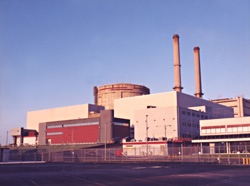
Crystal River Nuclear Generating Plant, Unit 3, 80 miles north of Tampa, FL. (photo: U.S. NRC)

Crystal River is back in the news. Regular readers will recall when last we visited Progress Energy Florida’s (PEF) troubled nuclear reactor it was, shall we say, hooked on crack:

The Crystal River story is long and sordid. The containment building cracked first during its construction in 1976. That crack was in the dome, and was linked to a lack of steel reinforcement. Most nuclear plants use four layers of steel reinforcement; Crystal River used only one. The walls were built as shoddily as the dome.

The latest problems started when Crystal River needed to replace the steam generator inside the containment building. Rather than use an engineering firm like Bechtel or SGT–the companies that had done the previous 34 such replacements in the US–Progress decided it would save a few bucks and do the job itself.

Over the objections of on-site workers, Progress used a different method than the industry standard to cut into the containment building. . . and that’s when this new cracking began. It appears that every attempt since to repair the cracks has only led to new “delamination” (as the industry calls it).

Sara Barczak of CleanEnergy Footprints provides more detail on the last couple of years:

The Crystal River reactor has been plagued with problems ever since PEF self-managed a steam generation replacement project in September 2009. The replacement project was intended to last 3 months, until PEF informed the Commission that it had cracked the containment structure during the detensioning phase of the project. PEF subsequently announced that the CR3 reactor would be repaired and back in service by the 3rd quarter of 2010…then by the 4th quarter of 2010…and then by the first quarter of 2011. On March 15, 2011 PEF informed the Commission that it had cracked the reactor again during the retensioning process and subsequently told the Commission that it estimated repair costs of $1.3 billion and a return to service in 2014. Shortly thereafter, the Humpty Dumpty Crystal River reactor suffered yet another crack on July 26, 2011.

That July crack was later revealed to be 12-feet long and 4-feet wide–and here, at least when it came to notifying the Nuclear Regulatory Commission, “later” means much later. . . like four months later.

The issue, of course–as anyone with a lifetime crack habit will tell you–is that this all gets very expensive. Not only is there the cost of the repairs. . . and the repairs to the repairs. . . and the repairs to the repairs to the repairs. . . there is the cost of replacing the energy that was supposed to be supplied to PEF customers by the crippled reactor.

And then there is the cost of the new reactors. . . .

Wait, what?

Yes, based on the amazing success they have had managing Crystal River–and something called a “determination of need,” which was granted in 2008–Progress Energy holds out hope of someday building two of those trendy new AP1000 nuclear reactors at another Florida site, this one in Levy County.

And who is expected to pick up the tab? Who is on the hook, not just for repairs and replacement energy at Crystal River, but for PEF keeping its options open at Levy? Well, not surprisingly in “privatize profits, socialize risk” America, the plan was to stick Florida ratepayers with the bill (again Footprints provides the numbers):

Customer bills for instance, were expected to increase by $16/mo. in 2016; $26/mo. in 2017 and a whopping $49/mo. in 2020. Initially, Progress expected the proposed reactors to cost $4-6 billion each, coming online beginning in 2016. Just a few years later, the estimated costs have skyrocketed to over $22 billion and the online date, if the reactors ever even come online, has bumped back to 2021 and 2022. And the Office of Public Counsel believes that PEF may not intend to complete the reactors until 2027, if at all. The company has spent over $1 billion dollars on the Levy nuclear reactors and has yet to commit to build them. And the company is entitled to recover all its preconstruction and carrying costs from its customers before even a kilowatt of electricity is produced. In fact, even if the project is never completed PEF can recover all its construction costs from customers courtesy of the 2006 anti-consumer “early cost recovery” state law…essentially a nuclear tax scheme.

But now, as of this week, there is a new plan. . . stick Florida ratepayers with the bill:

The state Public Service Commission on Wednesday unanimously approved an agreement that will increase the power bills of Progress Energy Florida customers — who already pay among the highest rates in the state.

It is supposed to be a win for consumers.

The deal includes a $288 million “refund” of money customers were to pay to replace power from the crippled Crystal River nuclear plant, which has been offline since fall 2009 and might never return to service.

PSC staff concluded that customer rates still would increase. The average Progress customer’s bill on Jan. 1 is expected to increase $4.93 a month per 1,000 kilowatt hours of usage, from $123.19 to $128.12, subject to adjustments for fuel costs.

That’s a “win” for Floridians, it seems, because they are paying out something less for Progress Energy’s mistakes–at least in the near term. But even that caveat is subject to scrutiny:

While the agreement provides a replacement power cost refund over 3 years of $288 million to PEF customers (due to the CR3 outage) – it comes packaged with a base rate increase of $150 million and it precludes the parties from challenging up to $1.9 billion (yes, billion) fuel and replacement power costs from 2009 to 2016.

And that’s not all. Also in the agreement is a requirement that PEF start (yes, that is start) the latest repairs on Crystal River by the end of 2012; if they do not, Progress has to “refund” an additional $100 million to consumers. Missing, however, from the agreement is any new estimate (given the latest revelations, not to mention any post-Fukushima upgrades required) of the cost should PEF actually try to remedy all of Crystal River’s problems–and perhaps even more glaring, questions remain as to who will pay (and how much it will cost) should PEF decide to stop throwing good money after bad and decommission Crystal River reactor 3.

Also missing from the calculation is any determination of what PEF’s insurance will cover–Crystal River’s insurer stopped paying out in early 2011, and they have yet to decide if they will pay anything more. . . at all.

The agreement also fails to put an end to what is now becoming a regular part of the nuclear power finance scam–collecting public money for plants that will never be built. As the Southern Alliance for Clean Energy (SACE, which is affiliated with CleanEnergy Footprints) observed when it opted not to sign on to the Florida rate agreement:

PEF hasn’t committed to actually building the Levy Co. reactors. Having customers pay for the company just to maintain the “option” at a later date to build reactors is unfair to today’s customers – and runs counter to the Commission’s “intent to build” standard. The agreement allows the company to collect another $350 million from customers, presumably for pursuing their Nuclear Regulatory Commission license (without any prudency review) for reactors it hasn’t committed to build? In fact, the agreement contemplates that the company will cancel its engineering and procurement contracts as well, further demonstrating the unlikelihood of project completion.

If something sounds familiar here, it should. Southern Company has been using heaping helpings of Georgia ratepayer money to do all kinds of preliminary work on their Vogtle site, purportedly the future home of two new AP1000 reactors, just granted a combined construction and operating license by the NRC in January.

The big difference so far between Levy and Vogtle has been Southern’s ability to line up some financing for its Georgia construction–thanks to $8.33 billion in federal loan guarantees granted the project by the Obama administration almost two years in advance of the NRC approval.

PEF does not have this kind of guarantee, but that did not stop them from trading on the possibility:

Progress Energy Florida officials said Thursday that President Obama’s plan to offer federal loan guarantees to encourage investment in nuclear power plant construction will be a strong incentive to move forward with the company’s proposed Levy County plant.

The project, however, is facing delays of between 20 to 36 months due to economic and regulatory problems, making the plant’s future uncertain despite the company’s insistence the project isn’t cancelled.

“It (the loan guarantee program) will definitely play a role in that decision (whether to continue with the project). It is one of many, but a very important one,” said Progress Energy spokesman Mike Hughes.

That was in 2010, right after President Obama announced the new Department of Energy loan program–but two years later, PEF has not secured a federal guarantee, and so has not secured any financing. . . and thus has also not committed to ever building the Levy plant. But none of that has stopped Progress from collecting money from Florida consumers just to keep hope alive, as it were. And none of that has apparently stopped any of Florida’s public service commissioners from telling PEF that this practice is just jake with them.

Even with NRC approval and some federally guaranteed money, it is still not a sure bet that the Vogtle AP1000 reactors will ever come on line. PEF’s Levy project has no license and no loan guarantee.

The folks at Progress Energy are not stupid–at least not when it comes to short-term financial gain–they know how very slim their chances are of ever pushing even a single kilowatt out of Levy County, but they also know where the profit is in the nuclear power game. It is not, quite obviously, in the construction of nuclear power plants–rife as that process is with lengthy delays and massive cost overruns–and it is not, some might be surprised to learn, so much in electric generation, given that plants in the US are now suffering “unusual events” that force one or more of them offline pretty much every week. Unusual events cost money–in parts and labor, and in time lost to repairs and inspections–and, as has been demonstrated at Crystal River, there is the cost of replacement energy.

No, the real profits in the nuclear racket come from the ability to collect on services not rendered and a product not delivered, or at least not delivered regularly. Because the system backstops the financing of nuclear facilities while also allowing plant operators to pass both real and anticipated costs onto ratepayers, many American taxpayers are poised to pay twice for nuclear power plants that don’t produce power.

And it would be remiss to close without adding a few more points.

Much has been made of the failure of solar panel manufacturer Solyndra, which also received aid from the federal government in the form of loan guarantees. Solyndra ultimately got $527 million from the government; contrast that with what has been granted to Southern for Vogtle. Or, starker still, look at the entire alternative energy loan program, now projected to cost out at under $3 billion, and then look back to 2010, when Barack Obama pledged $54.5 billion to the DOE loan guarantee program designed to foster investment in nuclear power.

In addition, while the government will actually recoup most of the money lost on Solyndra when the factory and inventory are auctioned off, the “leftovers” from a failed nuclear plant–even the parts that are not contaminated with radioactivity–are much harder (if not impossible) to move.

The focus of this story has been on the costs–because the case of Progress Energy Florida is such a glaring example of how nuclear operators fleece America–but the fact that a company so focused on the bottom line, regardless of its effect on public safety, is still allowed to play with something as dangerous as a damaged nuclear power plant should not be overlooked. Alas, as was exposed last year, nuclear regulators and the nuclear industry seem to agree that safety should be addressed with an eye toward cost. So, while Crystal River is a scary mess, the reactor in question is actually offline right now. The same cannot be said, for example, about Ohio’s Davis-Besse plant, which has cracking problems of its own, but was allowed by the NRC to restart in January–over the vociferous objections of industry watchdogs, engineers, and Rep. Dennis Kucinich (D-OH).

And then there is Palisades, on the shores of Lake Michigan, where numerous events and releases of radioactivity in the last year caused the Nuclear Regulatory Commission to issue a downgrade of the plant’s safety rating–but the NRC did not order the plant to shut down. Palisades is owned by Entergy Nuclear, who was recently cited for “buying reactors cheap, then running them into the ground.” In addition to Palisades, Entergy owns nine other plants–Arkansas Nuclear One, Nebraska’s Cooper Nuclear Station, Fitzpatrick in upstate New York, Grand Gulf in Mississippi, Indian Point, just north of New York City, Pilgrim, outside of Boston, River Bend and Waterford, both in Louisiana, and Vermont Yankee.

The case of Vermont Yankee is especially upsetting. Yankee is a GE boiling water reactor, similar to the model that failed so catastrophically at Fukushima–but the NRC voted to extend its operating license just days after the Tohoku quake. The state of Vermont had a better idea, declaring that the nuclear plant should shut down by March 21, 2012. However, in January, federal district court judge J. Garvan Murtha ruled Entergy could ignore Vermont’s order and continue operating. The state is appealing the ruling, but in the meantime, Yankee continues to operate. . . and continues to leak tritium into the groundwater, and into the Connecticut River.

It is not clear who will be paying for any attempt to clean up the Vermont Yankee leak–though one can guess–nor is it clear what will happen to new nuclear waste produced after March 21, since the Vermont statehouse has forbidden any new waste storage on the site. Indeed, storing used nuclear fuel is a nationwide problem that poses real dangers in the near term, and will likely cost billions of public dollars in the long term.

And that’s the bottom line–the real bottom line–for the industry’s oft-ballyhooed “nuclear renaissance.” Plant operators and captured regulators can try to obscure the safety concerns with diversionary dustups and magical thinking, but economic realities, like facts, are stubborn. Without huge injections of public money, nuclear power simply cannot continue to function–and the public is in no mood for another multi-billion dollar government bailout.

NRC Vogtle Reactor Approval Should Blow Lid Off Nuclear Finance Scam

Work is well underway on the Vogtle Unit 4 turbine building. The bottom of the Unit 3 containment vessel can be seen in the background. (photo via the Southern Company)

The Nuclear Regulatory Commission’s Thursday vote to approve the combined construction and operating license application (COLA) for Southern Company’s Plant Vogtle cleared the way for adding two AP1000 nuclear reactors to the two existing units near Augusta, Georgia, but it should also shine a light on the elaborate shell game that masquerades as nuclear-powered electrical generation.

Coming almost exactly two years after the Obama administration granted the project $8.33 billion in federal loan guarantees, the NRC’s OK for the project did not signal a groundbreaking at Vogtle. Thanks to a redefinition of what constitutes construction, drafted under a former NRC commissioner who now works for the nuclear industry, Southern started building on the site long before the AP1000 reactor design was finally approved by the NRC last December. And foundations were poured into the Georgia earth before environmental impact surveys were even required to be filed. So, Thursday’s move did not actually start construction, but it did start the roulette wheel turning on a massive financial gamble where Southern Company is pretty much assured of winning, and US taxpayers and Georgia utility customers are guaranteed to lose.

How much those Americans who don’t happen to own a power company will lose is an issue of some question–a question that the Department of Energy and Southern Company is making very hard to answer.

As this month marks two years since the government agreed to the loan guarantees, it will mark almost as long a time since the Southern Alliance for Clean Energy (SACE) filed a Freedom of Information Act (FOIA) request for the details of the deal the DOE struck with Southern Co., and thus it also marks almost two years of stonewalling by the Obama administration and the energy consortium:

To date, DOE has produced heavily censored documents that have provided little or no information in an effort to frustrate any analysis that would be useful to taxpayers. Based on the limited information produced to date, it appears that the power companies had to put almost no “skin in the game,” only promising to pay a token credit subsidy fee of what could be as little as 0.5 or 1.5 percent of the total loan principal.

Perhaps the once-pledged-to-be-the-most-open-in-history-but-now-proving-to-be-just-as-secretive administration thinks it can hide behind the idea that it is only a guarantee, and, at that, a guarantee of a private business plan, but that would be doubly troubling.

The DOE has indeed tried to use the confidential business argument, but Mindy Goldstein, acting director, Turner Environmental Law Clinic at Emory University School of Law, who is representing SACE in its FOIA case, explains just how disturbing that argument is:

DOE claims that the loan guarantee terms and credit subsidy fee estimates are confidential and may only be viewed by Georgia Power and its utility partners. Let’s hope DOE is wrong. For such information to be withheld as confidential, it must have been obtained from the utilities themselves. If the power companies are literally writing their own guarantees and credit subsidy fee estimates, the Loan Guarantee Program is more flawed than anyone could have imagined.

Alas, given the long history of industry representatives “helping” the DOE and NRC draft their regulations, Goldstein’s legal conundrum isn’t hard to imagine as the actual state of affairs.

And neither the government nor the taxpayer should take comfort from the guarantee angle:

Private lenders have declined to finance new reactors because of the enormously high cost of new nuclear power and the substantial risk that any such investment will fail. In 2003, the Congressional Budget Office (CBO) estimated that the chance of a loan for new nuclear reactor construction resulting in default would be “very high – well over 50 percent.”

And for the folks at Vogtle, the risk is likely much higher. The two reactors now at the Georgia site took over 15 years to complete, came in 1,200 percent over budget, and resulted in an enormous rate hike for Georgia power consumers.

The fact that even with taxpayers already shouldering the risk ratepayers are also on the hook is the remarkable second slap in the face that comes with the nuclear power con:

[Southern’s subsidiary and largest utility, Georgia Power] customers already are paying down the [Vogtle] project’s financing costs through a fee that will increase to $8.74 a month by 2015. The fee will end once reactors start producing power in 2016 and 2017.

Well, the fee is supposed to end when the reactors start producing power, which is supposed to be in 2016 and 2017. But no nuclear project comes in on time or on budget–and as was just noted, history is not Vogtle’s friend here–and not only will ratepayers continue to cough up cash while construction drags on, it is certainly not unprecedented to see them continue to get fleeced for overruns after the plants are finished (just ask the good citizens of Florida).

These, of course, are just the costs incurred if everything goes more or less right. And these, of course, are just the costs of building the reactors–it has nothing to do with the fueling, the maintenance, the waste removal and clean up should anything get, you know, “unusual.” But since the taxpayers and ratepayers pretty much built the new reactors for them, those costs should come out of Southern Co/Georgia Power’s profits once they start charging for the actual power, right?

Uh. . . wrong. As George W. Bush was headed out the door, he made sure that the Department of Energy would be liable for all costs from any high-level radioactive waste generated at the new Vogtle units. And, of course, as is true for all facilities in the US, the Price-Anderson Act indemnifies the industry against claims arising nuclear accidents.

And the Nuclear Regulatory Commission’s approval–coming when it does–does nothing to make those accidents less likely. The NRC voted for Vogtle’s COLA over the objections of its chairman, Greg Jaczko, who thought safety rules that should come from the post-Fukushima recommendations should have been stipulated as essential to any new license. And the AP1000’s design, which Toshiba-Westinghouse likes to tout as safer than its close cousin, the pressurized water reactor, is suspected to be anything but.

Meanwhile, trouble at nuclear reactors worldwide continues apace. At Japan’s Fukushima Daiichi, unit two, which was said to have been brought to a “cold shutdown” in December, has experienced what is called a “re-criticality”–in other words, the temperature inside the ruptured containment vessel has begun to rise again, up more than 20 degrees Celsius since February 1. Officials from Japanese power company TEPCO have done a poor job of explaining why this might be happening or what it might mean for the future, but they do admit to the necessity of increasing the amount of water and boric acid pumped into the damaged reactor to counteract the warming. And, since there are holes and cracks in the reactor vessel, that means more radioactive waste water pouring out of the building and into the basements and surrounding plant grounds–more water on top of the 95,000 cubic meters already believed to be there, and on top of the 220,000 cubic meters that TEPCO has claimed they “processed” (and then dumped back into the environment).

And something else quite troubling has been observed in Japan–bird populations in Fukushima prefecture have taken a bigger dip than was expected from studies of similar species around Chernobyl after that nuclear disaster.

Speaking of the former Soviet Union, there was a fire last weekend at the Alikhanov Institute of Theoretical and Experimental Physics in southwestern Moscow. The building contains an atomic collider and is home to Russia’s very first heavy water reactor, built in the 1940s, and now decommissioned. Government officials said there was no danger of a radiation leak, but others, like Greenpeace Russia, beg to differ.

Back in the USA, the San Onofre plant remains completely shutdown after one reactor was found to be leaking tritium on January 31. Meanwhile, the other reactor, offline for refueling and repairs since January 9, was discovered to have alarmingly excessive wear inside its almost new turbine tubes.

And at Prairie Island, a nuclear facility in southeastern Minnesota, Xcel Energy has copped to two separate toxic chemical and radiological spills. One happened last November, but Xcel did not alert residents of the Prairie Island Indian Community–a whopping 600 yards from the power plant–till last week. The second happened just last Friday, February 3, but Xcel waited to give notice till Monday because the leak happened “‘after business hours’ just before the weekend.”

This is but a small sample–less than a week’s worth–of the nuclear world the NRC has now voted to expand. With each of these items should come a list of questions and a cavalcade of caution, but the NRC’s rulings on the AP1000 have defied the facts on the ground. Meanwhile, the entire federal government seems hell-bent on ignoring the fiscal realities, instead choosing to guarantee that money flow from the pockets of taxpayers into the coffers of nuclear energy corporations, whether or not those corporations ever provide a kilowatt of power to those taxpayers.

It is a sad state of affairs–that almost goes without saying–but perhaps sadder is the relative silence around such a multi-layered scandal.

Political activists were rightfully outraged when the Bush administration fought tooth-and-nail to keep the minutes of Vice President Dick Cheney’s energy task force secret. Now, aside from the good people at SACE, who else is working to uncloak an equally secretive–and equally offensive–Obama energy deal?

Some look to leverage a scandal off the failure of Solyndra–but the loan guarantees to Southern Company are over 15 times larger than those made to the small solar manufacturer, and frankly, even today, more risky. (Solyndra may have failed, but its assets can and will be sold, and its plant will be repurposed. Very little of that potential exists for a failed nuclear endeavor.)

Many who are outraged by the bailouts of the banks should see each of these nuclear facilities as a little version of the same “socialize the risk, privatize the profit” model. A nuclear facility might only lose billions of dollars instead of trillions, but as Everett Dirksen observed in a cheaper era, “A billion here, a billion there, pretty soon you’re talking real money.”

And, of course, nuclear failures aren’t just toxic to the economy, they are toxic to the environment, too.

And for those that think this week’s $25 billion settlement with the five big financial institutions guilty of mortgage fraud is somehow a grand amount–just remember that you can’t get two new nuclear power stations for that. . . and after typical delays and cost overruns, $25 billion likely won’t even get you one.

So, take a good look at what is happening in Georgia–even if the Obama administration and the Nuclear Regulatory Commission won’t. . . even if the Obama administration and the NRC don’t want you to. The nuclear industry, its acolytes, its lackeys, its supplicants and subordinates want to make the Vogtle reactors the first of many, the first of an irresistible nuclear renaissance, the start of a hard-charging, government-subsidized pushback–against activists and environmentalists, sure, but in reality, against the truth.

The truth, of course, is that without the lobbyists and the grease they spread, without the captured regulators and the purchased elected officials, the nuclear industry would be relegated to the past, right alongside its antiquated technology. The truth is that nuclear power is not clean, nor safe, nor too cheap to meter–it is dirty, dangerous, and a financial sinkhole of epic proportions. Banks and investment houses know it, ratepayers in Georgia and Florida know it, many of the residents of Japan know it, and even the government of Germany knows it–and now you know it, too. Now is the time to make sure your representatives in government–your president, your members of Congress, your state and local officials–know that you know it. Now is the time to stop this boondoggle and bailout, and then get to the business of safely uncoiling the nuclear serpent’s grip on our leaders and our imaginations. The AP1000 is not a first glimpse of the future, it is the last gasp of the past–and the sooner we stop subsidizing the old ideas, the sooner we can start investing in some new ones.

Nuclear Regulatory Commission Ignores Fukushima, Green-Lights First New Reactors in 34 Years

Current containment buildings and cooling towers at the Vogtle Electric Generating Plant in Burke County, GA. (photo: NRC)

The Nuclear Regulatory Commission has granted a construction and operating license to Southern Co. for two reactors to be added to its Plant Vogtle facility in Georgia. The OK is the first granted by the US regulator since 1978.

The NRC approved the license over the objections of its chairman, Gregory Jaczko, who wanted the license to stipulate that the units would meet new standards recommended by the agency’s Fukushima Near-Term Task Force (NTTF) report:

“I think this license needed something that ensured that the changes as a result of Fukushima would be implemented,” Jaczko said in an interview after the vote. “It’s like when you go to buy a house and the home inspector identifies things that should be fixed. You don’t go to closing before those things are fixed.”

The NTTF recommendations, geared toward improving safety and preventing another disaster like the one still evolving at Japan’s Fukushima Daiichi nuclear power facility, have still not become official government rules–some are projected to take up to five years to draft and implement–and so, for now, the new reactor construction will get to pretend the Tohoku quake and tsunami, and the resulting core meltdowns and widespread radioactive contamination, never happened.

The Vogtle reactors are of a new (or, let’s call it “new-ish”) design. The AP1000 reactor was just approved by the NRC in December, over the objections of numerous scientists and engineers, who saw claims of innovation insufficient to counter the dangers native to any Pressurized Water Reactor (PWR) design. Upon examination, many of the “improvements” to the AP1000 look more like ways to cut construction costs. Even so, a single new AP1000 is expected to cost anywhere from $8 billion to $14 billion dollars–and, it should be noted, no US nuclear facility has ever come in anywhere close to on time or on budget. The US government has already pledged over $8 billion in federal loan guarantees to cover construction of the Georgia reactors, since without the government backstop, no private financial institutions will invest in such a high-cost, high-risk project. Southern Co. has already spent $4 billion preparing the Vogtle site for the anticipated new construction.

I cannot support this licensing as if Fukushima never happened,” said Gregory Jaczko after the Thursday vote–but thanks to the four other commissioners of his captured agency, licensing as if Fukushima never happened is exactly what the NRC did.

San Onofre: One Leaks, the Other Doesn’t… Yet

For those who thought that, with the new year, nuclear power had turned a page and put its “annus horribilis” behind it–as if the calendar were somehow the friend America’s aging reactors–let’s take a quick look at January 2012.

First, a glance across the Pacific, where the month began with the revelation that the Japanese government purposely downplayed their assessments of the Fukushima disaster–hiding the worst projected scenarios from the public from soon after the March earthquake by classifying the documents as personal correspondence–and ended with discovery of yet another large leak of radioactive water from one of the crippled reactors.

Closer to home, the lone reactor at Wolf Creek, Kansas, was shutdown on January 13 after the failure of a main generator breaker was followed by a still-unexplained loss of power to an electrical transformer. Diesel generators kicked in to run the safety systems until external power was restored, but the plant remains offline while a Nuclear Regulatory Commission inspection team tries to figure out what went wrong.

On the morning of January 30, a power failure caused a reactor at Exelon’s Byron Generating Station to scram, which in turn required a wee bit of venting:

[At] Exelon Nuclear’s Byron Unit 2 atomic reactor near Rockford, IL, primary electrical grid power was lost and safety and cooling systems had to run from emergency backup diesel generators when smoke was seen coming from a switchyard transformer. However, when the plant’s fire brigade responded, they could not find the fire. . . .

As revealed by Exelon’s “Event Report,” offsite firefighters were called in, Unit 1 is still at full power, and Unit 2’s cool down “steam [is] leaving via atmospheric relief valves.”

An initial AP report on the incident stated: “The steam contains low levels of tritium, a radioactive form of hydrogen, but federal and plant officials insisted the levels were safe for workers and the public…[NRC] officials also said the release of tritium was expected. . . .

Because, you know, a scram without some steam is like a coffee with out some cream. Or, as noted in the past, these emergency shutdowns are not subtle, quiet events. They are like slamming the breaks on a speeding car, and they cause all kinds of stresses and strains on reactor systems. Even when backup power kicks in, the process can require the venting of steam to relieve pressure in various parts of the reactor (where depends on the type of reactor and the kind of “unusual event”)–and that steam will often contain tritium, which has molecules so small they can pass from the closed loop that runs through the reactor into the secondary loop (in the case of pressurized water reactors) that powers the turbines.

So, lots of places in the system with varying levels of tritium, which, as Beyond Nuclear points out, is in no way “safe”:

[T]he linear no threshold theory, endorsed by the U.S. National Academies of Science for decades, holds that any exposure to radioactivity, no matter how small, still carries a health risk, and such risks are cumulative over a lifetime. It would be more honest for NRC officials to states that the tritium releases from Byron are “acceptably risky,” in their judgment, but not “safe.” After all, tritium is a potent radionuclide, a clinically proven cause of cancer, mutations, and birth defects, and if inhaled, ingested, or absorbed through the skin, can integrate anywhere in the human body, right down to the DNA level.

And to add insult to the dishonestly undersold injury, the NRC says it can’t yet calculate just how much tritium escaped in this event.

But Wolf Creek and Byron were really just steamy warm ups (as it were) for January’s main event–the Grand-Guignol-meets-the-Keystone-Kops tragic-comedy commonly referred to as SONGS, or the San Onofre Nuclear Generating Station.

San Onofre sits on the California coast, about halfway between San Diego and Los Angeles, and has a long, infamous history of construction screw-ups, safety breaches, lax reporting, falsified records and unusual events. Unit 1 was brought online in 1968–and decommissioned 25 years later; Units 2 and 3 started up in the early ’80s, and are still operating today. . . .

Well, uh, about that. . . .

Officials at the San Onofre nuclear power plant shut down one of the facility’s two units Tuesday evening [January 31] after a sensor detected a possible leak in a steam generator tube.

The potential leak was detected about 4:30 p.m., and the unit was completely shut down about an hour later, Southern California Edison said.

The next day, SCE revealed that yes, indeed, it was a leak that caused them to scram Unit 3, and that they were dealing with it by “reducing pressure“. . . which other people might call “venting.” SONGS is also a PWR, and this leak was also in the loop that spins the turbines and not the one that runs through the reactor, but as noted above, that system still contains some radionuclides. Edison does admit to the release of some radiation, though they make the same “no threat/no harm” assertions common to the other unusual events.

Beyond the usual pushback on that “no harm” claim, it should also be noted here that the leak did no occur in the reactor’s sealed containment building, but in an auxiliary building. . . with doors. . . and people that go in and out through those doors. . . so the question is not whether some radiation escaped into the atmosphere, but “how much?”

But that’s not the scary part.

The leak occurred in Unit 3, and so that had to be shut down, but Unit 2 was already down–offline for two months of refueling and repair. However, the accident in Unit 3 prompted quite the revelation about Unit 2:

Unusual wear has been found on hundreds of tubes that carry radioactive water at Southern California’s San Onofre Unit 2 nuclear plant, raising questions about the integrity of equipment the company installed in a multimillion-dollar makeover in 2009.

. . . .

The problems at Unit 2 were discovered during inspections of a steam generator, after the plant 45 miles north of San Diego was taken off-line for maintenance and refueling. The two huge steam generators at Unit 2, each containing 9,700 tubes, were replaced in fall 2009, and a year later in its twin plant, Unit 3, as part of a $670 million overhaul.

According to the Nuclear Regulatory Commission, more than a third of the wall had been worn away in two tubes at Unit 2, which will require them to be plugged and taken out of service. At least 20 percent of the tube wall was worn away in 69 other tubes, and in more than 800, the thinning was at least 10 percent.

This level of wear might be typical to systems in use for several decades–still not comforting, considering the age of America’s nuclear plants–but to see this degradation in virtually new tubes gives one pause. . . especially one Joram Hopenfeld, retired NRC engineer and researcher:

“I’ve never heard of anything like that over so short a period of time,” Hopenfeld said.

“The safety implications could be very, very severe,” Hopenfeld added. “Usually the concern is in older steam generators, when they have cracks all over the place.”

According to the regulatory commission, the tubes have an important safety role because they represent one of the primary barriers with the radioactive side of the plant. If a tube breaks, there is the potential that radioactivity from the system that pumps water through the reactor could escape into the atmosphere.

About two-thirds of US reactors are of similar design to those at SONGS.

That’s the scary part.

It is scary, of course, because it raises questions about the manufacturing, the installation, and the maintenance of the $670 million rehab at San Onofre–but it also should raise concerns about the repairs, refurbishments and retrofits at dozens of other domestic facilities.

And it also provides another object lesson on the real costs of nuclear power. To put it in context, the San Onofre makeover cost $135 million more than the much-maligned federal loan guarantee extended in 2009 to the now-defunct solar panel manufacturer Solyndra Corporation. (And, unlike it could ever be for a nuclear loan guarantee, the federal government will recoup most of the Solyndra money when company assets are sold.)

Atomic energy advocates will argue that while construction costs are high, once built, nuclear plants run pretty much round-the-clock–24/7/365, as they say.

Except, of course, as the events just described or any of the dozens of other incidents documented here over the last year show, they don’t. Right now, SONGS is generating zero power. None. The same can be said for Wolf Creek, and one of the two reactors at Byron. The Palisades plant in Michigan was shut down five times last year. Ohio’s Davis-Besse facility, offline much of 2011 because of major repairs and a series of questions about cracks in the reactor building, was just given the green light to restart by the NRC, despite the objections of many nuclear watchdogs and US Rep. Dennis Kucinich (D-OH).

Reactors at North Anna, VA, Calvert Cliffs, MD, and Fort Calhoun, NE, were all offline for substantial amounts of time in 2011. A swarm of jellyfish took out Florida’s St. Lucie nuclear plant for several days last summer, and Crystal River, also in Florida, has not produced so much as a single kilowatt in almost two-and-a-half years. And it likely won’t produce any more until 2014 at the earliest, assuming Florida ratepayers pony up another $2.5 billion for repairs.

All of which again underscores that nuclear power is not just phenomenally expensive in every phase of its life, it is an expense always born by ratepayers and taxpayers. And that, of course, just refers to the financial costs.

Those tritium leaks will take some toll on the health of residents in regions near Byron and SONGS, though it will debated just how much. Less debatable now–thanks to a French study released, yes, in January–the everyday dangers of having a nuclear facility in your general area:

In a report certain to cause fear and loathing in the global nuclear industry, an eminent French research institute published a study in the International Journal of Cancer, which notes increased rates of leukemia in children living close to French nuclear power plants (NPPs.)

How much greater?

The study by the Institut National de la Sante et de la Recherche Medicale (French Institute of Health and Medical Research, or INSERM) found a leukemia rate twice as high among children under the age of 15 living within a 3.1-mile radius of France’s 19 nuclear power plants.

France, of course, has a universal health plan, so those costs will directly hit their national budget. The US does not embrace a similar level of responsibility for the health of its citizens, but the costs of increased numbers of childhood cancers will ripple through the economy all the same (well, in reality, even more then all the same).

Still feeling nuclear power’s worst year is behind it?

But, wait, there’s more–a sort of microcosmic calamity to put a grace note on nuclear’s macro-farce: A few days before the leak and the revelations about tube decay, an Edison employee at San Onofre fell into a fuel storage pool while trying to retrieve a dropped flashlight. The worker was not injured in the fall, though he did ingest some unspecified amount of radioactive water–but (and you know what’s coming here. . . wait for it. . . wait for it) SCE said the man “did not suffer harmful radiation exposure.”

Welcome to 2012. One mensis horribilis down, 11 to go.

Too Cheap to Meter, Too Expensive to Compete

“Clean, safe, and too cheap to meter.” This sunny tagline from the early days of atomic energy has more recently become the quickest way to sum up how dark and dismal its prospects are today–as in, nuclear power has proven itself to be unclean, unsafe, and prohibitively expensive. “Clean, safe and too cheap to meter” now sounds less like boastful marketing, and more like a schoolyard taunt.

The numbers of ways nuclear power plants have betrayed their Madison Avenue mantra has pretty much been the backbeat of this column for nearly ten months now, and 2012 keeps up the cadence.

Exelon Corporation, the nation’s largest owner of nuclear facilities, has already hit a sour note. . . or two.

First, Exelon and Constellation Energy, another major nuclear operator that Exelon agreed to buy last April, have just seen Citigroup downgrade their stock from “buy” to “neutral.” The reason this time, it seems, is not due to the shaky future of nuclear holdings, but instead due to the falling price of natural gas. Gas prices have hit a two-year low thanks to the glut of gas from a nation gone frack-happy.

But why should a Citigroup not worry about the value of nuclear stocks when current problems have required costly shutdowns and repairs, and future improvements that might (might) be required post-Fukushima will necessitate more capital outflow? One need look no further than the same Exelon portfolio, as reflected in a separate story out just one week later:

The U.S. Nuclear Regulatory Commission wants Exelon Corporation to detail its plan regarding a decommissioning fund shortfall for the Limerick Unit 1 nuclear power plant in Pottstown.

“Once we receive the (request for additional information) response, we will make a determination regarding reasonable assurance of adequate decommissioning funding for the plant,” said Neil Sheehan, NRC Public Affairs, via email on Wednesday.

Sheehan said Exelon planned to request rate relief from the Pennsylvania Public Utilities Commission later this year to address the deficit.

“The relief, if approved, would take effect at the beginning of 2013,” Sheehan said.

In other words, a nuclear facility isn’t only ridiculously expensive while it is up and running, generating some power–and so, in theory, some revenue–a nuclear plant is a massive liability for years (decades, really) after it is shut down.

Decommissioning a plant is a process that the Nuclear Regulatory Commission requires operators to finish within 60 years. Yes, it can take that long to safely dismantle a facility, store its moderately radioactive parts and entomb its massively radioactive reactor shell. The cost, as estimated by the NRC itself, is “$300 million or more.”

Indeed, the emphasis should be on “more.” The NRC’s lowball figure not only assumes everything goes smoothly and there are no nasty discoveries, like, say, radioactive contamination of surrounding ground or water, it assumes a constant dollar value over the life (death?) of the decommission. Take note, for instance, that the fund for the decommissioning of one Limerick reactor is at present required to be over $628 million.

But again, why would that not more seriously affect the rating of a company like Exelon, with its vast stable of aged, faulty reactors? Because Exelon, as is the case for all its nuclear brethren, doesn’t expect to have shoulder the costs by themselves–if at all.

Feeling a little light in the decommissioning fund? Do not fear! As pointed out in the story above, Exelon expects rate relief. In other words, Pennsylvania power consumers will pick up the tab in the form of increased electric bills.

Worried the rate hike won’t quite cover it? No problem! As the NRC hints at here and has proven elsewhere, when push comes to dangerous, radioactive shove, the federal government will cover any shortfalls. After all, the alternative–a halfway or half-assed shutdown–is not an acceptable policy option.

Concerned that even with a rate hike and a government bailout something still might go wrong, resulting in pricey lawsuits? Hush, now! Thanks to the Price-Anderson Act, the liability of the nuclear plant operator is remarkably limited.

This is all part-and-parcel of the standard obfuscation procedure and pass-the-buck accounting that allows the nuclear industry to pretend to compete in the energy marketplace. Exelon executives no doubt love to praise the free market, but they are possibly the only ones that get away for anything close to free. Their taxes are discounted, their infrastructure is subsidized, their loans are guaranteed, and their accidents are indemnified, all by state and federal governments, which means all by taxpayers–taxpayers already paying up front for higher energy bills.

Lest this story be misinterpreted, the answer is not, of course, to permit more fracking to continue to drive down the price of natural gas–that option is as rife with dangers as it is ridiculously shortsighted. No, the answer is to take into account all of the money that really goes into nuclear power generation when costing out energy options. Take just a fraction of what the US government expends to backstop atomic energy and invest it instead in improved efficiency, conservation programs, and truly renewable alternatives, and then see what power source can really claim the mantle of clean, safe, and too cheap to meter.

Nuclear Regulator Adds Heat to 2012 Congressional Race

Congratulations go out this first week of the new year to the Nuclear Regulatory Commission for giving Democrats in Ohio’s 9th congressional district a reason to come out and vote in their March 6 primary. . . and for giving residents from Toledo to Cleveland, not to mention those in a large swath of southern Michigan, something to keep them up at night.

As previously reported, the NRC waited till very late on a December Friday to announce a restart of the Davis-Besse nuclear facility, located near Oak Harbor, Ohio, on the banks of Lake Erie. Davis-Besse, of course, has a rap sheet as long and as disturbing as any power plant in the country:

. . . a fire at Ohio’s crippled Davis-Besse facility cut ventilation to the reactor control room. A faulty valve in a pipe sending water to the reactor core leaked on an electrical switchbox, triggering an electrical arc, which started the fire. This could have been a potentially catastrophic emergency. . . had the reactor not been shut down seven weeks earlier to replace an already once previously replaced, corroded, 82-ton reactor lid. This “transplant operation” revealed a 30-foot crack in the concrete shield building that will require a separate repair program. . . which will in no way be completed before the end of the year.

This was all on top of dangerous acid leaks discovered years earlier that caused what was called the worst corrosion ever seen at a US reactor. For their lack of attention to this little detail, Davis-Besse operator FirstEnergy was fined $5.45 million by regulators, and the company agreed to pay another $28 million in civil penalties.

All of this was public information before the NRC signed off on the December restart. But then:

[O]n December 7, one day after the reactor restart, FirstEnergy, Davis-Besse’s operator, admitted that they had withheld news of new cracks on a different part of the structure, which were discovered in November.

But, hey, FirstEnergy said that they only had withheld this information from the public, and that they indeed did report it to the NRC–which, as was observed at the time, raises some serious questions about the honesty, independence and competency of that body.

Well, one month after the commission gave its latest blessing to Davis-Besse, the NRC arranged a public meeting to explain its decision.

Wait–that’s not quite right. Representatives of the Nuclear Regulatory Commission and FirstEnergy were at a public meeting December January 5 at the request Rep. Dennis Kucinich (D), who currently represents Ohio’s 10th congressional district, which lies to the east of Davis-Besse.

And there’s the rub. A victim of a population shift and a gerrymander by state Republicans, Kucinich’s district is disappearing in the next Congress. After much consideration, Rep. Kucinich recently announced that he would try to win back a seat in Congress representing Ohio’s 9th district, thus setting up a primary against House veteran Marcy Kaptur, the Democrat who has represented OH-9 for 29 years.

It should be noted that Kucinich has been on the Davis-Besse case for a very long time, and had called for the public meeting before the new district lines were drawn. But, as fate would have it, both Representatives Kucinich and Kaptur appeared at Thursday’s event.

Kucinich stated that his fight this January night was with the NRC and FirstEnergy, and not with Kaptur, but the contrast was there all the same:

“The cracking is not architectural, it’s structural,” Kucinich said. “FirstEnergy finally admitted this tonight. It’s an issue of public trust. FirstEnergy did not give the public, media or us a true picture of what really happened at the start.”

Rep. Kucinich has repeatedly stated that the Davis-Besse reactor should not have been allowed to restart until plant operators and regulators could explain why the reactor building was cracking and prove that the problem had been arrested. To date, neither of those criteria has been met.

Despite this uncertainty, Rep. Kaptur, whose district includes the troubled nuclear plant, supports the course currently set by the NRC and FirstEnergy–at least that seems to be what she’s saying:

“I came to assure the people that I am a proponent of public safety, I am convinced the NRC did its job this time, and I also want to see advanced energy production that’s affordable and see the plant increase employment,” Kaptur said. “We have to live in the 21st century . . . not the 20th . . . which is what Davis-Besse is providing. I know what [Kucinich] believes, but I’m in my 30th year as a public servant and I think I’ve learned something in that time.”

The Davis-Besse plant is said to account for about 800 jobs–though, since none of the players is proposing the decommissioning of the reactor, it is not clear how delaying restart until safety issues are addressed would change the employment picture. As for living in the 21st Century instead of the 20th, perhaps Kaptur has forgotten that Davis-Besse broke ground in 1970, and came on line in 1978. Its light water reactor design is older still.

As for believing in public safety, beyond the recent fire, the two reactor head replacements and the numerous unexplained cracks, Kaptur probably should be reminded that the plant in her district is the site of two of the five most dangerous US nuclear events since 1979.

As for “energy production that’s affordable,” even a casual reader is by now aware that nuclear power–with its construction costs, costs of operation, costs of fuel mining and refining, costs of spent fuel storage, accident clean-ups, tax breaks, rate subsidies and federal loan guarantees–is one of the most phenomenally uneconomical ways of producing electricity ever conceived.

And, as for the NRC doing its job–“there is a high level of assurance that the reactor building is safe,” said Cynthia Pederson, a regional director with the NRC responsible for the Midwest. But Pederson also confirmed that their investigation into the cracks is ongoing, and most notably, that the NRC is relying on FirstEnergy to sort it all out:

The commission signed off on restarting the plant following several tests and after its owner, FirstEnergy Corp., assured it that the cracks don’t pose a threat.

The commission has given Akron-based FirstEnergy until the end of February to find out what caused the cracks.

Until the cause is known, there’s no reason to order closer inspections at other plants with similar concrete shields, Pederson said.

It’s possible that the cracks have been around for a while, she said. “Concrete has a tendency to crack,” she said.

“Concrete has a tendency to crack”–how is that an acceptable “finding” from a representative of the regulatory agency responsible for guaranteeing the safety of nuclear reactors? Pederson, in her statements Thursday, has made it quite clear that her agency has no idea why the Davis-Besse containment structure is cracking, or whether it has stopped cracking, and that the NRC has relied on the operator’s assurance that the cracks “don’t pose a threat.”

Remember, this is the same operator that previously had to pay out over $33 million in penalties for a previous lapse in judgment, and has just been caught concealing knowledge of additional cracks.

And beyond those structural cracks, Davis-Besse has, time and again, revealed the troubling cracks in the system. Looking at the history of this Ohio reactor–let alone the history of atomic power across the country–the federal agency responsible for policing the nuclear industry has instead proven itself the patsy. FirstEnergy has proven itself untrustworthy, yet the NRC has said that it trusts them, and that the public should trust them, too.

And now, by coming down on the side of FirstEnergy, Marcy Kaptur has volunteered her constituents as participants in this trust exercise, as well. Rep. Kucinich chooses to trust evidence over faith–and that evidence says Davis-Besse is not just an accident waiting to happen, it is a series of accidents, some still in waiting, some now evolving. With the terrifying results of Japan’s Fukushima nuclear accident still very much developing, it seems naïve if not criminal to give the nuclear industry the benefit of the doubt.

So, this first week of 2012, the Kaptur-Kucinich race already has a clear issue. Residents of Ohio’s 9th, you have a clear choice.

The Party Line – December 30, 2011: The Party Line, Nuclear Style

As we close out 2011, readers of this space will likely not be surprised to hear the following:

  • The crisis at Japan’s Fukushima Daiichi nuclear facility continues and continues to poison the planet;
  • Accidents and events at nuclear reactors across the United States continue at a headshaking pace (something goes wrong somewhere pretty much weekly);
  • The nuclear industry continues its full-court press against any new safety rules that might spring from lessons learned from Fukushima or the domestic events;
  • Industry-friendly regulators continue to help slow-walk new rules while also working with allies in Congress to oust the slightly more safety-minded Nuclear Regulatory Commission chair, Gregory Jaczko;
  • Chairman Jaczko continues to hope his faith in a moderate path and a captured regulatory agency will guarantee a safe nuclear future and help save his job; and
  • All of this has happened before.

Last point first: Ryan Grim has a great follow-up on this month’s attempted coup at the NRC–where four commissioners, in coordination with members of congress and nuclear industry lobbyists, have gone public with complaints about the NRC chairman, Greg Jaczko. While the commissioners have stopped short of calling for Jaczko to step down, several GOP congressmen are pressing for just that result.

As Grim reports in the Huffington Post, the effort to oust Jaczko not only continues in the wake of two congressional hearings on the matter, the whole ugly putsch closely resembles moves in the 1990s to discredit another regulation-minded nuclear regulator. And the stories even include some of the same players.

Like with the current “scandal,” the plot is not a simple one to summarize (so please read Grim’s detailed story), but the highlights include a former National Resources Defense Council scientist, Terry Lash, who was appointed by the Clinton administration to run the Department of Energy’s Office of Nuclear Energy, his deputy, one William Magwood, and a staffer for the very nuke-industry-financed Sen. Pete Domenici (R-NM) named Alex Flint.

Thanks to an exploited possible gaffe in protocol and the coordinated work of Domenici, Magwood and Flint, Terry Lash was eventually pushed aside. And Magwood would take over the nuclear division at DOE, first as acting director, and then, under George W. Bush, as the office’s permanent head.

And yes, you’ve read two of those names here before. Bill Magwood is a commissioner at the NRC, a former consultant to the nuclear industry, and one of the most vocal critics of Chairman Jaczko. Alex Flint has run through the classic DC regulatory revolving door, moving between Senate staffer, nuclear industry lobbyist and back, most recently settling in as the top lobbyist for the Nuclear Energy Institute (NEI), the industry’s largest trade association.

The story is as troubling as it is tired. A government agency manipulated by the industry it is supposed to regulate. An industry, protected by bought politicians, avoids accountability while profiting from government largess. Some of that profit is then turned around to lobby and buy another administration’s worth of officials.

And an agency chief who is maybe too slow to realize that the industry and its surrogates will work relentlessly to undermine him and the regulatory body he tries to command.

The lessons here seem obvious and familiar. . . and yet they seem to be lost on so many.

It has been all-too-rare to see broad coverage of the US nuclear industry in the establishment press, yet, during the first week of December, nearly every news organ was Johnny-on-the-spot, repeating the industry storyline. Gregory Jaczko, it seems, was a temperamental leader, so difficult to work with that the NRC’s mission had been compromised.

Beyond the unremarked upon humor inherent in seeing Republican Senators and Representatives suddenly so concerned with nuclear safety, Jaczko himself provided under-reported frame-relief by proving so difficult to work with that he was able to secure the NRC’s unanimous approval of the new Westinghouse AP1000 reactor (despite some very serious concerns about that design and no financial support for construction without billions in federal loan guarantees). And the rest of the commission was able to out-vote Jaczko, four to one, to fast-track the construction and licensing of the new reactors, slated for plants in Georgia and South Carolina.

But perhaps most remarkable is that despite the industry push-back and power-politics, Jaczko still seems to think and act as if nuclear power can be regulated to a safe and prosperous future. The viciousness of the industry attacks and the seriousness of the events of nuclear’s annus horribilis should really disabuse him of that notion.

And the horrible year is not yet over. The last two weeks have seen the first of the debris from the Japanese tsunami hitting US shores, Pacific seals being tested after showing up in Alaska with skin lesions and other symptoms consistent with radiation poisoning, and a report from the International Journal of Health Services linking some 14,000 excess deaths in the US to the fallout from the Fukushima reactors.

Then there is the Japanese interim report on their nuclear disaster describing a regulatory agency unable and unwilling to take control of the crisis. There is the Tokyo Electric Power Company (TEPCO) contention that they are not legally responsible for fallout once it lands on someone else’s property. And here in the United States, there was a valve leak at Mass Pilgrim, a condenser leak at New York’s Fitzpatrick plant, and an event at Vermont Yankee where both of the cooling system’s backup power generators were offline at the same time.

Still, the nuclear industry pushes the notion of an impending nuclear renaissance. It wasn’t true before Fukushima, and it certainly isn’t true after, but with even their supposed nemesis on the NRC helping them build new reactors and relicense old ones, why not keep working the system?

As noted here (but few other places), the December hearing before the Senate Environment and Public Works Committee that was so dominated by the Jaczko cause célèbre was originally scheduled months earlier to track the progress of recommendations from the Fukushima taskforce. An August admonition from Sen. Barbara Boxer (D-CA) seemed to move the commissioners to put some of the recommendations on what passes for a fast track at the NRC, but even that has now been reversed by a majority of commissioners who voted themselves the ability to reject the very rules they previously ordered up. But all the attention in oversight hearings has been focused on Jaczko and his management style–learning the lessons of Fukushima and how that might improve US nuclear safety has been less than a footnote.

So, though Jaczko continues in his job with the public support of the White House, the nation’s regulatory agenda has already been altered. The nuclear industry may not yet have their head, but they’ve demonstrated they own the body.

And now a new year is upon us. The flip of the calendar will not wrap up the Fukushima disaster any more than it will end the parade of lesser events at American nuclear facilities. The nuclear industry will not decide to embrace safety upgrades and stricter regulation any more than the financial community will embrace nuclear power as a good risk. And no matter how many moves Gregory Jaczko makes in the direction of Bill Magwood or his industry masters, neither will ever like him. . . or consider calling off their well-practiced campaign to oust him.

Happy New Year.

You Could Even Say It Glows: NRC Votes to Fast-Track a More Dangerous Nuclear Future

To paraphrase the United States Nuclear Regulatory Commission, Merry Effin’ Christmas.

In a news dump that came a day early (because who really wants to dump on Christmas-Eve Eve?), the Nuclear Regulatory Commission made a pair of moves Thursday that could have significant consequences for America’s nuclear industry–and all the people who have to live with it.

First, the Westinghouse AP1000 reactor design got the big thumbs up:

The Nuclear Regulatory Commission unanimously approved a radical new reactor design on Thursday, clearing away a major obstacle for two utilities to begin construction on projects in South Carolina and Georgia.

Whoa–let’s stop it there for a sec. . . . A “radical new reactor design?” Somebody’s being a good little scribe this Christmas. As previously discussed, there is nothing radical about the AP1000–it’s a tweak on the generations-old pressurized water reactor design that theoretically would allow the core to avoid a meltdown in the event of a total loss of AC power. . . .

Well, for 72 hours, anyway.

After that, the manufacturer–in reality the Japanese owner of Westinghouse, Toshiba–says something about it taking only “minimal operator effort” to avert disaster.

Keep in mind that the AP1000 was designed well before the Japanese earthquake and tsunami that started the ongoing Fukushima disaster, but this approval, of course, comes well after.

Designers of the AP1000 assert that gravity and convection will serve to keep reactor cooling functioning even if systems are disabled as they were at Fukushima. That assertion is predicated on the storyline that the Daiichi plant’s safety systems survived the massive quake, and only ran into trouble when the tsunami flooded and disabled the diesel backup generators that powered cooling systems for the reactors and the spent fuel pools.

That is a capricious assertion for two very disturbing reasons:

First, it is by no means established fact that Fukushima’s cooling systems survived the earthquake undamaged. Reports from the Japanese government and TEPCO, Fukushima Daiichi’s owner-operator, have gone back and forth on this matter. It would be naturally beneficial to nuclear advocates to go with the story that the quake did nothing to the reactor and its safety systems. But given the visible damage to the plant and the surrounding area, and given the profound leaking of cooling water that has continued seemingly unabated from the earliest days of the disaster, it is hard to believe all pipes, tubes, couplings, fittings, vents and valves–not to mention the containment vessels and tanks themselves–remained watertight after the massive temblor.

Second, the earthquake worthiness of the AP1000, itself, has been officially questioned by senior NRC officials and Rep. Ed Markey (D-MA), the Ranking Member of the House committee charged with overseeing nuclear regulation:

Just days before the earthquake in Japan, Rep. Markey wrote a letter to the NRC urging the Commission not to approve the Westinghouse AP1000 design until serious safety concerns were addressed. One of NRC’s longest-serving staff, Dr. John Ma, had warned in NRC documents that the reactor’s containment could shatter “like a glass cup” due to flaws in the design of the shield building if impacted by an earthquake or commercial aircraft. The shield building has the critical safety function of preventing damage to the reactor that could cause fuel meltdowns and radiation releases.

Note, Dr. Ma has been with the NRC since its inception, and this was the first non-concurrence dissent of his career. The NRC acknowledged this concern and asked Westinghouse for a response. . . and the response was, essentially, “nah-ah.” A response that has now proven good enough for the agency tasked with assuring the safety of America’s nuclear reactors.

So, it theoretically would be great if the AP1000 were able to survive without melting down through three days without electrical power–though it should be noted that three days wouldn’t have really saved Fukushima’s bacon (even if it had remained intact) given the devastation to the region’s infrastructure. But that semi-sunny selling point on the AP1000 assumes that there would still be a reactor containment building to cool.

It is the kind of “what could possibly go wrong” assumption that has tripped up nuclear power generation in large and small ways throughout its history–and it is stunning that, especially in the wake of the Japanese crisis, this cavalier attitude continues.

But perhaps it is not so surprising when we consider just why the AP1000 has such a novel/brittle containment building: it is supposedly cheaper to build.

The AP1000 is slated to have a smaller footprint with fewer components, but still use off-the-shelf, previous-generation parts. Most notably, the design uses under a fifth the amount of concrete and rebar, compared with existing PWRs.

Not convinced that economics is the real driving force behind this “innovation?” Take a look at the other action the NRC announced Thursday:

In an unusual step, the commission waived the usual 30-day waiting period before its approval becomes official, so its decision will be effective in about a week. That moves the utilities closer to the point where they can start pouring concrete for safety-related parts of the plant.

The decision also moves the industry toward the first test of a streamlined procedure in which the commission will issue a combined construction and operating license. Up to now reactors had to obtain a construction license and then undergo a long wait for an operating license, resulting in expensive delays in starting up reactors that had essentially been completed.

The approval of a shaky design is disturbing, but the approval of a process that will allow that design to move to completion and operation with far fewer pauses to test safety is unconscionable. (And the fact that this happening because of bottom-line concerns is criminal.) As the distinguished gentleman from Massachusetts put it:

“Today, the NRC has presented its holiday gifts to the nuclear industry,” said Rep. Markey, top Democrat on the House Natural Resources Committee and a senior member of the House Energy and Commerce Committee. “Instead of doing all they should to protect nuclear reactors against seismically-induced ground acceleration, these Commissioners voted to approve the acceleration of reactor construction. While they continue to slow walk the implementation of recommendations of the NRC professional staff’s Near-Term Task Force on Fukushima, they have fast-tracked construction of a reactor whose shield building could ‘shatter like a glass cup’ if impacted by an earthquake or other natural or man-made impact.”

And it is important to mention that the approval of this accelerated process came over the objections of NRC Chairman Gregory Jaczko–who just last week faced both House and Senate panels questioning his leadership style–but the certification of the AP1000 design did not. In fact, at the same time news of the Jaczko witch hunt was blocking out the sun, the NRC chair was actually working with other commissioners–the ones who sent a letter to the White House saying Jaczko was impossible to work with–to secure the unanimous OK for the new reactor.

It is not the first time those wary of a nuclear renaissance had been presented with the dilemma of both praising and cursing Jaczko. In fact, just last week, on December 15, Jaczko was the only vote in support of a move to make all recommendations of the post-Fukushima Near-Term Task Force report mandatory for the “adequate protection” of nuclear power plants. The four other NRC commissioners asserted that it was “premature” to make such a rule–and so Fukushima’s lessons continue to go unlearned, over Jaczko’s protestations and lonely protest vote.

But it is just this sort of nightmare-inducing nuclear mollycoddling that should convince Jaczko that the process he has often praised is deeply flawed. He cannot advocate for new safety rules one week and then grant license to the industry that works so hard against those rules the next. Not if he really wants change; not if he really cares about public safety.

Regulatory Meltdown Goes Nuclear: Will Attacks on NRC’s Jaczko Kill Post-Fukushima Upgrades?

NRC Chmn. Jaczko testified Wednesday before the House Committee on Oversight and Government Reform.

If you like politics as blood sport, this is great stuff. On the other hand, if you worry about people, their lives, their health, how their money is spent and how their government protects their lives, their health and how their money is spent, well, then, this sucks.

If you had been waiting for the three-month follow-up to the Senate Environment and Public Works committee hearing on the Fukushima Near-Term Task Force recommendations–the one Sen. Barbara Boxer (D-CA) promised in August at the last hearing on this issue of vital importance to US nuclear safety–well, that hearing was yesterday, Thursday, December 15. . . and whether you watched them or not, you are still waiting.

Though this hearing was, indeed, scheduled months ago, and was introduced Thursday by Boxer with the insistence that the committee should focus on the progress of post-Fukushima lessons learned, the Senators instead behaved much like some of their House brethren had the day before, spending over two-and-a-half hours debating whether Nuclear Regulatory Commission chairman Gregory Jaczko was either a bad chairman. . . or the worst chairman ever.

As has been detailed so many places, the four other NRC commissioners sent a super-complainy letter to the White House essentially accusing Jaczko of making decisions they disagreed with. . . oh, and yelling, banging his gavel, and causing three unnamed female NRC employees to cry. Not to belittle any real problems with real bullying, harassing, martinet bosses, but given the context–seeing this letter “leaked” by House Oversight and Government Reform Chairman Darrell Issa (R-CA) just before the scheduled release of a report (PDF) from Rep. Ed Markey (D-MA) accusing members of the NRC (most notably industry loyalist and Obama appointee Bill Magwood) of conspiring to slow-walk and/or submarine safety upgrades that Jaczko wanted to see adopted after the Fukushima disaster–it is hard to see this dustup as anything but a distraction and a witch hunt.

And it is hard to see the Representatives and Senators (all of them Republican) who spent the last two days berating Jaczko as anything but clumsy puppets of a nuclear industry hell-bent on seeing that nothing more is required them, memorable nuclear nightmare or no.

Look no further than Rep. Issa’s introductory statement at his Wednesday hearing, in which he so badly butchered the names of four of the five NRC commissioners seated in front of him. Issa did OK with “Magwood,” but the verbal Play-Doh that he substituted for “Jaczko,” “Svinicki,” “Apostolakis” and “Ostendorff” demonstrated either a purposeful slight of those “fereign” soundin’ names, or a complete and total ignorance of the matter at hand.

Now, I will cop to having botched the pronunciation of Chairman Jaczko’s name (I now have it on good authority that it is pronounced YAHTZ-ko), but in my defense, I was just going by what I heard on radio and television. Issa, on the other hand, should, in his role as a House member tasked with oversight of the NRC, and as a man who has pushed this apparent scandal as the single most important thing confronting nuclear regulation right now, have a familiarity if not a close working relationship with these people. His demonstration that he did not seemed to say that rather than have any deep knowledge of the matter at hand, Issa was likely just reading what had been placed in front of him by folks who had paid for the right to put words in the mouth of a US Congressman.

Now, as has been mentioned before, it is hard to find the energy to go to the mat for Chairman Jaczko, who may be the most liberal commissioner at the NRC, but is still not seizing this Fukushima moment and truly rethinking US nuclear policy. Perhaps Kevin Kamps of Beyond Nuclear put it best: “He’s not ‘our guy’ by any means, he has voted to re-license plants that should probably be shut down. But he does care about safety, in ways that the others do not.” It is hard not to wish that Jaczko were the worst commissioner at the NRC instead of the best. But it is easy to be outraged by what has happened to Jaczko, and more importantly, what has happened to the fight to improve the safety of America’s nuclear facilities.

And it was hard, while watching the House and Senate hearings within the boundaries of a TV screen, not to think you were seeing some colorized clip from the McCarthy era. The innuendo, character assassination and countless hours of self-righteous grandstanding from Republicans that all-of-the-sudden were oh-so-concerned about supportive work environments and reactor safety went beyond politics-as-usual–it was business as usual, and politics as business. A naked power play by an entrenched, privileged, presumptuous and protected industry.

But now what? This round goes to the nuclear industry–hats off–they made a week that should have been about following up on Fukushima taskforce recommendations, and made it instead about the regulator that dared to regulate. Big nuclear put reformers on their heels at a time when the literal and political fallout from Fukushima should have nuclear apologists running for the hills.

But this is far from over. Darrell Issa, Sen. James Inhofe (R-OK), commissioners Magwood, Svinicki, Ostendorff and Apostolakis, and the nuclear lobby that buttresses all of them will not stop here. The two days of hearings may have ended with a plea for a bunch of smart and dedicated public servants to “work it out,” but watching the events of the last week (and reading the emails included in Markey’s report) make it clear this is not just a war on Jaczko, this is a war on regulation. It may look on the surface like so much bread and circuses, but big nuclear’s henchmen are prepared to feed Christians to the lions all day long. Pro-nuclear forces will accept nothing short of an unobstructed path to privatized profits with socialized risks.

So, the ball’s in your court, Chairman Jaczko. Will you try to give the industry some of what it wants–go ahead with approval of the new AP1000 reactors, the restart of derelict facilities like Davis-Besse and Crystal River, and the relicensing of aged, Fukushima-class plants–in the hopes that somehow this will make the masters of the nuclear universe like you more? Or will you stand fast, indeed, stand faster–pause the relicensing, stop new construction, accelerate post-Fukushima safety upgrades–and stare down the lobbyists and wholly owned elected officials?

If they want to pose as Joe McCarthy, then you, Chairman Jaczko, channel your inner Joseph Welch: “Have you no sense of decency, sir, at long last? Have you left no sense of decency?”

Thanks to a rare alignment of personal interests and election-year politics, it appears the White House has the NRC chairman’s back (at least for now)–Jaczko should use the opportunity to look forward.

The War on Gregory Jaczko: Attempt at NRC Coup Evidence of Bigger Problems

NRC, nuclear

NRC Chair Gregory Jaczko (photo: Gabrielle Pffaflin/TalkMediaNews)

Readers of this space know that the pace of safety reforms for America’s nuclear facilities, especially in the aftermath of Japan’s Fukushima disaster, has been alarmingly slow. The recalcitrance–if not active hostility–exhibited by the nuclear operators and their government handmaidens borders on the criminal. So, it might sound more than a little bit shocking to hear that the chairman of the Nuclear Regulatory Commission, Gregory Jaczko, is now under attack. . . for trying to implement new safety standards too quickly.

That’s not how House Oversight and Government Reform Committee Chairman Darrell Issa (R-CA) is putting it, of course. In doublespeak that would make Orwell proud, Issa has written to the White House, issued a report, and fallen just shy of calling for Jaczko’s head:

“The current Chairman, through his blatant disregard for the Commission and its core beliefs, is testing this resolve,” the report says. “The NRC has survived thus far but the cracks are forming and all symptoms point to catastrophe.”

The report comes several days after Issa released a mid-October letter from the NRC commissioners to the White House that alleges that Jaczko is causing “serious damage” to the agency that could harm the body’s ability to protect health and safety.

The reality, of course, is that Issa–who has summoned Jaczko and fellow commissioners to appear at hearings this very day–has a vested interest in obstructing new health and safety rules, and the hubbub and hearings he is now orchestrating do not in any way focus on post-Fukushima lessons learned, unless that lesson is that the nuclear industry must engage a full-court press to preserve their privilege and profits in light of a new global awareness of the true cost and real dangers of nuclear power.

Since taking the gavel at Oversight, Issa has used his authority to disrupt government’s regulatory roll in the service of his corporate benefactors. In the case of the nuclear industry, Issa’s district includes the San Onofre Nuclear Generating Station (SONGS), and Edison International, which owns nearly 80 percent of SONGS through its subsidiary, Southern California Edison, is Issa’s third largest source of career campaign contributions:

[Edison’s] political action committee has given Issa’s campaigns $46,000 over the years, including $5,500 during the last cycle. The PAC has also given $10,000 to Issa’s own PACs.

A company–in this case a nominally public utility–paying the piper and calling the tune is, sadly, not necessarily breaking news in 21st Century American politics, but when it comes to the nuclear sector, the level of influence and the nakedness of the quid pro quo should offend everyone.

And the ties don’t stop at the electoral level. Many regulators today come with strong connections to the industries they are supposed to regulate, but few demonstrate a closer relationship or a more unsettling affinity for their private-sector counterparts than NRC commissioner William Magwood, IV.

As reported in October, Bill Magwood, an Obama appointee, spent many years in the Bush administration’s Department of Energy as director of the Office of Nuclear Energy. During that time, Magwood was alleged to have had regular private meetings with Marvin Fertel, then-Senior Vice President and now President and CEO of the Nuclear Energy Institute (NEI), the lobbying arm of the nuclear power industry. (Not, coincidently, Fertel is quoted in several of this week’s stories hostile to Greg Jaczko.) FOIA requests were filed for records of those meetings, but Magwood’s email correspondence and calendars were destroyed just one month after he left the DOE in 2005.

After leaving the Bush administration, Magwood formed a consulting firm, Advanced Energy Strategies, which had as clients many of the nuclear power companies he dealt with at the Department of Energy and is now tasked with regulating as a commissioner at the NRC. One of those clients, as was uncovered this week by The Huffington Post’s Ryan Grim, was TEPCO, the Japanese power consortium that officially still owns and operates the damaged Fukushima Daiichi nuclear facility. And that’s not all:

Magwood’s recent client list makes up a who’s who of Japanese power and nuclear companies, and included CLSA Japan Equities Division, the Federation of Electrical Power Companies in Japan (FEPC), IBT Corporation, Marubeni Corporation, Mitsubishi Heavy Industries, RW Beck, Sumitomo Corporation and the Japan Atomic Energy Agency, which was roundly criticized for its response to the crisis.

It is Jaczko’s use of his authority to push for new rules based on the post-Fukushima Near-Term Task Force (NTTF) recommendations that reportedly triggered the discord that motivated Issa’s current attack. But the controversy is deeper and more complicated.

First, Magwood and other NRC commissioners were vocally differing with Chairman Jaczko before the Fukushima nightmare started. Most notably, some of the commissioners and much of the nuclear industry were upset when Jaczko removed the unfinished Yucca Mountain nuclear waste facility from the NRC budget after President Obama announced an end to the troubled Nevada dumpsite. Magwood was a strong proponent of Yucca Mountain during his years at the DOE and after, when he worked in the private sector. US nuclear facilities face a spent-fuel disposal crisis, and desperately need the federal government to take the hazardous waste off their hands.

Second, though the commissioners’ complaint was written and delivered to the White House in October, it was only made public by Rep. Issa last Friday. A slot usually reserved for news dumps seems like bad timing if Issa and his allies wanted to create a splash, unless you consider that Rep. Ed Markey (D-MA) had planned to release a report on Monday showing how NRC commissioners had coordinated with pro-nuclear legislators to slow or stop post-Fukushima safety reforms. Markey’s report (PDF) includes emails revealing commissioner Magwood and staffers for pro-nuclear Sen. James Inhofe (R-OK) worked together to discredit Jaczko for taking the lead on the US regulatory response to Fukushima.

Magwood, it should be noted, is thought to be next in line for NRC chief, if attempts to unseat Jaczko are successful.

Still, as internecine as all this sounds, this story would be easier to grasp if it were a simple tale of strong regulators vs. industry shills. Alas, as has often been the subject of these columns, the Jaczko-led NRC is far from the zealous industry antagonist depicted in pro-nuclear critiques. While Greg Jaczko might be the most regulation-friendly member of the current commission, his positions and policies are hardly progressive.

Those post-Fukushima recommendations, while all positive moves, are still weak tea when compared with the crisis that motivated the report. The speed at which they will be adopted–if they are ever adopted–can only be described as glacial. Despite Jaczko’s expressed wish that post-Fukushima realities be considered in the design, licensing and re-licensing of US reactors, the approvals of new construction and the renewals of operating licenses for aged reactors continue without any additional, Fukushima-influenced requirements. Further, disturbing domestic nuclear power events have not been met with the level of scrutiny they deserve.

November alone saw the approval of new reactors in South Texas, the refusal to consider the Fukushima report in the proposed relicensing of Seabrook, and reactor restarts of the quake-damaged North Anna facility and of the troubled Davis-Besse plant, even after its owner was forced to admit the presence of new cracks in its reactor building.

In October interviews, Jaczko expressed an interest in increased safety, but he also hid behind a regulatory process that quite plainly was not accomplishing his stated goals. The chairman also made assertions about the lifespan of reactors and the long-term safety of on-site spent-fuel storage that seemed cavalier and contrary to both existing evidence and current science.

While Jaczko might wish to see the Fukushima taskforce recommendations become rules, his pronouncements on the need for progress were weaker than the demands made by Sen. Barbara Boxer (D-CA) before her Environment and Public Works Committee (one of the committees charged with oversight of the NRC) during August hearings on the NTTF report:

The California Democrat said that if the industry wanted to operate and expand, it had to demonstrate that it could do so safely. Boxer stressed that it was important that citizens saw regulators as their defenders, able to act quickly in response to a crisis and honestly assure the safety of nuclear facilities. It takes a trusted regulatory regime for an industry to prosper.

. . . .

Boxer, to her credit, vowed to hold hearings every 90 days to push for action on the task force report.

The decision to stop construction on the Yucca Mountain waste facility, while the right one, was as much a victory for NIMBY politics as it was for progressive values. Indeed, Nevada Sen. Harry Reid (D), long an opponent of putting a nuclear dump in his state, was once Jaczko’s boss. The end of Yucca Mountain and Jaczko’s NRC job likely owe much to Reid’s early support of Obama in 2008.

Now Reid and Obama (through his Chief of Staff, Bill Daley) have come out for Jaczko again. But is this enough to counter the nuclear industry’s attempt at a coup?

While it would not be a surprise to see “no drama” Obama–who has benefitted greatly from nuclear industry campaign contributions–abandon his NRC chief, especially in the run-up to the 2012 election, it would be more difficult if anyone outside the Beltway felt moved to fight on Jaczko’s behalf.

It’s been the same story for Democrats for years now–Jaczko’s fight is just the latest example. Democrats from the president on down have repeatedly leaned right, disheartening and alienating their activist base, while gaining no measurable concessions from Republican opponents. Nothing Jaczko has done to appease the nuclear industry (or their government surrogates) has made them like him any more–to them, any regulator is a bad regulator. The nuclear lobby wants their loan guarantees, their tax breaks, and their Price-Anderson indemnity without any strings attached.

While it is very possible that any chair that replaces Jaczko will be even friendlier to the nuclear industry, there still exists little pro-Jaczko excitement on the left. Fukushima is a signal moment (well, in actuality, it is a never-ending series of signal moments), one that demands a much broader rethink of US nuclear policy than the regulatory tweaks in the taskforce report. If Jaczko and his elected allies want to energize America’s very-energize-able anti-nuclear community, then they need to seize the Fukushima moment with more than a proposal that better backup power systems be in place at some nuclear plants by 2016.

In the wake of the Japanese earthquake, the nuclear industry mobilized to secure their bottom line. Before there were recommendations to oppose, the industry had a plan in place to oppose them. If Jaczko and his backers want to see a mobilized response to this industry putsch, then they have to give people something to fight for. They can’t just make a few ripples and hope pro-nuclear forces will let it go; Jaczko, and Markey, and Boxer–and any others in government that grasp the meaning of nuclear’s “annus horribilis“–have to make waves.