Gregory Jaczko Has a Cold

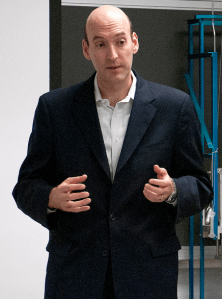
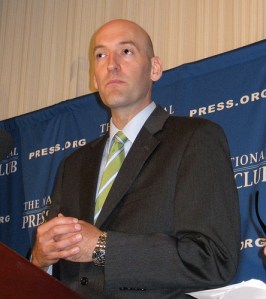
NRC Chairman Gregory Jaczko (photo: pennstatelive)

In April 1966, Esquire Magazine published a story by Gay Talese that is still considered one of the greatest magazine articles of all time; the article, the cover story, was titled “Frank Sinatra Has a Cold.”

The piece, still very much worth the read, says much about celebrity, journalism, and, of course, celebrity journalism, but germane here is a point Talese makes early on: for most people, having a cold is a trivial matter–after all, it’s called the “common” cold–but when a man, a cultural icon, a giant of stage and screen like Sinatra (remember, this is 1966) has a cold, well. . . .

Frank Sinatra with a cold is a big deal. It affects him, his mood, his ability to perform, and so it affects his friends, his entourage, his personal staff of 75, his audience, and perhaps a part of the greater popular culture. In other words, as Talese wants you to understand, in this case, a cold is anything but trivial.

Gregory Jaczko, the chairman of the United States Nuclear Regulatory Commission, made some comments to the press earlier this week. Jaczko, it seems, is worried. He believes, as noted in an Associated Press story, that “U.S. nuclear plant operators have become complacent, just nine months after the nuclear disaster in Japan.” The NRC head thinks that a slew of events at over a dozen domestic nuclear facilities reveal the safety of America’s reactors to be something less than optimal.

To be clear, safety concerns at any kind of plant, be it a soda bottler or a microchip manufacturer, are probably not trivial, but when the safe and secure operation of a nuclear facility comes into question–as the aftermath of Chernobyl or the ongoing crisis in Japan will tell you–it ratchets up concern to a whole different level. So, when the man who more or less serves as the chief safety officer for the entirety of the nation’s nuclear infrastructure says he’s worried, many, many other people should be worried, too.

To put it another way, Greg Jaczko has a cold.

But that’s not the scariest part.

When Frank Sinatra had a cold, he knew he had a cold–pretty much everyone knew he had a cold. It was unpleasant for all of them, but forewarned is forearmed. Jaczko, though, doesn’t know–or won’t acknowledge–he’s sick. As relayed by the AP:

Jaczko said he was not ready to declare a decline in safety performance at U.S. plants, but said problems were serious enough to indicate a “precursor” to a performance decline.

Pardon my acronym, but WTF does “‘precursor’ to a performance decline” mean?

It sounds like a way to talk about erectile dysfunction, but perhaps a more accurate analogy is to say that Greg Jaczko has just told us that, yes, actually, you can be a little bit pregnant.

Of course, that is not true. Either safety–with regards to protocols, equipment and people–is up to snuff, or it is not. As Jaczko observes–and the many “unusual events” he has had to deal with this year make clear–the safety of America’s nuclear reactors is not where it needs to be:

Mr. Jaczko said the NRC has noticed an increase in “possible declines in performance” at some U.S. nuclear facilities, including instances of human error that almost exposed workers to high levels of radiation. He said a number of nuclear plants have experienced safety challenges in recent months, and that two of the plants were having significant issues.

The chairman’s classic understatement here is magnified by the Wall Street Journal. Beyond the fact that “possible declines in performance” means flat-out “declines in performance,” the human error referred to here didn’t “almost” expose workers to high levels of radiation–the accidents at Cooper Nuclear Station in Nebraska and the Perry Nuclear Power Plant in Ohio most definitively exposed workers to high (and possibly dangerously high) levels of radiation.

And the two plants having significant issues–which would those be? Would they be Crystal River in Florida, where news of a third major crack in the containment building recently came to light, and Nebraska’s Fort Calhoun, which is still shut down after flooding earlier this year? Or might they be New Hampshire’s Seabrook, where crumbling concrete was discovered in November, a month after the plant had to shut down because of low water levels, and Vermont Yankee, where radioactive tritium continues to leak into the Connecticut River?

Or maybe Jaczko was referencing North Anna, which of course scrammed when the Mineral Springs, VA, earthquake shook the reactors well in excess of their designed tolerances. Or maybe he’s including Calvert Cliffs in Maryland, where a piece of siding blown off by Hurricane Irene shorted a transformer, and the resulting loss of power to safety systems caused its reactor to scram. And who can forget Michigan’s Palisades nuclear power plant, which had to vent radioactive steam when it scrammed after worker error triggered a series of electrical issues?

Is it possible the NRC head was thinking of the constantly troubled Davis-Besse plant near Toledo, Ohio? Probably not–since the Commission just (as in 4:40 PM on Friday, December 2) okayed a restart there, despite serious concerns about numerous cracks in its shield building. But perhaps Jaczko should think again–on December 7, one day after the reactor restart, FirstEnergy, Davis-Besse’s operator, admitted that they had withheld news of new cracks on a different part of the structure, which were discovered in November. (FirstEnergy says that they only withheld the information from the public, and that they did report it to regulators–which raises grave questions about the honesty, independence and competency of the NRC and how it could approve a restart.)

Representative Dennis Kucinich, by the way, is thinking of Davis-Besse. The Ohio Democrat had called for public hearings in advance of the restart, and is now criticizing both FirstEnergy and the NRC for their lack of candor about the new cracking.

Kucinich appears to understand something that Jaczko does not: when it comes to oversight of the nuclear industry, there is no room for even the germ of a doubt.

To extend the illness-as-metaphor metaphor a little further, there is a construction often used to imply the broadly felt repercussions of a single action or a major actor: When “x” sneezes, “y” catches a cold. The phrase is believed to have started during the worldwide depression that spread after the U.S. stock market crash of 1929–as in, “When America sneezes, the whole world catches cold.” The cliché has come back into vogue during the last three years of global economic tumult, but it could easily be adapted to the ongoing perils of nuclear power.

On November 26, the Asahi Shimbun gave the world another measure of just how big a disaster the ongoing crisis at the Fukushima Daiichi nuclear facility has become:

Radioactive substances from the crippled Fukushima No. 1 nuclear power plant have now been confirmed in all prefectures, including Uruma, Okinawa Prefecture, about 1,700 kilometers from the plant, according to the science ministry.

The ministry said it concluded the radioactive substances came from the stricken nuclear plant because, in all cases, they contained cesium-134, which has short half-life of two years.

Before the March 11 Great East Japan Earthquake, radioactive substance were barely detectable in most areas.

Or, it could be said, when Fukushima sneezed, all of Japan caught a cold.

And not just Japan, of course. Fallout from Fukushima has drifted halfway around the world. Radioactive isotopes directly linked to Japan’s crippled reactors have been detected in milk and vegetables across the U.S. and Canada. And the Pacific Ocean, too, has been contaminated–and continues to be more so. December brings news of new leaks sending more radioactive runoff from the Japanese reactors into the sea. Tens of thousands of tons of overspill have already flowed into the waters around Japan’s northeastern coast–bringing levels of radioactivity to thousands of times what is considered acceptable–and TEPCO, still nominally the Fukushima’s operator, just had to scrap plans to dump untold tons more after protests from Japanese, Chinese, and Korean fishing concerns. (The contaminated water, still collecting at the plant at a rate of 200 to 500 tons a day, will exceed the facility’s 155,000-ton storage capacity by March.)

The effects of bioaccumulation–as dangerous isotopes move with global tides, and contaminated fish (and their contaminated predators) migrate–presents scientists with a long-term research project where much of the world’s population will serve as unwilling subjects.

And, as has been noted here many times, the crisis is far from over. Even TEPCO’s own conservative (or is that “dishonest?”) models now confirm a core melt-through in reactor 1. TEPCO officials insist that somehow they will cool the surrounding steel or concrete enough to stop the molten corium from going further, but the architect of Fukushima Daiichi Reactor 3, Uehara Haruo, sees things very differently. As relayed by Kevin Kamps of Beyond Nuclear, Haruo says:

It is only a matter of time before the molten core, at least of Unit 1–if not Units 2 and 3–does reach ground water, and if it hits it right. . . you’re going to have a powerful steam explosion.

And, as Kamps explains, that steam explosion will again send massive amounts of radiation into the atmosphere. As longtime nuclear activists Paul Gunter recently put it, “It’s pins and needles time,” implying that while much is unknown about what is going on inside the destroyed reactors, nothing indicates TEPCO is gaining the upper hand on this dire situation.

Yet, with all this–with the spreading fallout, the continuing radioactive water leaks, and the real threat of what so many refer to as a “China Syndrome” event–NRC Chair Jaczko worries that the U.S. nuclear industry has become complacent about the safety gaps highlighted by the Fukushima disaster. Given the evidence–and given that the NRC itself spent all summer studying the crisis and drafting recommendations based on “lessons learned”–it is hard to believe complacency is really the problem. It is probably even too generous to say that the industry suffers from willful ignorance. No, when considering the contagion spreading from Japan and the coughs and hiccups that are practically weekly here in the United States, it is probably more accurate to say that the profit-driven, government-protected nuclear sector is actively callous.

The risks, after all, of the nuclear business model are not borne by power companies. In the U.S., federal loan guarantees, state tax breaks and utility rate hikes insulate nuclear operators from the costs of slipshod construction, poor training, and malign management. Even without that, perhaps the only lesson the domestic nuclear industry will choose to learn from Fukushima is that when a catastrophe like this happens, the government is given no choice but to step in. (Beyond the price of the cleanup, and the healthcare and relocation of those in severely contaminated regions, note how TEPCO’s stock price fell all week after word leaked that the Japanese Government would buy $13 billion worth of new shares.)

So, what’s a chief regulator to do? Given the overwhelming evidence of industry arrogance in the face of real danger, Jaczko could have an “I am Hamlet, Prince of Denmark” moment, seize his birthright, as it were, and actually demand compliance from the industry he has been tasked to oversee–but, judging from his tone in many interviews, and the continuing approvals of new and renewed operating licenses, it seems more like the NRC chief will remain the Hamlet of the first four acts of the play.

WWSD–What Would Sinatra Do? Read through the Esquire piece and see how, despite his froggy throat and foul mood, Sinatra takes control of his world. In the end, as Sinatra drives his Karmann Ghia down a sunny LA street, a pedestrian sees him through the windshield and stares, wondering, “Could it be? Is it?” Sinatra, knowing he has done what needed to be done–and done it well–stares back, as if to confidently say, “Yes, it is.”

Gregory Jaczko would do well to read (or maybe re-read–who knows?) “Frank Sinatra Has a Cold.” Even if his nuclear rat pack won’t learn the lessons of Fukushima, the NRC chairman could learn a thing or two from the Chairman of the Board. Let’s hope Jaczko does so before his cold gets worse–because the possibility of another Fukushima, here in the United States, is nothing to sneeze at.

The Party Line – December 2, 2011: Nuclear’s “Annus Horribilis” Confirms Its Future Is in the Past

In the immediate aftermath of the Japanese earthquake and tsunami that triggered the horrific and ongoing disaster at the Fukushima Daiichi nuclear power generating station, President Barack Obama went out on a bit of a limb, striking a tone markedly different from his fellow leaders in the industrialized world. Speaking about Japan and its effect on America’s energy future–once within days of the quake, and again later in March–the president made a point of reassuring Americans that his commitment to nuclear power would stay strong. While countries like Germany and Japan–both more dependent on nuclear power than the US–took Fukushima as a sign that it was time to move away from nuclear, Obama wanted to win the future with the same entrenched industry that so generously donated to his winning the 2008 election.

But a funny thing happened on the way to winning our energy future–namely, our energy present.

As November drew to a close, an article on AOL Energy (yes, it seems AOL has an energy page) declared 2011 to be “nuclear’s annus horribilis“:

March 2011 brought the 9.0 magnitude earthquake off northeastern Japan that sparked a tsunami whose waves may have exceeded 45 feet. Tokyo Electric Power Company’s oldest nuclear station, Fukushima Daiichi, apparently survived the earthquake, but its four oldest reactors didn’t survive that wall of water. Nuclear experts are still figuring out what all went wrong, and tens of thousands still haven’t returned home as Japanese authorities try to decontaminate radioactive hot spots.

In April, massive tornadoes that devastated the southeast swept near the Tennessee Valley Authority’s Browns Ferry plant.

In June, droughts sparked wildfires across the Southwest, including one that threatened the Los Alamos National Laboratory, where nuclear weapons materials are stored.

June also brought record floods across the upper Midwest. For weeks Omaha Public Power District’s Fort Calhoun nuclear plant was essentially an island.

August saw the 5.8 magnitude Virginia earthquake just 11 miles from Dominion Energy’s North Anna plant. The plant shut safely, and returned to service mid-November after extensive checks found no damage even though ground motion briefly exceeded the plant’s design.

That list, as readers of this space will no doubt note, is far from complete. This year has also seen serious events at nuclear plants in California, Maryland, Michigan, New Hampshire and Ohio. But, perhaps even more troubling is the strangely positive tone of the piece.

Despite its ominous headline, it seems the message is: “Yeah, lots of nasty business in 2011, but 2011 is almost over. We got through it and no one died (at least no one in the US), so. . . problem solved!” It’s an attitude absurd on its face, of course, the passage of time is not the friend of America’s aging nuclear infrastructure–quite the opposite–but it is also a point that can’t survive the week in which it was made.

Take North Anna, for example. Yes, it is true that the NRC signed off on a restart in the waning hours of November 11, but the two generators at Dominion’s plant were not back at full power till November 28 because there was indeed damage–some of which was not discovered until after the restart process began.

A week earlier, a fire at Ohio’s crippled Davis-Besse facility cut ventilation to the reactor control room. A faulty valve in a pipe sending water to the reactor core leaked on an electrical switchbox, triggering an electrical arc, which started the fire. This could have been a potentially catastrophic emergency. . . had the reactor not been shut down seven weeks earlier to replace an already once previously replaced, corroded, 82-ton reactor lid. This “transplant operation” revealed a 30-foot crack in the concrete shield building that will require a separate repair program. . . which will in no way be completed before the end of the year.

The day after that fire, November 20, the St. Petersburg Times reported that Progress Energy’s Crystal River nuclear power plant in Citrus County, Florida, had discovered a 12-foot by 4-foot crack and crumbled concrete in its containment building in late July, but failed to notify the Nuclear Regulatory Commission. This was a patently intentional omission, as Progress Energy was already reporting to the NRC about repairs to two other major cracks in the same building dating back to October 2009 and March 2011.

The Crystal River story is long and sordid. The containment building cracked first during its construction in 1976. That crack was in the dome, and was linked to a lack of steel reinforcement. Most nuclear plants use four layers of steel reinforcement; Crystal River used only one. The walls were built as shoddily as the dome.

The latest problems started when Crystal River needed to replace the steam generator inside the containment building. Rather than use an engineering firm like Bechtel or SGT–the companies that had done the previous 34 such replacements in the US–Progress decided it would save a few bucks and do the job itself.

Over the objections of on-site workers, Progress used a different method than the industry standard to cut into the containment building. . . and that’s when this new cracking began. It appears that every attempt since to repair the cracks has only led to new “delamination” (as the industry calls it).

At this point, most have determined that the best plan going forward is to tear down the substandard structure and build a properly reinforced new one, but Progress thinks they have a better idea. Crystal River’s operator is trying to replace the wall panels–all six of them–one by one.

Funny enough, the cost of this never-before-tried retrofit is about the same as the cost of a whole new building. But the full rebuild would take more time–and there’s the rub.

Every day that Crystal River is offline costs Progress money because they have to buy energy to replace what they agreed to provide to the region from this nuclear facility. Each year that the plant is offline is said to cost $300 million. The price tag on this little cracking problem so far–not counting the actual costs of the repair–is $670 million.

Who will pay that bill? Well, if you live in Florida, the answer is: you:

Customers will pay $140 million next year so Progress Energy Florida can buy electricity from other sources while a nuclear plant remains shut down for repairs.

Consumer advocates opposed the power replacement charge, which will take effect Jan. 1, but it won unanimous approval Tuesday from the five-member Florida Public Service Commission.

The panel’s decision is a prelude to a determination next year whether a portion of the repair costs should be passed on to customers or paid in full by the company’s investors owing to problems that have delayed the work. The Crystal River plant was closed for repairs in 2009 but now isn’t expected to reopen until 2014. That’s about three years later than initially expected.

The repair bill is expected to total $2.5 billion. The utility wants customers to pay $670 million, or about a quarter of that amount.

Interesting how that $670 million exactly mirrors the replacement energy costs through today. Students of the Florida Public Service Commission would probably be skeptical that the bailout will really stop there–remember, Florida residents already pay a surcharge on their utility bills for possible (but in no way guaranteed) future nuclear power construction.

And to say that it’s all about the money would not be pure speculation. As the St. Petersburg Times reports, while the good people at Crystal River failed to notify the NRC (or the Public Service Commission) about their latest troubles in a timely fashion, Progress Energy didn’t dare keep secrets from the US Securities and Exchange Commission. On August 8, the same day it neglected to mention the new cracks in a report to the PSC, Progress filed its annual report to the SEC and stated “additional cracking or delaminations may have occurred or could occur during the repair process.”

Given the many revelations of just how casual SEC enforcement can be, it is disturbing to think a nuclear provider had more to worry about from the SEC than from the NRC, the agency given direct oversight of nuclear plant licensing and safety.

Disturbing, but not surprising. This year has also revealed the cozy relationship between the nuclear industry and the NRC. An AP exposé made that clear over the summer, but one need look no further than the AOL Energy story:

[Nuclear Energy Institute CEO Marvin] Fertel said the industry and NRC are “in very good alignment” on the issues raised by 2011 events. The concern for utilities is the “cumulative impact” of new rules, he said, and making sure they’re ranked so plant staffs attack those with the most safety benefit first and the cost is manageable.

The government and the industry agree–safety must be addressed with an eye toward cost. And the tens of millions of Americans living in the shadow of a nuclear reactor will see just what this means as the watered-down post-Fukushima recommendations are slowly proposed and implemented–with little fully required of plant operators before 2016.

Indeed, the global nuclear industry is proceeding not just as if it is business as usual–when it comes to the United States, manufacturers of nuclear plant components are already betting on a new wave of reactor construction. Over the Thanksgiving weekend, Yomiuri Shimbun reported that Toshiba Corp. is preparing to export turbine equipment to the US.

The turbines are for Toshiba-owned Westinghouse Electric Company-designed AP1000 reactors proposed for sites in Georgia and South Carolina. As previously reported, the AP1000 is a new reactor design–a new design that has not yet officially been approved by the Nuclear Regulatory Commission. Still, the operators of the plants have already started to procure the equipment.

All of which raises the question, how is it that, in an age when credit is so hard to come by, an industry so focused on the bottom line feels secure in moving forward with commitments on a plan that is still officially going through the regulatory pipeline?

The assurances come from the top, and so does the money.

In contrast to pledges to, say, close Guantanamo or give Americans a public health insurance option, when it comes to nuclear power, Barack Obama is as good as his word. In February, Obama pledged $8.33 billion in federal loan guarantees to Southern Co., the operator of Georgia’s Plant Vogtle, the proposed home of two new AP1000 reactors. Again, this pledge came in advance of any approval of the design or licensing of the construction.

So, perhaps the nuclear industry is right to feel their “annus horribilis” is behind them, at least when it comes to their business plans. And with the all-too-common “privatize the profits, socialize the risks” way the utilities are allowed to do business, one might even doubt this last annus was really that horribilis for them at all.

But for the rest of us, the extant and potential problems of nuclear power are not limited to any particular period of time. The dangers of nuclear waste, of course, are measured in tens of thousands of years, the Fukushima crisis is lived by millions every minute, and the natural disasters, “events” and accidents that plague an aging, expensive and insufficiently regulated American nuclear industry are an anytime, anywhere reminder that future cannot be won by repeating the mistakes of the past.

NRC Gives OK for Restart of Damaged North Anna Nuclear Plant

North Anna Nuclear Generating Station (photo: dougward)

In what feels like a Friday news dump that goes to 11, the US Nuclear Regulatory Commission has given its approval to restart Dominion Virginia Power’s North Anna nuclear power facility. The decision came late in the day on a holiday–Veterans Day, 11/11/11.

As previously noted, the reactors at North Anna scrammed during the Mineral, VA earthquake of August 23. It was later shown the power plant sustained shaking well beyond its design criteria. Several spent fuel storage casks moved one to four inches, and other storage containers showed what was termed cosmetic damage (namely, cracks), but plant operators contend that the nuclear reactors sustained no “functional” damage.

What constitutes “functional” now remains to be seen. The fact is there was no official protocol–no “checklist”–for evaluating a nuclear facility after it experienced a seismic event such as this. The NRC’s inspectors have essentially been inventing that inspection regime on the fly as they surveyed the North Anna plant. Dominion has been pressing for permission to restart since shortly after the quake.

Of concern, beyond the cracks and dancing dry casks, has been the integrity of the containment buildings and, more specifically, the pipes and couplings that ensure that the reactors can be properly cooled once the cores are allowed to again heat up. Questions about the state of underground pipes were expressed right after the earthquake by watchdogs such as Paul Gunter, and those same buried pipes were cited as recently as last week when explaining the ongoing delay to the restart OK.

North Anna’s reactors were initially thought to have shut down when the cooling systems lost power from the electrical grid, soon after the Virginia quake. Three backup diesel generators provided power to the safety systems until power could be restored (a fourth generator failed). Later, however, it was discovered that the shaking itself caused the reactors to scram–a fast emergency shutdown sometimes compared to slamming the brakes on a speeding car.

How the NRC and its inspectors resolved questions about what constituted a passing grade after a never-before-seen event remains to be seen. Until then, it appears the NRC will do the regulatory equivalent of keeping its fingers crossed:

Eric Leeds, director of the NRC’s Office of Nuclear Reactor Regulation, said in a statement. “We’re satisfied the plant meets our requirements to restart safely, and we’ll monitor Dominion’s ongoing tests and inspections during startup of both reactors.”

Let’s hope inspectors work holidays.

The Party Line – November 4, 2011: Self-Styled Clean Energy President Embraces Future That’s Dirty, Dangerous, and Expensive

“Reeling from months of protests, President Barack Obama’s advisors are worried. . . .”

So begins a November 3rd story from Reuters assessing the potential political fallout from an administration decision to green-light the Keystone XL pipeline, TransCanada Corp’s plan to move crude oil from the tar sands of Alberta to refineries in Texas. Reading the whole piece, one can’t help but feel that Obama is still of a mind to go ahead and OK this dangerous and much-derided plan, it is just the Obama 2012 campaign that’s agonizing over how to spin it.

Back in 2008, Obama the candidate seemed to understand the threat posed by global warming, and he spoke often of moving away from carbon-heavy fuel sources like tar sands. Now, a good part of what is considered the president’s “base,” it seems, understands that the transcontinental pipeline is not only a danger to farmlands and aquifers, but also a betrayal of a campaign promise.

Don’t think this is the dynamic at play? Look at recent administration boasts about such “green” initiatives as raising the Corporate Average Fuel Economy (CAFE) standards, or just read Obama campaign spokesman Ben LaBolt in the abovementioned Reuters story:

“The president has done more to wean us off of foreign oil and transition the nation to a clean energy economy than any other,” he said. “When Americans compare the president’s record promoting clean energy and America’s energy security to those of the leading Republican candidates, who don’t even believe that climate change is an issue that we need to address and would cede the clean energy market to China, there will be no question about who will continue our progress.”

Moving beyond the observation that this is the same “We suck less” positioning that performed so poorly for Democrats in 2010, there are indeed many questions raised by Obama’s apparent take on our energy future.

LaBolt’s claim, “The president has done more to wean us off of foreign oil and transition the nation to a clean energy economy than any other,” first begs the obvious fact-check: Alberta is not in the US, and tar sands crude is no one’s idea of clean energy. But it is not a big leap to read this statement as something more inclusive, something meant to refer to all of the Obama administration’s moves in the energy sector. Indeed, with references to clean energy, climate change and China, the Obama campaign is probably hoping for some to hear a commitment to solar power, while others might understand it as an embrace of nuclear fission.

Intent notwithstanding, administration moves have underscored the latter–a White House enraptured with nuclear power–just as events continue to lay bare the lie that US nuclear power generation could fit anywhere into a tale of clean, domestic energy advocacy.

A new stupid way to boil water?

On November 1, the Nuclear Regulatory Commission approved a new design of what is called an Advanced Boiling Water Reactor (ABWR) slated for construction in South Texas. The plan to build two 1,350-megawatt reactors was originally pitched five years ago, with the original plant operator, NRG Energy (so nice they named it twice!), requesting design certification for Toshiba’s version of ABWRs in 2007.

But in 2009, the NRC made mandatory what had previously been a voluntary requirement that plants would be able to withstand a 9/11-style aircraft attack and continue to cool the reactor and spent fuel pools. The ABWR design, and its certification, had to be amended. This amended design is what just received the NRC’s thumbs-up.

A funny thing, however, happened since the original request: NRG stopped investing in the project. NRG was the prime investor in the “South Texas Project Nuclear Power Co.,” which is the name of the body that originally submitted the amended design. Without NRG, Toshiba has been shepherding the certification request, the one just approved by the Nuclear Regulatory Commission. Just one hitch, though, foreign companies are not allowed to operate nuclear power plants in the United States–a point that seems to have been missed by the NRC (and by most establishment news reports about the certification).

This design certification without funding or domestic management in place provides an almost comic counterpoint to the funding-without-certification approach taken by the Obama administration for the AP1000 reactors proposed for Georgia’s Plant Vogtle.

The AP1000, a riff on a Pressurized Water Reactor design, is supposed to provide passive cooling inside a reactor in the event of a loss of power to the active cooling system. There are many questions about the AP1000, and it too had to be altered to comply with the 2009 9/11 rules, but the most recent delay in certification comes at least in part from concerns that the design should also account for a Fukushima-like seismic event. At this point, Vogtle’s operator, The Southern Company, and the NRC have not come to a meeting of the minds.

But these concerns–or, at least, delays–did nothing to dampen the enthusiasm of the White House. In February of 2010, without any design certification in place, none other than Barak Obama himself announced $8.33 billion in loan guarantees for Southern. This was done with fanfare at a public event (there’s even a YouTube of the announcement).

So, certification with no funding, or funding with no certification–to the US federal government, it doesn’t matter. And it spells out two points in bold type: The Obama administration stands squarely behind nuclear power. . . and the marketplace does not. Without help from what the campaign would have voters believe is the all-time greatest champion of clean, green, domestic energy, new nuclear reactors would not be built in the United States.

Uranium extraction is not clean and never has been. The US is still paying to clean up from mining in the southwest that ended half a century ago. And today, uranium is not really a domestic fuel source, either. A list of the world’s top uranium producers looks like this: 1) Kazakhstan, 2) Canada, 3) Australia, 4) Namibia, 5) Russia, 6) Niger, 7) Uzbekistan. The US comes in eighth, accounting for just 2.9 percent of the world’s uranium production. By contrast, the US ranks third in global oil production, extracting almost 11 percent of the world’s crude.

And uranium doesn’t jump out of the ground ready to go for a nuclear reactor. The processing of uranium ore into useable fuel is a dirty, costly and energy intensive endeavor requiring loan guarantees, waste storage and safety protocols all its own. (And as if to underscore this, House Speaker John Boehner has recently requested federal loan guarantees to build a new nuclear processing plant in his home state of Ohio.)

Fukushima: a case study

A pair of new stories out of Japan provide all the evidence any president would need to honestly evaluate the role of nuclear power in America’s supposedly clean, green energy future.

Fukushima isn’t a single event, it is an ongoing, ever-evolving, always metastasizing crisis. In case anyone thought otherwise, the detection of radioactive xenon in Fukushima Daiichi reactor 2 provided a chance to again pay heed to just how serious things remain at the crippled Japanese nuclear facility.

Though Tokyo Electric Power Company (TEPCO), the nominal owners Fukushima Daiichi, contend that the trace of xenon gas does not represent evidence of a nuclear chain reaction inside the reactor previously thought closest to a so-called “cold shutdown,” they still pumped in boric acid–a substance used to mitigate nuclear fission.

Tokyo Electric may or may not be telling the whole truth in this instance, but evidence from throughout this disaster dictates skepticism. For example, scientists have again revised upwards their estimates of total radiation released from the plant, and a new study explodes TEPCO’s minimalist fairytale:

France’s l’Institut de Radioprotection et de Surete Nucleaire (Institute for Radiological Protection and Nuclear Safety, or IRSN) has issued a recent report stating that the amount of radioactive cesium-137 that entered the Pacific after 11 March was probably nearly 30 times the amount stated by Tokyo Electric Power Co. in May.

According to IRSN, the amount of the radioactive isotope cesium-137 that flowed into the ocean from the Fukushima Daiichi nuclear plant between March 21 and mid-July reached an estimated 27.1 quadrillion becquerels.

Quadrillion is not a number that often comes up in polite conversation, but suffice it to say, it’s a lot. . . even for becquerels. Soon after the March 11 earthquake, Japan revised acceptable levels of radioactive cesium upward. . . to 500 becquerels per kilogram. Though even the 27.1 quadrillion number sort of redefines the phrase “a drop in the ocean,” the really disturbing notion is that with a relatively long half-life, the pattern of Pacific currents, and the principles of bio-accumulation and bio-concentration at play, it is possible that everyone who includes Pacific Ocean fish in his or her diet is now part of an informal, long-term experiment on the effects of low-level radioactive contamination. Or, as the same story as above snidely puts it:

The radioactive silver lining? Radioactive cesium-137 has a half life of roughly 30 years, so if the IRSN estimates are accurate, then [b]y 2041 the Pacific’s aquatic life will only be subjected to a mere 13.55 quadrillion becquerels of radiation.

But long half-lives and long-term health effects require long-range thinking, not to mention arguments about the relative value of human life. Perhaps another fresh release from Japan tells the nuclear story in numbers a deficit-obsessed DC elite can more easily comprehend:

Tokyo Electric Power Co. won approval for a 900 billion yen ($11.5 billion) bailout from the government after the Fukushima nuclear catastrophe to avert bankruptcy and start paying compensation for the crisis.

Trade and Industry Minister Yukio Edano approved the support after the company known as Tepco committed to cutting 7,400 jobs and 2.5 trillion yen in costs. The utility forecast an annual loss of 600 billion yen, its second since the March earthquake and tsunami wrecked its Fukushima nuclear plant.

Eleven-and-one-half-billion dollars–and that only takes TEPCO through March 2013. Who here thinks the crisis will be over by then? It almost makes Obama’s $8.33 billion loan guarantee to Southern look like a bargain.

Almost.

Except that the loan guarantee is just for construction of a yet unapproved reactor design–should Southern, or whatever entity might eventually operate Plant Vogtle, experience an accident, that would likely be a whole other ball of bailout.

But what could possibly go wrong? Well, as repeatedly documented in this column, a lot. Beyond the level-7 sinkhole that is Fukushima, in the US, 2011 alone has seen manmade accidents and natural disasters that have scrammed and/or damaged more than a half-dozen reactors. And with each event, a process of shutdown, repair, inspection, authorization and startup costs time and money that does nothing to provide America with clean, safe, renewable, affordable energy.

Each event does, however, add costs to a variety of segments of the economy. Energy production and utility bills are obvious, but this nuclear obsession also drives up costs for healthcare, food safety, air and water quality, the yet-to-be-solved problem of long-term waste storage, and don’t forget the additional tax burden required to support all the bailouts, tax breaks and loan guarantees for the nuclear industry. The Center for Strategic and International Studies, a US think tank, has also called for a global study of the health effects of long-term radiation exposure as part of an international response to the Fukushima disaster. That, too, is an expense that should be factored into the real cost of nuclear power.

One thing, however, has gotten cheaper since the Japanese earthquake and tsunami gave the world its third top-level nuclear accident since 1979, and that would be uranium. Since March, world uranium prices have fallen some thirty percent. In fact, demand is so low, the French company Areva has decided to suspend its uranium mining in the Central African Republic–for two years.

The market is again speaking, but to those predisposed to cherish the siren song of nuclear power, cheap uranium could easily become the excuse to dash greener, safer alternative energy development.

Since the earliest days of nuclear power, that siren song has gone something like this: clean, safe, and too cheap to meter. Obviously, 2011 has proven none of that rings true, but when an administration believes it can greenwash away the political fallout from a tar sands pipeline, is it such a stretch to see them ignoring the financial and radioactive fallout of nuclear power in their attempt to package Obama as the cleanest, greenest energy president ever?

* * *

I am always happy to see the issues discussed in this column get attention from a broader audience, so I was thrilled to see Rachel Maddow take nine minutes out of her Wednesday show to call attention to what she sees as a scandal no one finds sexy enough to get excited about–namely the dangerous state of nuclear power plants across the US. But her contention that no one is paying attention irks me, at least a little. I have lost count of the number of posts I have devoted to this very subject this year, and I think, throughout, most would say I find much about this subject quite scandalous. So, Rachel, next time you want to talk about this stuff, the next time you want to share your excitement about this scandal, call me.

The Party Line – October 28, 2011: NRC Moves to Adopt Fukushima Recommendations “Without Delay”

The US Nuclear Regulatory Commission voted last week to implement recommendations from the Near-Term Task Force Review of Insights from the Fukushima Daiichi Accident (PDF), and to do so “without delay.” Coming over seven months after the earthquake and tsunami that started the crisis in Japan, and over four months after the Near-Term Task Force (NTTF) issued its report, the move highlights what might be accomplished when attention is paid, but also illustrates systemic flaws in the US nuclear regulatory regime.

The NRC identified a set of top-tier recommendations that focus on:

  • Re-evaluation of seismic and flood hazards;
  • Inspections after earthquakes and floods;
  • New regulations for “station blackouts” (the loss of all AC power at a reactor);
  • Reliability of vents on Mark I and Mark II containments; and
  • Better instrumentation for monitoring spent fuel pools.

This list does not represent the entirety of NTTF recommendations, just the ones the NRC wishes to see fast tracked (you know, “without delay”)–which, when it comes to nuclear regulation in the United States, means years. The NRC said its staff “should strive to complete and implement” these changes by 2016 (though Commission Chairman Gregory Jaczko said he thinks the station blackout rule can be adopted by April 2014 (PDF), so fasten your seatbelts).

Now, these recommendations (as opposed to actual rules, which still have to be drafted) do address some of the specific weaknesses exposed by the Japanese disaster–multiple external threats, power interruptions, hydrogen buildup, failing spent fuel storage systems–and that’s a positive step because these problems are quite real and quite possible at many of America’s nuclear power plants. But these fast-tracked proposals make up only seven of the 12 or 13 recommendations in the NTTF report–which, itself, is several points short of a truly comprehensive response to the threats Fukushima brought to the fore–and the process (much beloved by Chairman Jaczko) relies heavily on the cooperation of other government agencies, the good faith of the nuclear industry, and a seemingly magical belief that manmade or geologic events on a level with the March earthquake and tsunami will not happen here until after everything is brought up to code.

So, yes, there is a process for identifying problems (at least after they happen) and proposing some fixes with something approximating alacrity–which raises the question of why the system has not been more responsive over the last 50 years–but history and experience make it clear that process does not equate with performance.

During an interview earlier this month, NRC Chair Greg Jaczko was asked about one of his biggest efforts before the Fukushima crisis (PDF & Flash)–improving fire safety at nuclear facilities. Jaczko reflected on it this way:

[A]fter the Browns Ferry fire, we came up with a new set of regulations. Those regulations ultimately I think were very, very challenging to implement, so we’ve been struggling really for several decades to really implement those in an efficient and effective way. That’s not to say we don’t have strong fire protection programs, but we don’t have the most effective way to do it.

The Browns Ferry Fire happened in 1975. Jaczko has been an NRC commissioner since 2005; he has been chairman since 2009. And yet, here, now, in October 2011, 36 years after a guy checking for air leaks with a candle started a fire considered to be the second most frightening accident at a US nuclear plant (next to Three Mile Island), six years after Jaczko joined the NRC, Jaczko says that fire safety–a cause he has championed–is a “struggle,” “challenging to implement” and still not at its “most effective.”

In the same discussions, Jaczko also referenced safety upgrades suggested in response to the terrorist attacks of September 11, 2001, and how those are not yet fully implemented. Indeed, a recent story on security at the Indian Point power station underscored just how far the industry still has to go:

[W]hile the NRC came out with new security guidelines in 2003, these were largely voluntary in keeping with the Bush administration’s anti-regulatory policy. They were made mandatory in 2009, but Indian Point, New Jersey’s Salem, Hope Creek and Oyster Creek plants, and about 60 others around the country were granted waivers so they did not have to incur immediate expenses.

If a major domestic accident or a terrorist attack that, frankly, has colored practically every government action over the last decade cannot motivate full and fast compliance with NRC rules, why should the 65% of Americans who live within 50 miles of a nuclear plant believe that the Fukushima recommendations will be handled any better?

Already, events say that they shouldn’t. Within a day of the NRC voting to fast track some NTTF recommendations, the Atomic Safety and Licensing Board, the body responsible for renewing or extending the operating licenses of existing facilities, declared that it would not consider the proposed post-Fukushima requirements when evaluating an extension for the Seabrook Station nuclear plant, nor would it delay consideration of the license till new rules were in place. This is despite NRC Chair Jaczko’s stated preference to the contrary:

I would like to see some type of license condition that provides a commitment or a requirement for implementation of those [Fukushima] lessons before the plants would operate.

It should also be noted that even with Jaczko’s predilection on record, his term as chairman is set to expire in 2013–over a year before he expects any of the NTTF recommendations to be implemented. Jaczko’s desire to serve another term not withstanding, the question of whether he will be asked–even if President Obama is re-elected–or whether he can get reconfirmed is an open one. Despite originally being appointed by George W. Bush, Jaczko has come under fire from other NRC commissioners and from Republicans on the Hill. And it should be pointed out that Obama’s own appointee to the NRC, William Magwood, IV, is a veteran of the Bush administration’s Department of Energy and has been roundly criticized for his cozy relations with the nuclear industry.

And, of course, the planet also seems to have little regard for Jaczko’s inclinations. As repeatedly noted here, numerous US nuclear reactors have had to scram this year, courtesy of Mother Nature’s tornadoes, floods, earthquakes and hurricanes. (Again, that was all this year.)

So, what’s a country to do? Cross some fingers and hope for the best from a deep-pocketed industry and its weak, captured regulators? Or hit “pause” on license renewals and new plant construction–and even some restarts of sub-standard facilities–until the lessons of nuclear power’s most recent catastrophes are truly learned, and instead spend the time, money and effort on energy sources that don’t require such elaborate safety regimes?

In time, the Rockies may crumble, Gibraltar may tumble. . . but so many of the problems and byproducts of nuclear power are here to stay. Instead of accepting this eternal and fatalist frame for learning lessons and making changes, perhaps this latest case study in regulation should teach a broader lesson: transition to cleaner, safer, and more sustainable energy sources. . . without delay.

NRC Chair Jaczko: Events Like Fukushima Too Rare to Require Immediate Changes

NRC, nuclear

NRC Chair Gregory Jaczko (photo: Gabrielle Pffaflin/TalkMediaNews)

For those that think nothing has changed in United States regulation since the Japanese earthquake and tsunami started the ongoing crisis at the Fukushima Daiichi nuclear facility, think again. The pre-disaster mentality of “What could possibly go wrong?” has been replaced with reassurances that “Stuff like that hardly ever happens!”

At least that is the impression conveyed by the current chairman of the US Nuclear Regulatory Commission, Gregory Jaczko, in a pair of early October interviews. During two NRC-sponsored events, Jaczko fielded questions first from nuclear industry professionals and those considered friendly to the expansion of nuclear power, and then, in a separate session two days later, responded to representatives from public interest groups and other individuals generally seen as opposed to nuclear energy.

While the tone of the questions differed somewhat predictably in the two sessions, Chairman Jaczko’s attitude did not. Jaczko took several opportunities to praise the NRC staff and the processes and protocols used by the commission, repeating in both panels that the primary duty of his agency is ensuring the safety of nuclear facilities in the United States.

Beyond his broad assurances and patient, capable demeanor, however, many of the chairman’s assertions about both the NRC process and the progress being made toward his stated safety goals highlighted notable contradictions and troubling biases inherent in America’s nuclear regulatory regime.

To be fair, the pre-Fukushima outlook was not exactly “What could possibly go wrong?” In terms of the types of accidents and the repercussions of contamination, containment breaches, radioactive releases, meltdowns, melt-throughs, and a host of other undesirable situations, regulators and industry insiders alike were probably quite aware of what could go wrong. But as US nuclear proponents and profiteers strove to convey the impression of an informed industry, they also moved to downplay the threats to public safety and made sure to stress that, when it came to disaster scenarios, they had it covered.

If the disaster in Japan has proven one thing, though, it is that plant operators and nuclear regulators didn’t have it covered. Events (or combinations of events) that were either not foreseen or not acknowledged leave Japan scrambling to this day to understand and mitigate an ever-evolving catastrophe that has contaminated land and sea, and exposed yet-untallied thousands of Japanese to dangerous levels of radiation. “As we saw in Fukushima,” said Jaczko, “accidents still do happen in this industry. If we are thinking that they can’t, we are in a dangerous place.”

But for US nuclear regulators, there needn’t be any sense of urgency–or so believes the NRC chair. When asked why the agency doesn’t hold up plant relicensing until new standards that include lessons learned from the Japanese disaster are in place, Jaczko expressed confidence in the current system:

Bottom line is that changes get made at a plant. . . some changes will be made quickly, some may take years. It doesn’t matter where a plant is [in the process]–what is the licensing phase–but that changes get made. These are low frequency events, so we have some leeway.

It is a posture Jaczko took again and again in what totaled over two-and-a-half hours of Q&A–accidents are very, very rare. Given the history of nuclear power, especially the very recent history, his attitude is as surprising as it is disturbing. Beyond the depressingly obvious major disasters in nuclear’s short history, unusual events and external challenges now manifest almost weekly in America’s ageing nuclear infrastructure. The tornado that scrammed Browns Ferry, the flooding at Fort Calhoun, the earthquake that scrammed the reactors and moved storage casks at North Anna and posed problems for ten other facilities, and Hurricane Irene, which required a number of plants to take precautions and scrammed Calvert Cliffs when a transformer blew due to flying debris–all are external hazards that affected US facilities in 2011. Add to that two leaks and an electrical accident at Palisades, stuck valves at Diablo Canyon, and failures in the reactor head at oft-troubled Davis Besse, and the notion that dangerous events at nuclear facilities are few and far between doesn’t pass the laugh test.

That these “lesser” events have not resulted in any meltdowns or dirty explosions does nothing to minimize the potential harm of a more serious accident, as has been all too vividly demonstrated in Japan. The frequency or infrequency of “Level 7” disasters (the most severe event rating–so far given to both Chernobyl and Fukushima) cannot be used to paper-over inadequate safeguards when the repercussions of these catastrophes are so great and last for generations.

Storage concerns don’t concern

Chairman Jaczko’s seeming ease with passing current problems on to future generations was also in evidence as he discussed mid- and long-term storage of spent nuclear fuel. Though previously a proponent of an accelerated transfer of spent fuel from pools to dry casks, Jaczko now says, post-Fukushima, he has “no scientific evidence that one method is safer than the other.” The chairman made a point of noting that some dry casks at Virginia’s North Anna plant moved during the August earthquake, but said that it will be well over a year before we can evaluate what happened to wet and dry storage systems at Fukushima.

While it is true a full understanding will have to wait until after Daiichi is stabilized and decontaminated, it is already apparent that the spent fuel pools, which require a power source to actively circulate water and keep the stored fuel cool, posed dangers that in some ways rivaled the problems with the reactors. (So far, no Japanese plants have reported any problems with their dry casks.) So obvious was this shortcoming, that the NRC’s own staff review actually added a proposal to the Fukushima taskforce report, recommending that US plants take more fuel out of wet storage and move it to dry.

Jaczko’s newfound indifference is also odd in light of his own comments about dry casks as an alternative to a central nuclear waste repository. Asked in both sessions about the closing of Yucca Mountain (the proposed US site for spent nuclear fuel), the chairman buoyantly championed the possibility of using on-site dry casks for hundreds of years:

The commission is taking the appropriate action to address the storage of spent fuel. We have come to the conclusion that, over the short- and medium-term, safe storage is possible. We are taking a look at what is the finite limit on current [dry] storage. . . 200, 300, 400 years. Is there a time we have to move the fuel? . . . Nothing tells us we shouldn’t generate the [radioactive] material. We don’t see a safety concern out 100 years, or anything that says at 101 years, everything changes.

Chairman Jaczko then added that while the nuclear industry is generating waste that will require “long, long term storage or isolation,” it is not unprecedented to assume this problem can be taken care of by “future generations.”

It is good that Jaczko has such faith in the future, because his depiction of the present is not actually that impressive. While the NRC chief repeatedly touted their “process” for evaluating risks, problems, and proposals, he also painted a picture of a bureaucracy that has so far failed to fully act on the initiatives he has considered most important. Neither the fire-safety improvements Jaczko has championed since he came to the commission in 2005, nor the security enhancements required after 9/11/2001 have as yet been fully implemented.

Process is everything

Time and again, whether he was directly challenged by a question or simply asked for clarification, Gregory Jaczko referred to the NRC’s “process.” “We have a relicensing process,” “there is an existing process [for evaluating seismic risk],” there is a process for determining evacuation zones, there is a process for incorporating lessons learned from Fukushima, and there is a process for evaluating new reactor designs. Process, of course, is not a bad thing–in fact, it is good to have codified protocols for evaluating safety and compliance–but stating that there is a process is not the same thing as addressing the result. Too often, what might have sounded like a reasonable answer from the chairman was, in reality, a deflection. “The process knows all; trust in the process. I cannot say what will happen, and what I want to happen does not matter–there is a process.” (This, of course, is a dramatization, not a direct quote.) Form over functionary.

But Jaczko had barely started his second session when his reliance on process suffered an “unusual event,” as it were.

Asked about why the NRC seemed to be moving full-speed ahead with relicensing, rather than pausing to wait for Fukushima taskforce recommendations to be formalized, the agency chief first said, “There is an existing program, there are processes.” But within a breath, Jaczko then said, when it comes to lessons learned from Fukushima being some sort of prerequisite for final license approval, “We are going to look on a case-by-case basis.”

Is deciding whether to apply new requirements on a “case-by-case basis” actually a process? Many would say it pretty much defines the opposite.

The counter-intuitive also took a star turn when it came time to consider new externalities and pending environmental impact surveys. Shouldn’t the Fukushima taskforce findings be considered as part of a series of new environmental impact studies? Well. . . “It is clearly new information, but does it affect the environmental impact survey? Because they are very, very low likelihood events, it is not part of the environmental impact survey.” Jaczko here seems to be saying that unless you know in advance of the new study that the new information will alter the findings, you do not need to consider new information.

Shocked, shocked

With such confidence in the commission and its process, would it be safe to assume that Greg Jaczko is comfortable with the current state of nuclear safety in the United States? Perhaps surprisingly, and to his credit, the NRC head seems to say “no.”

As previously discussed, Jaczko expected faster action on fire safety and security upgrades. He also defended his going public with complaints about design problems with the AP1000 reactors proposed for Plant Vogtle:

We had been going back and forth with [AP1000 designer] Westinghouse for two years. I felt [a lack of] openness; felt if you aired the issues, they get addressed. Now, I feel it was. . . addressed. It ultimately forced these issues to get resolved.

Chairman Jaczko was also asked what tech issues keep him up at night:

Those components that are not replaceable, not easily inspectable. Those subjected to repeated exposure to high radiation, stresses that cause high degradation.

Jaczko said he felt the commission had a handle on what radiation does to the concrete in the containment vessel, but he was less sure about the effect of “shock,” which he defined as “repeated power trips” or scrams. Jaczko acknowledged that this increases stress on the containment vessels, and added, “Some places will not have 20 years [left] on pressure vessels. We get into an unknown piece of regulation on pressure vessel repair.”

That is a pretty stark revelation from a man so passionate about his agency’s ability to, uh, process new data, but it highlights another facet of Jaczko’s approach to regulation.

Noting that New Jersey’s Oyster Creek reactor was granted a renewed operating license for 20 years, but its operator later negotiated with the state to shut it down in 10 years, Jaczko said, “Extension is an authorization to operate, not a requirement to operate.” Relicensing, he said, might come with requirements for modifications or orders that they “monitor aging.”

Jaczko also said that states or facilities might decide it is not economically viable to keep a plant running for the full length of its license, “Like if you have a car and the clutch goes and you make a decision not to replace it.”

How to regulate, even without the Regulatory Commission

Yes, another deeply flawed automobile analogy, but note that Jaczko allows for, and maybe even expects, limits to a plant’s life that are not regulated by the NRC. And in detailing such, the chief regulator of the US nuclear industry shows where citizens might exercise leverage when his NRC fails.

First, there is that issue of economic viability. As previously discussed, the market has already rendered its verdict on nuclear power. In fact, it would be absolutely impossible to build or operate a nuclear plant without loan guarantees, tax breaks, and subsidies from the federal government. The new construction at Vogtle is projected to cost nearly $15 billion (and these plants always go way over budget), and the Obama administration has had to pledge $8.33 billion in loan guarantees to get the ball rolling. Without that federal backstop, there would be no licensing battle because there wouldn’t be the possibility of the reactors getting built.

In fact, in this time of questionable nuclear safety, deficit peacockery and phony Solyndra outrage, it is illustrative to note:

. . . in FY2010 alone, $2.82 billion went to natural gas and petroleum interests (through direct expenditures, tax expenditures, research and development funds, and loan guarantees), $2.49 billion to nuclear energy interests and $1.13 billion to solar interests.

Would any of the relicensing and new construction applications be before Jaczko’s NRC if the energy-sector playing field were leveled?

Second, at many points in the interview, federal regulator Jaczko referenced the power of the states. Early in the “pro” nuclear session, an anxious question expressed worry that states such as Vermont could play a role in the relicensing of reactors. While stating it was yet to be determined whether Vermont’s authority overlapped with the NRC, its chairman stated plainly that states do play a role. “States decide what kind of generating sources they use,” Jaczko said, “especially if the state has a public utility.”

When asked in the second panel if the NRC considers whether new rules or licensing delays will cause rate hikes for consumers, Jaczko said the final determination on rates was the purview of a state’s public utilities commission:

If the PUC denies charges, then they won’t get our approval to go forward–but if the PUC denies a rate change, they [the plant operators] still have to make the improvement required.

And when discussing how the NRC draws evacuation zones, Chairman Jaczko said that in the end, it was the responsibility of the state and local governments, acting on data from the utilities and advice from the NRC, to determine where, when and how to evacuate in case of a nuclear accident.

And, yes, that does sound again like some of the buck-passing that marked too much of these interviews, but it is also a roadmap for a possible detour around a recalcitrant or captured federal agency. If activists feel shut out of the regulatory process, they can attack the funding. If federal elected officials are not responsive (because they, too, have been captured by a deep-pocketed nuclear industry), concerned citizens can hit closer to home. As Jaczko says, states can choose their power sources, and states can define evacuation protocols that either better insure public safety or reveal continued operation of nuclear facilities to be untenable.

Such action would not be easy–state and local officials have their own interests and conflicts–but it might prove easier than a broad federal play. Recent successes by those seeking to close aging coal-fired generators show that action at the individual plant level is possible.

Open to openness

For anything to happen, of course, it is important that a dedicated and passionate citizenry organize around a tactic, or, if they prefer, a process. But it will also require a level of openness on the part of government. Sometimes that openness is offered, sometimes it is hard won, but without transparency, progress is hard to make and hard to measure.

Gregory Jaczko repeatedly stated that he is a big advocate of openness, and he offered these interviews in that spirit. These two events obviously didn’t go all the way in that direction–not even close–but the sessions had merit. Chairman Jaczko, despite all the problems detailed above, can still be admired for exhibiting something rather rare in today’s political climate, a regulator that actually believes in regulation. He, in fact, conveys a passion for it. That some of that regulation is based on flawed assumptions, and that much of it is weak or never enforced, cannot be ignored, but if the head of the Nuclear Regulatory Commission advocates for the regulatory process (even when hiding behind it), then there is at least a process to improve.

* * *

A version of this story was previously posted on Truthout.

The Party Line – September 30, 2011: No Will, No Way: Nuclear Problems Persist, But US Fails to Seize Fukushima Moment

As September drew to a close, residents of southwest Michigan found themselves taking in a little extra tritium, thanks to their daily habit of breathing (h/t emptywheel). The tritium was courtesy of the 40-year-old Palisades Nuclear Generating Station in Covert Township, which suffered its third “event” (as they are politely called) in less than two months, and was forced to vent an indeterminate amount of radioactive steam.

The reactor at Palisades was forced to scram after an accident caused an electrical arc in a transformer in the DC system that powers “indications and controls“–also known as monitoring devices, meters and safety valves. (Transformer arcs seem to be “in” this season–it was a transformer arc that caused the Calvert Cliffs plant in Maryland to scram during Hurricane Irene.)

While it is nice to see rectors shut themselves down when a vital system goes offline, remember that “turning off” a fission reactor is not like flicking a light switch. Shutting down a reactor is a process, and the faster it is done, the more strain it puts on the reactor and its safety and cooling systems. And even after fission is mitigated, a reactor core generates heat that requires a fully functional cooling system.

Which is kind of an interesting point when considering that Palisades had just been restarted after completing repairs to a breach in the cooling system that was reported to be leaking more than 10 gallons per minute. Prior to that, a “special inspection” was ordered August 9 after a pipe coupling in the plant’s cooling system failed.

(By the way, have no fear, Michiganders, a public affairs representative for the Nuclear Regulatory Commission reassured the public that the concentration of tritium was “far below regulatory releases,” and that “as soon as it goes out, it gets diluted further.” You know, in the air. . . that you breathe.)

News of the Palisades tritium burp came at roughly the same time as a breathless (if a press release can be breathless) announcement from Dominion Resources, the folks responsible for the North Anna nuclear plant, the facility that scrammed after being shaken beyond design specifications by the earthquake centered in nearby Mineral, Virginia:

Our investigation showed the units tripped before the loss of off-site power when multiple reactor sensors detected a slight power reduction in the reactors. . . .

The root cause team determined that this occurred as result of vibration in the reactor or the monitoring devices in the reactors, or both.

Again, good that the reactors scrammed when something registered the quake, but noteworthy again because it was previously believed that the automatic shutdown started as a result of a loss of power–power required to operate the cooling systems, not only for the reactors, but for the spent fuel pools, as well.

While North Anna remains offline as the NRC continues its inspection (and tries to decide what would constitute passing that inspection), and Palisades is also down pending an (another) investigation, both serve as only the latest in a long string of examples in what could be called The Light Water Paradox: In order to safely generate a steady stream of electricity, a light water reactor needs a steady stream of electricity.

This is not just a perpetual motion machine laugh line. This inherent flaw in the design of LWRs is at the root of two other prominent tales of nuclear safety (or lack thereof).

The first, of course, is the ongoing, ever-metastasizing disaster in Japan, where failures in the cooling systems at Fukushima Daiichi following a massive earthquake and tsunami resulted in hydrogen explosions, core meltdowns, and, likely, melt-throughs that contaminated and continue to poison sizable portions of the country and surrounding sea.

The second story concerns the proposal for the construction of two new reactors at Plant Vogtle, a nuclear power facility near Augusta, Georgia.

The Vogtle reactors would be the first to be built in the US in a generation, and they have come under some additional scrutiny in part because they would be the first of a new-design LWR called the AP1000. A riff on previous Toshiba/Westinghouse pressurized water reactors, the AP1000’s most noticeable “innovations” are meant to address the active cooling paradox. First, it has emergency “dump tanks,” reservoirs of water situated above the reactor that could, in an emergency, empty into the reactor via gravity, providing up to 72 hours of “passive” cooling. Second, rather than housing the core in a reinforced concrete shell with a metal liner, the AP1000 would have an all-steel containment vessel which would, in theory, be able to expel heat through convection.

While these two design features both highlight and attempt to address a dangerous flaw that is a part of every other nuclear facility in the United States–that water has to be actively cycled through a reactor core to keep it from melting–the design still predates the Fukushima quake, and fails to truly incorporate the lessons of that disaster.

The massive March 11 earthquake shutdown power to the Fukushima Daiichi plant, and thus the cooling systems, and the tsunami that followed flooded the diesel-powered backup generators, but that was only part of the problem. Investigations now show that even if Fukushima had in some way managed to maintain power, the cooling system would still likely have failed for at least some (and likely all) of the reactors, and (and this is important) for the spent fuel pools, as well. That is because the quake not only caused a loss of power, it also caused numerous breaches in the cooling system. Cracks in the containment vessel, broken pipes, and dislodged couplings would have likely resulted in a calamitous drop in water levels, even with full power. Less than successful attempts to restore the cooling systems with new, external power sources, and the large amounts of contaminated water that continue to pour from the plant, have demonstrated just how severely the physical infrastructure was damaged.

There are additional concerns about the design of the AP1000 (possible corrosion of the all-metal containment vessel and less than rigorous computer modeling of seismic tolerances, for instance), but, in a post-Fukushima world, simply addressing the active/passive cooling problem (and only doing so for the reactor and not the spent fuel pools) does not promise a safe nuclear facility.

And there is, perhaps, a hint that at least one of the members of the NRC understands this:

The chairman of the U.S. Nuclear Regulatory Commission says the agency may need to incorporate its findings about a nuclear disaster in Japan into a license to build a new nuclear plant in Georgia.

NRC Chairman Gregory Jaczko said Wednesday [September 28] he believes the license to build two more reactors at Plant Vogtle near Augusta should include conditions that reflect the findings of a review of this year’s disaster at the Fukushima Dai-ichi plant.

While it is true that “may” and “should” are not “will” and “must,” and it is also the case that the Fukushima taskforce recommendations themselves do not fully address the problem outlined here, Chairman Jaczko’s comments do make the point that there are indeed lessons to be learned from the Japanese crisis, and right now, in the US, that education has not taken place.

The chairman and his fellow commissioners have wrestled all summer with the pace of post-Fukushima reform. Jaczko has argued for what in NRC terms is considered a speedy consideration of the new safety regime, but a majority of the panel has managed to slow the process down to a point where no new regulations will likely be in place by the time the NRC is required to rule on the Vogtle permits.

But, because the Vogtle hearings have revealed the Chairman’s understanding of at least some of the problems, it also reveals an obvious path for Jaczko and those (such as Senator Barbara Boxer (D-CA)) who would also want any new construction or operating permits to only be approved under guidelines drafted in response to the Fukushima disaster. If the industry–and the commissioners most friendly to it–wants to move quickly ahead on new construction and the relicensing of 40-year-old plants, then it should be required that they move quickly on adopting the Fukushima taskforce recommendations. No new safety rules, no new permits–the political calculus should be that simple.

And, if the NRC won’t do the political math, then it should be up to elected government to run the financial numbers.

Building the new Vogtle reactors is projected to cost $14.8 billion. That’s projected–the existing Vogtle plant went over budget by a factor of 14. But even if the new reactors stay on budget, there is still no way they would get built without help from the Federal Government. To that end, the Obama administration okayed an $8.33 billion loan guarantee for The Southern Company, owners of Plant Vogtle, contingent on the NRC’s approval of the plans. (By way of comparison, that is 16 times the size of the loan given to the now-defunct solar technology company Solyndra.) While there are a myriad of reasons why that and other such guarantees should never be proffered, at minimum, the federal government should now freeze the financial backing for new construction until the NRC passes–and industry adopts–an enhanced safety regime.

This wouldn’t be a one-shot power play. Hot on the heals of Vogtle, the V.C. Summer nuclear facility in South Carolina is also looking to add two new AP1000 reactors, and its permit process is also underway. And financial markets understand what a bad bet that project is, too. Summer is also owned by Southern, but it is operated by SCANA. Moody’s, the bond-rating agency, just downgraded SCANA’s debt to one notch above “junk” status, citing the cost of the proposed new reactors.

Meanwhile, the Commonwealth of Virginia has handed over $7 million in precious state funds to North Carolina’s Babcock & Wilcox to open a prototype of a small modular reactor (SMR) in the town of Forest, near Lynchburg. The SMR is small, indeed–160 megawatts (in contrast to the 1,800 megawatt capability of Virginia’s North Anna plant)–and it’s built entirely underground, supposedly enhancing its safety when faced with a potential terrorist attack. How it will provide greater protection from an earthquake or flood seems (at best) less obvious.

Yet, with all of this action, all of these new designs, all of this lobbying, and all of this (as “serious” people repeatedly caution) scarce government money, still no one is addressing another part of the nuclear equation: spent fuel. With Yucca Mountain now (supposedly) abandoned, the United States has no long-term plan for handling the already large and ever-growing problem of dangerous spent nuclear fuel. Right now, each nuclear facility stores its used fuel in either pools, dry casks, or both. The spent fuel pools require an active cooling system, which faces most of the same problems inherent in reactor cooling. Dry casks–used for fuel that is cool enough to remove from the pools–are considered safer, but they are far from “safe.” They are above ground, emit some radiation, and are theoretically vulnerable to terrorist attack (and the casks at North Anna moved and sustained “cosmetic” cracks in the August earthquake). In many US plants, both pools and casks are already filled to capacity. Expanding the number of nuclear reactors only accelerates the storage crisis.

And it must be reiterated, all of this activity comes a mere six months after the start of the Fukushima disaster. The latest announcement from the Japanese government–that they will relax the evacuation order for more than 100,000 residents even though their towns have not yet been decontaminated–says nothing about an easing of the emergency, and everything about a government that frankly just doesn’t know what else to do. The United States, though obviously larger, has reactors near enough to densely populated areas that a nuclear accident would make Japan’s evacuation problem seem like a rush hour fender bender. And the US government’s plan to deal with a nuclear disaster is no more impressive than Japan’s.

The saddest part, of course, is that it needn’t be that way. Beyond the political and financial tools proposed above, the NRC actually already has the power to demand the nuclear industry own up to the new seismic reality. When Westinghouse Electric came before the commission in May, it was ordered to fix its seismic calculations. Though Westinghouse grumbled, it did not question the NRC’s authority to rule on seismic concerns.

David Lochbaum, director of the Nuclear Safety Project at the Union of Concerned Scientists, agrees that the NRC has all the authority it needs:

Nuclear regulators already have “sufficient information and knowledge” to deal with earthquake risks at existing U.S. reactors and don’t need to wait for a broader review, a safety advocate said.

The Nuclear Regulatory Commission developed seismic rules for new plants in 1996 and has since approved preliminary construction for proposed nuclear units at a Southern Co. plant in Georgia and certified an early reactor design by Toshiba Corp.’s Westinghouse Electric unit, according to comments filed with the agency today by David Lochbaum. . . .

“If the NRC truly lacks sufficient information about seismic hazards and how safety at nuclear power reactors is affected, then the agency cannot responsibly have issued early site permits and certified new reactor designs,” he said.

Of course, having the authority and exercising it are not the same thing, but just as the NRC is not truly handcuffed by the fight over the Fukushima taskforce recommendations, the entire country need not be shackled to such a flawed, dangerous and expensive energy source as nuclear. The US government has demonstrated that it has the authority to make decisions on energy sources, and it has shown that it actually has the money to invest–big money. Of course, be it the NRC, Congress or President Obama, when it comes to moving beyond nuclear to demonstrably safer and truly renewable sources, what the US has not shown is the will.

– – –

Correction: Last week’s post included the wrong location for the Seabrook nuclear plant; Seabrook is in New Hampshire. Apologies and thanks to the readers that spotted the error.

The Party Line – September 23, 2011: In Post-Fukushima Reality, What is the Future, and Who is Winning It?

Beginning a story with a correction for what might seem a technical detail might not provide the most attention-grabbing lede, but it opens the door to a broader, and important, observation.

Last week’s column contained reference to “large nuclear power-generating nations,” and then listed Australia as part of that group. That, as pointed out by reader Dgdonovan, was incorrect:

Australia is not a large nuclear power producing nation, in fact none of Australia’s electricity is produced by nuclear power. Australia is a large uranium producing nation, however.

Indeed, while Australia may posses nearly a quarter of the world’s remaining uranium deposits, it has not commissioned a single industrial-scale nuclear reactor for electrical power generation. While the ongoing crisis at Japan’s Fukushima Daiichi plant makes that look prudent, given the expansion of nuclear power over the last 50 years, it does seem odd.

Australia is hardly an industrial backwater. A member of the G20, Australia is the world’s 13th largest economy in terms of GDP. And it is not as if Australia has not considered building nuclear plants, most recently about five years ago. But nuclear power has never gotten off the ground in Australia for a rather basic reason: it is not supported by a majority of its people.

What the public wants, however, (as some recent events in the US seem to indicate) is not always what the public gets. Also required is a mechanism for the electorate to impose their will.

As previously observed, in the aftermath of the Japanese disaster, German Prime Minister Angela Merkel committed her country to phasing out nuclear power generation in relatively short order, choosing to instead invest in renewables and efficiency. Merkel may have come to this decision based on the facts as now understood post Fukushima, but German domestic politics almost certainly came under consideration, too.

Merkel’s ruling coalition in the Bundestag currently includes her own party, the Christian Democrats (CDU), and the rightwing Free Democratic Party (FDP). By every indication, the FDP is heading for substantial losses in the next federal election, so the CDU will need a new coalition partner to keep Merkel in power. The most productive option is expected to be the Greens, and to woo them, Merkel found an opportune moment to move on a core Green Party issue.

Australia’s system is not identical to Germany’s, but the parliamentary (or Westminster) plan of the lower house introduces some of the same power dynamics. (Liberal-National Coalition PM John Howard proposed developing nuclear power in 2006; his party lost to anti-nuke Labor in 2007.) Federal and most regional elections are also decided by “preferential voting” (also known as IRV, or “instant runoff”). This form of democracy tends to give voters more options, and allows tertiary parties, and their issues, to gain a foothold in the system. Australia also accords a great deal of autonomy to its six state governments, where, for instance, it would be virtually impossible for the federal Australian government to put a nuclear power plant in a state if that state’s government had rejected it.

Contrast this with the United States, where, rather than responding to the new, post-Fukushima realities, the Nuclear Regulatory Commission has signaled it is “full speed ahead” on the relicensing of old nuclear facilities (many of which are nearly identical to the Fukushima reactors; all of which are reaching the ends of their projected lifespans). Seabrook, in Connecticut New Hampshire, has just been granted permission to proceed toward relicensing, and it looks like re-upping the Massachusetts Pilgrim plant will also be moving ahead. This movement runs counter to the NRC’s own recent task force report advocating a new safety regime that incorporates lessons learned from Japan. And this relicensing also runs counter to substantial objections from state governments, nuclear watchdogs, and community activists.

Shouldn’t the chief regulatory agency wait until its new, proposed regulations are in place before giving out licenses for another 20 years of potentially dangerous operation? Under a governmental system that draws its regulators from the industry it regulates and funds its two-party, first-past-the-post elections with money from that industry, it appears not.

And regulatory protocol is not the only point of contrast. In Germany, the marketplace has already recognized the changing reality. Siemens, a German industrial giant, has announced that it is getting out of the nuclear power business:

It [Siemens] will build no further nuclear plants and is canceling its nuclear joint venture with Russia’s Rosatom. Siemens built all 17 of Germany’s existing nuclear plants. Siemens chief executive, Peter Loescher, (pictured) praised the Merkel government’s decision to close all its nuclear plants by 2022 and aim for an 80% to 100% renewable energy economy by 2050, calling it “a project of the century.”

Siemens recognizes that without government support, and without an automatic customer, there is no profit in nuclear power.

In the United States, where President Obama (a beneficiary of large campaign contributions from nuclear power companies) went out of his way to affirm the US commitment to nuclear generation immediately following the Japanese quake and tsunami, and where the federal government continues to offer loan guarantees for maintaining and operating nuclear plants, a very different picture is emerging:

Exelon Corporation and Constellation Energy have filed for Federal Energy Regulatory Commission (FERC) approval of their proposed merger. In the filing, the companies commit themselves to divesting three of Constellation’s non-nuclear power plants totaling [sic] 2648 MWe in a step to ensure the merger will not cause power market or competitive concerns in the PJM (Pennsylvania, Jersey, Maryland) Power Pool in which they operate.

Constellation is the owner of the Calvert Cliffs nuclear facility in Maryland, which has recently come under scrutiny (OK, closer scrutiny, it has a long history of safety concerns) because of an emergency shutdown triggered by a transformer explosion during Hurricane Irene. Exelon, itself the product of a merger brokered by former White House Chief of Staff and current Chicago Mayor Rahm Emanuel, was one of Barack Obama’s largest campaign contributors. Exelon already operates more US nuclear plants than any other power company.

And this isn’t the only consolidation move in the US power sector. Duke Energy and Progress Energy, companies that operate nuclear facilities throughout the southeast, are seeking to form the country’s largest electric utility.

The Exelon-Constellation deal is facing opposition from Maryland’s Governor, Martin O’Malley, while the Duke-Progress merger has raised questions in North Carolina. But the final say on whether either deal goes through rests with FERC, the Federal Energy Regulatory Commission.

FERC is comprised of five commissioners, each appointed by the president to a five-year term (in theory, anyway–one commissioner is still there, despite his term supposedly ending in June). As currently constituted, three members are George W. Bush appointees, two were picked by President Obama (though that does not necessarily predict how they will act). FERC’s decisions are final, and are not subject to any kind of Congressional vote.

The differences are stark. In Germany, where electoral realities have forced to the government to take an honest look at nuclear safety, market realities have delineated a path away from nuclear power and toward a renewable energy economy. In the US, where government is not only insulated from popular opinion but also beholden to corporate largess, elected officials, regulators and industry work hand-in-hand to perpetuate dangerous, expensive and inefficient technologies (while, on Capitol Hill, House Republicans vote to slash already threadbare programs meant to encourage renewable energy development).

In an age where so many economies are desperately trying not to lose any more ground in the present, could it be that the ones more responsive to their rank-and-file electorates are the ones in the best position to (to borrow a quickly forgotten phrase) win the future?

The Party Line – September 16, 2011: Though Nuclear Crisis Continues, IAEA Can’t Force Safety Overhaul

On Monday, September 12, an incinerator explosion at a French nuclear waste processing center killed one, injured four, and created just enough nuclear news to edge this week’s other nuclear story right out of the headlines.

The explosion, which is reported not to have caused any leak of radiation, was at a facility that reprocesses used nuclear reactor fuel in order to create a more toxic, less stable form of fuel commonly known as “mixed oxide” or MOX. MOX, which is a tasty blend of uranium and plutonium, was in at least some of the rods in some of the reactors at Japan’s Fukushima Daiichi facility when it suffered catastrophic failures after the March 11 earthquake and tsunami–and the presence of MOX fuel made the fallout from explosions at the Japanese plant more dangerous as a result. (More dangerous than already extremely dangerous might seem like a trivial addendum, but it is of note if for no other reason than the manufacture and use of MOX fuel is what nuclear power proponents think of when they call it a “renewable resource.”)

And it was the Fukushima disaster that brought diplomats, nuclear scientists, and government regulators to the negotiating table in Vienna for this week’s annual meeting of the International Atomic Energy Agency. At issue, a June proposal by IAEA chief Yukia Amano that the world’s nuclear nations respond to the Japanese crisis with tougher safety regulations and mandatory inspections.

The proposal–which included a one-year deadline for new safety standards and an 18-month window for stress tests on all reactors–had the backing of large nuclear power-generating nations such as Canada, Germany, and Australia, as well as many non-nuclear nations across the globe, but that support and the ongoing disaster in Japan were not enough to overcome sustained, behind-the-scenes efforts to derail this plan. When the IAEA finally took up a draft resolution on Tuesday, it contained no timelines, deadlines or mandatory inspections. Instead, IAEA safety checks, peer reviews, and other moves to ensure nuclear safety may be taken up “upon request” of the nuclear state in question.

Which parties were behind the near-total neutering of the IAEA proposal? Who was responsible for reassuring the global nuclear power industry that virtually no lessons would be learned from the continuing crisis in Japan? It should be no surprise to find traditional foes of nuclear oversight such as Russia, China, Pakistan, and India (along with Argentina) pushing hard against the IAEA. And, given Barack Obama’s very public proclamations of support for nuclear power within days of the Japanese quake, it should probably also not surprise anyone to find the United States right there with them:

[T]he United States was also comfortable with the decision to strip the plan of language entrusting the agency with more clout that was present in earlier drafts and leaving oversight to governments, national safety authorities and power companies. . . .

And now, courtesy of the same AP story, the comic relief:

Such a stance reflects Washington’s strong belief in domestic regulatory bodies having full control of nuclear safety.

The Associated Press, which deserves immense credit for this summer’s exposé on the cozy relationship government regulators have with the nuclear industry it is supposed to police, clearly didn’t give this story the same level of effort (click through for the amusing use of the word “establish” in the penultimate paragraph). . . or maybe it did, and is just bad at communicating the sarcasm. As documented in the months since the start of the Fukushima crisis, a small collection of too-weak recommendations from a Nuclear Regulatory Commission task force is now dying a slow death thanks to lobbying from the nuclear industry, and the NRC commissioners and elected officials receptive to it.

This week’s physical explosion might have taken place in southern France, but the shot that needs to be heard around the world is the IAEA firing blanks, thanks in part to the concerted efforts of a United States government in the grip of a dangerous but powerful industry. At the same time a relative non-event like the Solyndra bankruptcy seems to be growing scandalous legs thanks to obsessive media attention, the real Obama administration scandal is its addiction to old, expensive, dangerous, and non-renewable forms of energy. (See here, too, a very interesting piece tying America’s decline to dwindling petroleum supplies.) That this “The business of America is business-as-usual” story has not made headlines is, itself, probably not news, but what can–and likely will someday–happen because the US government is adamant that Fukushima changes nothing will not be so easy to ignore.

The Party Line – September 9, 2011: Shaken, But Still Not Stirred

Sunday, September 11, will of course be the tenth anniversary of a tragedy that fundamentally changed America in ways we are still trying to understand. But this 9/11 is also a day for other anniversaries, ones that will likely get little, if any, recognition in the US.

In 1985, for instance, September 11 saw a Keystone Kops-like collection of miscues during a test of the remote shutdown protocols at the Limerick Generating Station, a boiling water nuclear reactor outside of Philadelphia. During the shutdown, a valve on a cooling system failed to open, and attempts to manually open the valve were met by a locked door, and a call for a key, which, after a 15-minute wait, turned out to be the wrong key. Once the proper key was found and the door was opened, the operators found the valve’s hand wheel chained and padlocked to prevent accidental opening. Those keys were in the abandoned control room. Bolt cutters had to be used before the operators could finally open the valve.

All that time, the reactor core’s temperature was increasing. Fortunately, the test was done during startup, when decay heat is relatively low, so control rods were able to slow the reaction enough to provide time to overcome the multiple barriers to opening the valve. Had the plant been operating at full power when this series of problems occurred, the outcome would likely have not been so rosy.

September 11 will also mark six months since the massive earthquake and tsunami that struck northern Japan triggered a series of cataclysmic failures at the Fukushima Daiichi nuclear complex. That accident provides no amusing anecdotes or happy endings, but those horrible events should provide a loud wakeup call and numerous object lessons for nuclear power programs across the globe.

As previously noted, the Japanese nightmare and domestic political realities have spurred German Prime Minister Angela Merkel to announce a rather rapid phase out of her country’s nuclear plants. The Japanese government, too, has spoken of turning away from nuclear power and toward renewable alternatives.

But here in the United States, six months on from Japan’s quake, there are no such proclamations or pledges–if anything, quite the contrary–and almost no movement on even the most incremental of recommendations.

In the face of lessons still not learned, a trio of nuclear experts gathered in Washington, DC on September 8 to highlight key concerns that still have not been addressed six months after the start of the world’s worst nuclear accident. Included on the list are several issues discussed in this space since the Fukushima quake (this is a partial and edited list–please use the link for more concerns and more explanation):

The U.S. regulatory response since Fukushima has been inadequate. “Six months after Fukushima, it seems clear that the U.S. is not going to undertake the type of fundamental, no-holds-barred look at its nuclear regulatory practices that followed the much less serious accident at Three Mile Island some 30 years ago.”

America should avoid post-9/11 mistakes in tightening reactor safety standards. “In responding to Fukushima by issuing orders, the NRC should not make the same mistakes as it did following 9/11, when industry stonewalling delayed implementation of critical security measures for many years. Even today, some post 9/11 security upgrades have not been completed at numerous plants. . . . The U.S. must respond to Fukushima in a much more comprehensive way or it may soon face an accident even worse than Fukushima.”

The U.S. was warned of Fukushima-style problems but failed to act … and is still failing to do so. “U.S. reactors have some of the shortcomings of the Fukushima plants. Furthermore, citizen groups and scientists had tried to call one of these – spent fuel pool vulnerability — to Nuclear Regulatory Commission attention during the last decade. The NRC dismissed these efforts. . . . Without a root cause analysis of its own failure to heed the now validated warnings about spent fuel pools, the NRC may patch the technical problems revealed by Fukushima, but it won’t fix the underlying shortcomings that allow defects to persist until catastrophic events rather than regulatory vigilance force the nuclear industry and the public to face up to them.”

Emergency planning zones in the U.S. must be expanded. “In contrast to the [NRC] Task Force conclusions, we believe that emergency planning zones should be expanded, certain hydrogen control measures should be immediately enforced and spent fuel transfer to dry casks should be accelerated. Also, the safety margins of new reactors need to be reassessed.”

The recent East Coast earthquake should spur more NRC safety analysis. “The earthquake near the North Anna nuclear plant, which reportedly exceeded the plant’s seismic design basis, reinforces the urgency of the NRC Fukushima task force’s recommendation that all plants immediately be reviewed for their vulnerability to seismic and flooding hazards based on the best available information today.”

To that last point, as noted before, the earthquake that struck Mineral, VA in late August should have moved US nuclear regulators to quickly adopt the recommendations of the Fukushima task force. Well, the quake doesn’t seem to have moved the NRC much, but it did move some things, like most of the 117-ton dry storage casks at the North Anna facility. . . and, as we now have learned, pretty much everything else there:

Last month’s record earthquake in the eastern United States may have shaken a Virginia nuclear plant twice as hard as it was designed to withstand, a spokesman for the nuclear safety regulator said on Thursday.

Dominion Resources told the regulator that the ground under the plant exceeded its “design basis” — the first time an operating U.S. plant has experienced such a milestone. . . .

That a facility experienced such a milestone is now known because, over two weeks after the fact, data from the so-called “shake plates” has finally been released (almost a week after it was expected):

“We are currently thinking that at the higher frequencies, the peak acceleration was around 0.26” g, which is a unit of gravity that measures the impact of shaking on buildings, said Scott Burnell, an NRC spokesman.

The plant was designed to withstand 0.12 g of horizontal ground force for parts that sit on rock, and 0.18 g for parts that sit on soil, Burnell said.

Dominion’s sensors recorded average horizontal ground force of 0.13 g in an east-west direction and 0.175 g in a north-south direction, officials said.

The apparent discrepancy seems to stem from the distance between instruments used by the US Geological Survey and those cited by North Anna’s operator, Dominion, but even taking the smaller numbers, the design limits of the plant were exceeded.

Dominion officials have been quick to point out that even though some things have moved and some structures show cracks, those changes are merely cosmetic and in no way dangerous. But nuclear engineer John H. Bickel says that vessels and pipes are not the first things to go in a quake:

[A]n analysis of plants hit by earthquakes had shown that the most vulnerable components were ceramic insulators on high-voltage lines that supply the plants with power and electrical relays, which resemble industrial-strength circuit-breakers and switches.

Even if the relays are not damaged, they might be shaken so that they change positions, cutting off the flow of electricity or allowing it to flow without any command from an operator.

As previously noted (with more than a hint of irony), in order to safely generate electrical power, nuclear plants need an uninterrupted supply of electrical power. Without electricity, cooling systems and important monitors in both the reactors and spent fuel storage pools cannot function. Without effective cooling, nuclear facilities are looking at a series of disasters like the ones encountered at Fukushima Daiichi. That the most quake-vulnerable components directly affect a nuclear plant’s power supply is yet another data point underscoring the urgent need to review and enhance seismic safety at US facilities.

But even before that nation-wide examination can take place, the damage to the shaken North Anna plant needs to be surveyed and analyzed so that Dominion might restart its reactors. What does Dominion need to show in order to get the thumbs up, what criteria need to be met, what repairs or retrofits should be required? To paraphrase the head of the NRC: Who knows?

In an interview last week, NRC Chairman Gregory Jaczko told Reuters it was unclear what the plant would need to show to resume operations because it is the first time an operating plant has sustained a beyond-design-basis quake.

As Hurricane Irene revealed the lack of national guidelines for what to do in the face of an approaching storm, the Virginia earthquake has shown that the United States has no regulatory regime for learning, analyzing, or acting on data from events that exceed the often-negotiated-down design parameters of its nuclear facilities.

In fact, the NRC does not even have a post-quake inspection protocol. Inspections of North Anna are being done according to procedural guidelines drawn up by the Electric Power Research Institute, “a nonprofit utility consortium that has inspected dozens of industrial plants hit by earthquakes around the world.”

Yes, the nuclear industry has written its own post-event checklist, and, in the absence of any other standard, is left alone to use it.

That sort of self-policing leads to some noteworthy analysis, like this from a nuclear industry attorney: “You shake something really hard, and it’s not designed to be shaken that hard — it doesn’t mean that it’s broken.”

But there is something even more disturbing, if that is possible, propagated by the weak regulations and weak-willed regulators. It leaves space for arguments like this one from that same industry lawyer:

The incident helps make the case for new-generation nuclear plants, which have additional safety features. . . . “If you can have a car from 2011 vs. a car from 1978, what are you going to put your toddler in?”

Beyond the fact that no one is actually suggesting the 1978 plants get traded in for newer models (just augmented with them), cars have to compete for consumer dollars in a way that nuclear plants do not. Nuclear plants could not be built, fueled, operated or maintained without massive subsidies, loan guarantees, and infrastructure commitments from the federal government.

Also of note, a 2011 automobile is safer and more efficient than a 1978 model because of government regulation. The auto industry has fought improvements like mandatory airbags, three-point restraints, and CAFE standards, but a strong government imposed those requirements anyway. And your toddler is safer in that car because the Consumer Product Safety Commission reviews the design of child car seats, and laws mandate their use.

Where the comparison does work, however, is that both represent a false choice. Just as a car is not the only way to transport a toddler, nuclear plants are not the only means by which to generate power. And in 2011, there are many more choices, and many safer choices, than there were in 1978.

Which recalls the important contrast between a country such as Germany–which, faced with a restive electorate and lessons to be learned from Japan’s misfortune, has made a commitment to not just trade in nuclear but trade up to renewable alternatives–and the US, where corporate influence and politics as usual have left the government with seemingly few options beyond willful ignorance and calcification.

Even without recognition of the Japan quake’s semi-anniversary, September 11 will probably be a tense day for most Americans, especially those with personal connections to the events of ten years ago. But while remembrance will be hard, it will mostly be so because of an event now relegated to history.

Residents of Japan, still living with an ongoing and ever-evolving threat, cannot so neatly define their anguish. And if there is a message to be found in this coincidental concurrence of dates, it perhaps springs from there. While Americans can debate what could have been done to prevent the attacks of 9/11/2001, it is a debate held in hindsight. For the Japanese dealing with the aftermath of their disaster, hindsight still seems like a luxury to be enjoyed very far in the future.

But, for the United States, a debate about what can be done to prevent a Fukushima-like disaster here is theoretically blessed, both because it is a debate that can be had before the next crisis, and because it is a debate that can be informed by events. And experience, science, economics and common sense are all pretty clear on what needs to be done.