NRC Report on San Onofre: Close Enough for Government Work

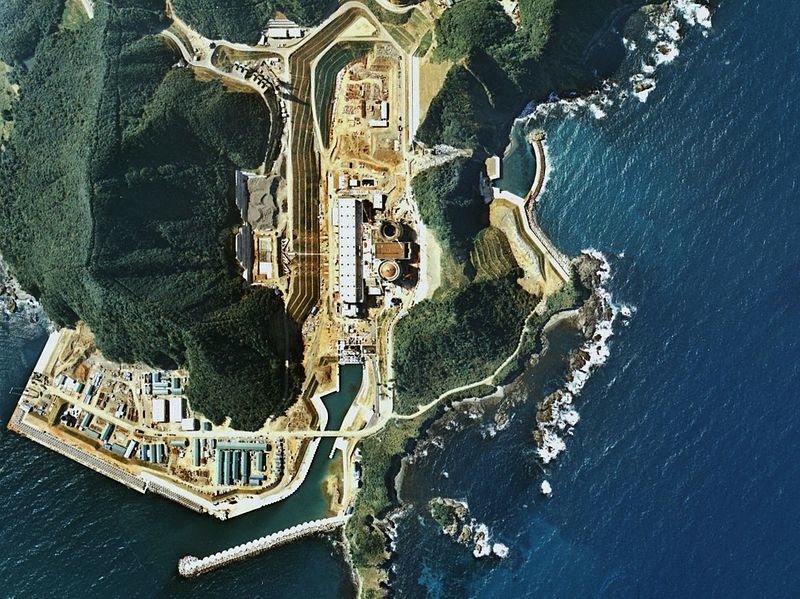
An aerial view of the San Onofre Generating Station. (photo: Jelson25 via Wikipedia)

The Nuclear Regulatory Commission released its report on recent failures at the San Onofre nuclear facility [PDF] on Thursday, stating that, as far as the government regulator was concerned, the operators of the power plant did nothing wrong when they reported major design changes as simple equipment replacement.

At issue at the San Onofre Nuclear Generating Station (SONGS) is the replacement of two giant steam generators less than two years ago. A metal heat-transfer tube in one generator ruptured in January, releasing superheated radioactive steam and triggering a shutdown. Further examination of that generator and its twin revealed unprecedented and unsettling rates of wear in hundreds of other tubes. SONGS has been completely offline ever since.

Investigation of the problem by plant operators and the NRC, as well as independent watchdogs, found that flaws in the computer modeling of the radically redesigned replacement generators lead to building and installing tubing that vibrated substantially more than was anticipated, and substantially more than the equipment could tolerate. Within 18 months of starting up the retrofitted reactors, vibration caused rapid degradation of the metal tubes, resulting in the rupture.

Still, according to the NRC, no laws were broken. Southern California Edison (a division of Edison International, the majority owner of SONGS) did not mislead regulators about the extent of the changes. Federal officials were not lax in their oversight. Things may not have gone exactly as planned, but no one on this side of the Pacific was to blame. Maybe the Japanese at Mitsubishi Heavy Industries, the folks who built the replacement parts, have some ‘splainin’ to do, but SCE and the NRC performed just like they were supposed to.

And that’s exactly the point, isn’t it?

To any outside observer (well, to any observer willing to plow through technical data and design specs), the replacement generators at San Onofre were quite obviously a major redesign–something requiring a more careful, time-consuming and, yes, costly government approval process. Mitsubishi was not the original manufacturer of the SONGS generators, and Edison was not looking to have Mitsubishi machine exact replacement parts. That would have been more expensive–much more expensive.

Instead, SCE sought out what would be the nuclear industry equivalent of “off the shelf” parts, and hoped to engineer a way to make them work with their 30-year-old reactors. Further, Edison desired to increase the output of this power plant. More power theoretically equals more profit–and, to oversimplify the technical details, more tubes could equal more power. The new generators had many times more heat-transfer tubes than the originals.

So, the major design changes at San Onofre were, to turn a phrase, very much by design. But to call them major design changes would have increased the cost, the time, and the amount of oversight required, so, as the NRC report seems to make clear, the rules are written to insure that such changes pass under the regulatory radar:

The agency staff investigation concluded that Edison “provided the NRC with all the information required under existing regulations about proposed design changes to its steam generators,” according to a statement.

But a key question remains under study: Does the agency need to change the process that was used to approve the replacement generators? At issue is whether tubing problems that eventually sidelined the reactors might have been identified by changing rules under which utilities swap equipment at nuclear power plants.

For example, the report concluded that there were “major design changes” between the original and replacement generators at San Onofre, yet they qualified as essentially identical replacements that did not require an exhaustive review by the NRC.

Show me what regulatory capture looks like; this is what regulatory capture looks like

The “letter is willing but the spirit is weak” tone of the San Onofre report seems especially poignant/disturbing coming, as it does, within a fortnight of the latest Japanese report on the Fukushima disaster. That lengthy study found that government officials colluded with the nuclear industry to avoid upgrades and evade scrutiny, resulting in a severe undermining of public safety. Summaries of that report focused on aspects described as unique to Japanese culture, but the NRC’s San Onofre findings demonstrate that this well-choreographed dance between industry and regulators crosses cultural and national boundaries.

The SONGS report also comes the same week as a party thrown by supporters of the recently deposed NRC chairman, Gregory Jaczko:

A cadre of veterans from the office of Senate Majority Leader Harry Reid (D-Nev.) are organizing an effort to pay down the legal debts taken on by Gregory Jaczko, the former chairman of the Nuclear Regulatory Commission, who stepped down amid a fierce industry-backed assault.

Jaczko, a former Reid staffer, racked up tens of thousands in legal fees defending himself. The thinking behind the fundraising effort is straightforward: High-level staffers for top senators can command high salaries in the private sector, many times more than can be earned in public service. So former Reid staffers who have spent their post-Senate years in more lucrative pursuits are coming to the aid of a colleague who made a different, and quite costly, decision.

. . . .

Jaczko’s former colleagues will gather Tuesday evening with Reid and Rep. Ed Markey (D-Mass.), another former boss of his, to thank him for his time on the nuclear panel. (No fundraising can legally take place while Reid and Markey are at the event, organizers said.)

. . . .

The industry’s two top representatives, Alex Flint and Marvin Fertel of the Nuclear Energy Institute, are planning to attend the event, said Karen Wayland, a former Reid staffer who, along with [another former Reid aid Susan] McCue, spearheaded the effort.

Tuesday’s event will also co-hosted by Jimmy Ryan, Dayle Cristinzio and Kai Anderson, high-powered corporate lobbyists who were senior aides to Reid.

Since the writing of that story, the event took place and Senator Reid’s Searchlight Foundation has made known its intention to donate $10,000 to Jaczko’s defense fund.

To be clear, what happened to Jaczko, who was forced out after he advocated for modest safety improvements at US nuclear plants and coordinated with the Department of Energy to end work on the Yucca Mountain nuclear waste project, is itself a lesson in regulatory capture. The US nuclear industry sees any new safety requirements as a threat to their bottom line, and it desperately needs the federal government to find a storage solution for their vast piles of highly radioactive spent fuel and related waste–and so Jaczko was purged and a message was sent.

But, as the guest list would tell you, it is hard to call anyone in this crowd a pure hero. When key figures behind your ouster are also guests at your farewell party and fundraiser, you have to ask yourself if you were really that tough–and everyone around you has to see that industry and government are too cozy.

Close is not good

If online etymologies are to be believed, the expression “close enough for government work” has its origins in the World War II saying, “Good enough for government work.” Back then, the saying was understood to mean that the government had exacting standards, so if the work could pass government inspection, then it could meet any benchmark.

The phrase quickly devolved, however, into its sarcastic opposite–defense contracting will have that effect–and now “close enough for government work” means barely acceptable.

And government–at least when it comes to agencies like the Nuclear Regulatory Commission–has sought to live up to that new understanding ever since.

But when it comes to nuclear power, with the ominous safety implications of substandard work and lax oversight, close enough is not good enough. And if government and industry “working closely” on a problem means what it seems to have at San Onofre, then “close” pretty much never means “good.”

Made in Japan? Fukushima Crisis Is Nuclear, Not Cultural

(photo: Steve Snodgrass)

Since the release of the Fukushima Nuclear Accident Independent Committee’s official report last week, much has been made of how it implicates Japanese culture as one of the root causes of the crisis. The committee’s chairman, Dr. Kiyoshi Kurokawa, makes the accusation quite plainly in the opening paragraphs of the executive summary [PDF]:

What must be admitted – very painfully – is that this was a disaster “Made in Japan.” Its fundamental causes are to be found in the ingrained conventions of Japanese culture: our reflexive obedience; our reluctance to question authority; our devotion to ‘sticking with the program’; our groupism; and our insularity.

That this apparently critical self-examination was seized upon by much of the western media’s coverage of the report probably does not come as a surprise–especially when you consider that this revelation falls within the first 300 words of an 88-page document. Cultural stereotypes and incomplete reads are hardly new to establishment reportage. What might come as a shock, however, is that this painful admission is only made in the English-language version of the document, and only in the chairman’s introduction is the “made in Japan” conclusion drawn so specifically.

What replaces the cultural critique in the Japanese edition and in the body of the English summary is a ringing indictment of the cozy relationship between the Japanese nuclear industry and the government agencies that were supposed to regulate it. This “regulatory capture,” as the report details, is certainly central to the committee’s findings and crucial to understanding how the Fukushima disaster is a manmade catastrophe, but it is not unique to the culture of Japan.

Indeed, observers of the United States will recognize this lax regulatory construct as part-and-parcel of problems that threaten the safety and health of its citizenry, be it in the nuclear sector, the energy sector as a whole, or across a wide variety of officially regulated industries.

No protection

The Japanese Diet’s Fukushima report includes a healthy dose of displeasure with the close ties between government regulators and the nuclear industry they were supposed to monitor. The closed, insular nature of nuclear oversight that might be attributed to Japanese culture by a superficial read is, in fact, a product of the universally familiar “revolving door” that sees industry insiders taking turns as government bureaucrats, and regulatory staff “graduating” to well-compensated positions in the private sector.

Mariko Oi, a reporter at the BBC’s Tokyo bureau, described the situation this way when discussing the Fukushima report on the World Service:

When there was a whistleblower, the first call that the government or the ministry made was to TEPCO, saying, “Hey, you’ve got a whistleblower,” instead of “Hey, you’ve got a problem at the nuclear reactor.”

A disturbing betrayal of accountability in any context, it is especially troubling with the ominous repercussions of the Fukushima disaster still metastasizing. And it is also ominously familiar.

Look, for example, just across the Pacific:

[San Onofre Nuclear Generating Station] was chastised two years ago by the U.S. Nuclear Regulatory Commission for creating an atmosphere in which employees fear retaliation if they report safety concerns.

. . . .

Edward Bussey, a former health physics technician at the plant, sued Edison in state court after he was fired in 2006 under what he said were trumped-up charges that he had falsified initials on logs documenting that certain materials had been checked for radiation. Bussey contended that he was really fired in retaliation for complaining about safety concerns to his supervisors and the NRC.

San Onofre–SONGS, if you will–has been offline since January when a radioactive steam leak led to the discovery of severely degraded copper tubing in both of the plant’s existing reactors. But here’s the real kicker: whistleblower suits at SONGS, like the one from Mr. Bussey, have routinely been summarily dismissed thanks to a little known legal loophole:

San Onofre is majority owned and operated by Southern California Edison, a private company, but it sits on land leased from the Camp Pendleton Marine Corps base.

That puts the plant in a so-called federal enclave, where courts have held that many California laws, including labor laws intended to protect whistle-blowers, do not apply.

Lawsuits filed in state court by San Onofre workers who claimed that they were fired or retaliated against for reporting safety concerns, sexual harassment and other issues have been tossed out because of the plant’s location.

The Los Angeles Times cites examples dating back to the construction of San Onofre where personnel who complained about safety or work conditions were terminated and left without many of the legal options normally afforded most California citizens. The history of SONGS is liberally peppered with accidents and safety breaches–and the lies and cover-ups from its owner-operators that go with them. Considering that San Onofre employees are regularly punished for exposing problems and have fewer whistleblower protections, is it at all surprising that SONGS is reported to have the worst safety record of all US nuclear plants?

If San Onofre’s track record isn’t evidence enough of the dangers of weak regulation, the findings and conclusions of the latest Fukushima report make it crystal clear: “safety culture” is not undermined by Japanese culture so much as it is by the more international culture of corruption born of the incestuous relationship between industry and regulators.

It’s a nuclear thing…

But the corrupt culture–be it national or universal–is itself a bit of a dodge. As noted by the Financial Times, the Japanese and their regulatory structure have managed to operate the technologically complex Shinkansen bullet trains since 1964 without a single derailment or fatal collision.

As the Diet’s report makes abundantly clear–far more clear than any talk about Japanese culture–the multiple failures at and around Fukushima Daiichi were directly related to the design of the reactors and to fatal flaws inherent in nuclear power generation.

Return for a moment to something discussed here last summer, The Light Water Paradox: “In order to safely generate a steady stream of electricity, a light water reactor needs a steady stream of electricity.” As previously noted, this is not some perpetual motion riddle–all but one of Japan’s commercial nuclear reactors and every operating reactor in the United States is of a design that requires water to be actively pumped though the reactor containment in order to keep the radioactive fuel cool enough to prevent a string of catastrophes, from hydrogen explosions and cladding fires, to core meltdowns and melt-throughs.

Most of the multiple calamities to befall Fukushima Daiichi have their roots in the paradox. As many have observed and the latest Japanese report reiterates, the Tohoku earthquake caused breaches in reactor containment and cooling structures, and damaged all of Fukushima’s electrical systems, save the diesel backup generators, which were in turn taken out by the tsunami that followed the quake. Meeting the demands of the paradox–circulating coolant in a contained system–was severely compromised after the quake, and was rendered completely impossible after the tsunami. Given Japan’s seismic history, and the need of any light water reactor for massive amounts of water, Fukushima wouldn’t really have been a surprise even if scientists hadn’t been telling plant operators and Japanese regulators about these very problems for the last two decades.

Back at San Onofre, US regulators disclosed Thursday that the damage to the metal tubes that circulate radioactive water between the reactor and the steam turbines (in other words, part of the system that takes heat away from the core) was far more extensive than had previously been disclosed by plant operators:

[Each of San Onofre’s steam generators has] 9,727 U-shaped tubes inside, each three-quarters of an inch in diameter.

The alloy tubes represent a critical safety barrier — if one breaks, there is the potential that radioactivity could escape into the atmosphere. Also, serious leaks can drain protective cooling water from a reactor.

Gradual wear is common in such tubing, but the rate of erosion at San Onofre startled officials since the equipment is relatively new. The generators were replaced in a $670 million overhaul and began operating in April 2010 in Unit 2 and February 2011 in Unit 3.

Tubes have to be taken out of service if 35 percent — roughly a third — of the wall wears away, and each of the four generators at the plant is designed to operate with a maximum of 778 retired tubes.

In one troubled generator in Unit 3, 420 tubes have been retired. The records show another 197 tubes in that generator have between 20 percent and 34 percent wear, meaning they are close to reaching the point when they would be at risk of breaking.

More than 500 others in that generator have between 10 percent and 19 percent wear in the tube wall.

“The new data reveal that there are thousands of damaged tubes in both Units 2 and 3, raising serious questions whether either unit should ever be restarted,” said Daniel Hirsch, a lecturer on nuclear policy at the University of California, Santa Cruz, who is a critic of the industry. “The problem is vastly larger than has been disclosed to date.”

And if anything, the Nuclear Regulatory Commission is underplaying the problem. A report from Fairewinds Associates, also released this week, unfavorably compared San Onofre’s situation with similar problems at other facilities:

[SONGS] has plugged 3.7 times as many steam generator tubes than the combined total of the entire number of plugged replacement steam generator tubes at all the other nuclear power plants in the US.

The report also explains that eight of the tubes failed a “pressure test” at San Onofre, while the same test at other facilities had never triggered any more than one tube breach. Fairewinds goes on to note that both units at San Onofre are equally precarious, and that neither can be restarted with any real promise of safe operation.

And while the rapid degeneration of the tubing might be peculiar to San Onofre, the dangers inherent in a system that requires constant power for constant cooling–lest a long list of possible problems triggers a toxic crisis–are evident across the entire US nuclear fleet. Cracked containment buildings, coolant leaks, transformer fires, power outages, and a vast catalogue of human errors fill the NRC’s event reports practically every month of every year for the past 40 years. To put it simply, with nuclear power, too much can go wrong when everything has to go right.

And this is to say nothing of the dangers that come with nuclear waste storage. Like with the reactors, the spent fuel pools that dot the grounds of almost every nuclear plant in America and Japan require a consistent and constantly circulating water supply to keep them from overheating (which would result in many of the same disastrous outcomes seen with damaged reactors). At Fukushima, one of the spent fuel pools is, at any given point, as much of a concern as the severely damaged reactor cores.

Ions and tigers and bears, oh my!

Even with the latest findings, however, Japanese Prime Minister Yoshihiko Noda pushed ahead with the restart of the precariously situated and similarly flawed nuclear reactor complex at Oi. It is as if the PM and the nuclear industry feared Japan surviving another summer without nuclear-generated electricity would demonstrate once and for all that the country had no reason to trade so much of its health and safety for an unnecessary return.

But the people of Japan seem to see it differently. Tens of thousands have turned out to demonstrate against their nation’s slide back into this dangerous culture of corruption. (Remember, the Oi restart comes without any safety upgrades made in response to the Fukushima disaster.)

And maybe there’s where cultural distinctions can be drawn. In Japan, the citizenry–especially women–are not demonstrating “reflexive obedience,” instead, they are demonstrating. In the United States, where 23 nuclear reactors are of the same design as Fukushima Daiichi, and 184 million people within 50 miles of a nuclear power plant, when the chairman of the Nuclear Regulatory Commission suggested requiring some modest upgrades as a response to the Fukushima disaster, the nuclear industry got its henchmen on the NRC and in Congress to push him out. . . with little public outcry.

Still, the BBC’s Mariko Oi lamented on the day the Fukushima report was released that Japanese media was paying more attention to the birth of a giant panda at a Tokyo zoo. That sort of response would seem all too familiar to any consumer of American media.

That baby panda, it should be noted, has since died. The radioactive fallout from Fukushima, however, lingers, and the crisis at Daiichi is far from over. The threat to global heath and safety that is unique to nuclear power lives on.

Fukushima Nuclear Disaster “Man-Made” Reports Japanese Panel; Quake Damaged Plant Before Tsunami

Aerial view of the Oi Nuclear Power Plant, Fukui Prefecture, Japan. (photo: Japan Ministry of Land, Infrastructure and Transport via Wikipedia)

The massive disaster at the Fukushima Daiichi nuclear facility that began with the March 11, 2011 Tohoku earthquake and tsunami could have been prevented and was likely made worse by the response of government officials and plant owners, so says a lengthy report released today by the Japanese Diet (their parliament).

The official report of The Fukushima Nuclear Accident Independent Investigation Committee [PDF] harshly criticizes the Japanese nuclear industry for avoiding safety upgrades and disaster plans that could have mitigated much of what went wrong after a massive quake struck the northeast of Japan last year. The account also includes direct evidence that Japanese regulatory agencies conspired with TEPCO (Fukushima’s owner-operator) to help them forestall improvements and evade scrutiny:

The TEPCO Fukushima Nuclear Power Plant accident was the result of collusion between the government, the regulators and TEPCO, and the lack of governance by said parties. They effectively betrayed the nation’s right to be safe from nuclear accidents.

. . . .

We found evidence that the regulatory agencies would explicitly ask about the operators’ intentions whenever a new regulation was to be implemented. For example, NISA informed the operators that they did not need to consider a possible station blackout (SBO) because the probability was small and other measures were in place. It then asked the operators to write a report that would give the appropriate rationale for why this consideration was unnecessary.

The report also pointed to Japanese cultural conventions, namely the reluctance to question authority–a common refrain in many post-Fukushima analyses.

But perhaps most damning, and most important to the future of Japan and to the future of nuclear power worldwide, is the Investigation’s finding that parts of the containment and cooling systems at Fukushima Daiichi were almost certainly damaged by the earthquake before the mammoth tsunami caused additional destruction:

We conclude that TEPCO was too quick to cite the tsunami as the cause of the nuclear accident and deny that the earthquake caused any damage.

. . . .

[I]t is impossible to limit the direct cause of the accident to the tsunami without substantive evidence. The Commission believes that this is an attempt to avoid responsibility by putting all the blame on the unexpected (the tsunami), as they wrote in their midterm report, and not on the more foreseeable earthquake.

Through our investigation, we have verified that the people involved were aware of the risk from both earthquakes and tsunami. Further, the damage to Unit 1 was caused not only by the tsunami but also by the earthquake, a conclusion made after considering the facts that: 1) the largest tremor hit after the automatic shutdown (SCRAM); 2) JNES confirmed the possibility of a small-scale LOCA (loss of coolant accident); 3) the Unit 1 operators were concerned about leakage of coolant from the valve, and 4) the safety relief valve (SR) was not operating.

Additionally, there were two causes for the loss of external power, both earthquake-related: there was no diversity or independence in the earthquake-resistant external power systems, and the Shin-Fukushima transformer station was not earthquake resistant.

As has been discussed here many times, the nuclear industry and its boosters in government like to point to the “who could have possibly imagined,” “one-two punch” scenario of quake and tsunami to both vouch for the safety of other nuclear facilities and counter any call for reexamination and upgrades of existing safety systems. Fukushima, however, has always proved the catastrophic case study that actually countered this argument–and now there is an exhaustive study to buttress the point.

First, both the quake and the tsunami were far from unpredictable. The chances of each–as well as the magnitude–were very much part of predictions made by scientists and government bureaucrats. There is documentation that Japanese regulators knew and informed their nuclear industry of these potential disasters, but then looked the other way or actively aided the cause as plant operators consistently avoided improving structures, safety systems and accident protocols.

Second, even if there had not been a tsunami, Fukushima Daiichi would have still been a disaster. While the crisis was no doubt exacerbated by the loss of the diesel generators and the influx of seawater, the evidence continues to mount that reactor containment was breached and cooling systems were damaged by the earthquake first. Further, it was the earthquake that damaged all the electrical systems and backups aside from the diesel generators, and there is no guarantee that all generators would have worked flawlessly for their projected life-spans, that the other external and internal power systems could have been restored quickly, or that enough additional portable power could have been trucked in to the facility in time to prevent further damage. In fact, much points to less than optimal resolution of all of these problems.

To repeat, there was loss of external power, loss of coolant, containment breach, and release of radiation after the quake, but before the tsunami hit the Fukushima nuclear plant.

And now for the bad news. . . .

And yet, as harsh as this new report is (and it is even more critical than was expected, which is actually saying something), on first reading, it still appears to pull a punch.

Though the failure of the nuclear reactors and their safety systems is now even further documented in this report, its focus on industry obstruction and government collusion continues in some ways to perpetuate the “culture of safety” myth. By labeling the Fukushima disaster as “Made in Japan,” “manmade” and “preventable,” the panel–as we are fond of saying here–assumes a can opener. By talking up all that government and industry did wrong in advance of March 11, 2011, by critiquing all the lies and crossed signals after the earthquake and tsunami, and by recommending new protocols and upgrades, the Japanese report fiats a best-case scenario for a technology that has consistently proven that no such perfect plan exists.

The facts were all there before 3/11/11, and all the revelations since just add to the atomic pile. Nuclear fission is a process that has to go flawlessly to consistently provide safe and economical electrical power–but the process is too complex, and relies on too many parts, too many people and too volatile a fuel for that to ever really happen. Add in the costs and hazards of uranium mining, transport, fuel milling, and waste storage, and nuclear again proves itself to be dirty, dangerous, and disgustingly expensive.

* * *

And, as if to put an exclamation point at the end of the Diet’s report (and this column), the Japanese government moved this week to restart the nuclear plant at Oi, bringing the No. 3 reactor online just hours before the release of the new Fukushima findings. The Oi facility rests on a fault line, and seismologists, nuclear experts and activists have warned that this facility is at risk much in the way Fukushima Daiichi proved to be.

Most of Japan’s reactors were taken offline following the Tohoku quake, with the last of them–the Oi plant–shut down earlier this year. In the wake of the disaster, Japan’s then-Prime Minister, Naoto Kan, suggested that it might be time for his country to turn away from nuclear power. Demonstrators across Japan seemed to agree and urged Kansai Electric Power Company and current Prime Minister Yoshihiko Noda to delay the restart of Oi. But the government seemed to be hurrying to get Oi back up, despite many questions and several technical glitches.

Noda insists the rush is because of the need for electricity during the hot summer months, but Japan managed surprisingly well last summer (when more of the country’s infrastructure was still damaged from the quake and tsunami) with better conservation and efficiency measures. Perhaps release of this new report provides a more plausible explanation for the apparent urgency.

Does the Netroots Care about Nuclear Power?

Van Jones speaking to the faithful at this year’s Netroots Nation conference in Providence, RI – June 9, 2012.

On Thursday, June 7, as hundreds of online journalists and activists gathered in Providence, Rhode Island for the seventh annual Netroots Nation conference to discuss what were deemed the most pressing issues of the day, a smaller group made up of nuclear industry representatives and officials from the Nuclear Regulatory Commission and the US Department of Energy got together 400 miles south to discuss matters they thought even more urgent. While the attendees in the Ocean State were getting training on “how to navigate the action-packed schedule at Netroots Nation [and] survive on two hours sleep (and still be alert for a day of panels!),” owners of the nation’s aging nuclear facilities pursued doubling the length of new operating licenses, floating the possibility that reactors will be allowed to run into their 80th year–twice the original design life of most plants.

As bloggers, organizers, pundits and politicians were discovering the charms of the Beehive of Industry (yes, that is one of Providence’s nicknames), inspectors at Davis-Besse, the oft-discussed, always troubled nuclear power plant near Toledo, Ohio were reporting what they termed a “pinhole” leak releasing about a gallon of radioactive coolant every 10 minutes. The reactor had been shut down for refueling, maintenance and safety inspections, but was supposed to restart last week. . . before the leak was discovered in a pipe weld. (Though the reason behind the leak has yet to be determined, FirstEnergy, Davis-Besse’s owner, has now resumed the restart. . . without so much as a raised eyebrow from regulators.)

This incident at Davis-Besse comes not so very long after the Ohio primary, where the safety of the plant and trustworthiness of its owners and regulators was an issue in the race between two sitting Democratic members of Congress–Representatives Dennis Kucinich and Marcy Kaptur. Forced to run against each other because of redistricting, the plight of Davis-Besse became a defining issue between the two, with Kucinich calling for the plant to remain off-line until the cause of cracks in the containment structure was determined, while Kaptur affirmed her faith in FirstEnergy. Kaptur argued that the failing facility meant jobs for the struggling district–a district that was drawn to favor Kaptur’s old base–and in the end, beat Kucinich for the Democratic nod.

Following this latest breach in safety, Representative-for-another-six-months Kucinich has petitioned the Nuclear Regulatory Commission’s Inspector General (PDF) for an investigation into the NRC’s lax supervision of Davis-Besse.

As the netroots community and representatives of organized labor pondered in Providence whither the union movement in the wake of the Wisconsin recall results, 250 actual union workers, locked out of their jobs at Massachusetts Pilgrim nuclear plant (a short drive from the Rhode Island Convention Center), some for as long as 10 weeks, were filing a five-point grievance with the National Labor Relations Board. The union accused Pilgrim’s operator, Entergy, of coercive and threatening behavior leading up to a June 2 vote on a new labor contract. The workers overwhelmingly rejected the contract a week after the NRC granted Entergy a 20-year license extension for the plant–and 10 days after Pilgrim had to scram because of reduced vacuum in the plant’s condenser.

That there would be problems at a plant where replacement workers have been complaining that they are being asked to do jobs outside their expertise hardly seems surprising. That an ongoing labor action, safety concerns and licensing fight happening just two counties away from Providence would not be an issue at the Netroots Nation convention is a bit more vexing.

While conventioneers in Providence listened to New York Attorney General Eric Schneiderman explain his relative lack of action on the foreclosure fraud crisis as somehow part of what he called a “transformational moment,” members of Pilgrim Watch, a citizen’s group opposed to the Massachusetts nuclear plant, were in court demanding that regulators do more to require post-Fukushima lessons learned be incorporated in required upgrades to Pilgrim’s GE Mark I boiling water reactor (the exact same design as those at Fukushima Daiichi). Activist groups have mounted similar (and additional) legal challenges to the relicensing of Vermont Yankee, another ancient Mark I reactor well into its break-down phase. And in New York, public activism mounts as the Indian Point reactors approach their relicensing hearing.

In fact, Friday, as Netroots Nation attendees wondered why there was a 90-minute gap in the midday schedule (word is conference organizers were hoping to bag the president or vice president as a lunchtime keynote, and the extra time was allotted for additional security. In case you missed it, the closest the conference got to any high-level White House official was a new campaign video, introduced on tape by Obama), the DC Court of Appeals handed down an important decision that could have broad implications for the future of domestic commercial nuclear power. A three-judge panel unanimously ruled that the Nuclear Regulatory Commission was negligent in the way it evaluated plant safety because regulators assumed a solution to the country’s long-term radioactive waste storage crisis when none currently exists.

If you were watching your twitter feed, you might have caught this. If you were sitting in on any of Friday afternoon’s Netroots panels, this ruling probably didn’t come up.

Indeed, throughout the three-plus days of panels, training sessions, caucuses and keynotes, attendees quite likely heard no mention of nuclear power, its persistent threats to safety, its drastic drain on the budget, its onerous oppression of workers or its brazen gouging of rate-payers. For, while there were well over 100 panels, and dozens of other training sessions and caucuses, nothing on the schedule even made a passing attempt to address nuclear energy here in the United States or the ongoing (and growing) crisis of radioactive contamination from Fukushima spreading across the globe.

It would be one thing if this were purely fodder for wonks and science geeks, but as demonstrated above, and in over a year’s worth of columns, nuclear power touches on many (if not most) of the issues considered to be core concerns of the netroots movement. Corporate greed, captured government, worker rights, environmental justice, and a lazy legacy media–its all part and parcel of the nuclear narrative.

And it might not be worth a few precious hours of conference schedule if the fight against nuclear power and its acolytes were a lost cause, but in this post-Fukushima moment (and, yes, we are still in it), the country and the world stand at a crossroads. While the US government seems hell-bent on backstopping a failing, flailing industry, other countries are using this crisis to step back from the next potential nuclear nightmare and commit to a cleaner, renewable energy future. Meanwhile, here in the United States, engaged communities of activists and concerned citizens are organizing to fight on the local level for the protections their federal government has failed to deliver.

The appeals court decision on Friday is a monument, really, to the years of hard work put in by individuals and organizations across the country–and it is a monumental opportunity to learn from this success and build the future of the anti-nuclear movement.

It is a movement that could benefit greatly from the online organizing tools that have breathed so much life into the netroots, but the netroots, too, could learn a few things from the anti-nuclear movement. Providence, with its physical proximity to Pilgrim, and its temporal proximity to so many developments on the nuclear front, would have seemed like a golden opportunity. But the organizers of Netroots Nation appeared to have other priorities.

While the good folks at NIRS–the Nuclear Information and Resource Service–where awarded a booth in the exhibition hall at the Providence convention center, veterans of the conference know there is quite a different level of engagement when it comes to the booths, versus what happens at panels and speeches. (This is to take nothing away from NIRS, which had a table filled with great information, much of which can also be found on their website.)

Fired up?

Some noise was made, quite publicly, as a matter of fact, about this year’s Netroots convention being friendlier to the Obama administration. “I think people are generally on board [with Obama’s reelection effort],” said Raven Brooks, the executive director of Netroots, as he explained to Talking Points Memo that this year’s convention would be relatively free of the confrontation that met White House Communications Director Dan Pfeiffer at the 2011 conference.

“People are fired up about 2012,” said Mary Rickles, who is communications director for Netroots, noting in the same TPM article that she expected an administration presence at this year’s conference. (Again, unless you count Schneiderman, there was none.)

Inside the convention center, Van Jones–briefly part of the Obama administration until driven out by a rightwing witch-hunt, and cofounder of Rebuild the Dream–headlined the last night of speeches. Jones, himself a longtime advocate for renewable energy, instead turned to a theme he has hit often in recent years: that while some might be disappointed with the pace of progress, in the end, it is not Obama’s failing, it is ours. But this time, it being an election year, and everyone thusly “fired up,” Jones put it this way: “We have two tasks: to re-elect the president and re-energize the movement to hold the president accountable.”

Quoting Jones in an email announcing next year’s convention, Brooks underscored the point:

After November has come and gone, our job of pushing for the strongest possible progressive policies will begin in earnest. In short, we’ve got to step up our game.

Inspiring thoughts, perhaps, but ones completely contrary to the way electoral politics has worked in this country about as far back as anyone can remember. Making demands of office-seekers after you’ve pledged your vote is not just cart-before-the-horse, it’s asinine and ass-backwards.

The netroots played a roll in the election of Barack Obama in 2008, though in the eyes of the now-POTUS, not an overly large one. After the election, Team Obama moved quickly to rein in the less-predictable elements of its grassroots campaign while one-by-one riding roughshod over most of the issues that mattered to left-leaning bloggers and online activists. Previous NetNat attendees had a right to boo Obama surrogates, and the folks charged with re-electing the president should be taught to fear that wrath–if not through activism, at least by way of apathy.

Mitt Romney would no doubt make a dismal president–but that is not the point. This election will be decided by turnout, and the Obama campaign will need to motivate parts of his base such as the netroots with reasons to get out and vote for his second term. If online activists want something from Obama in return for going to the polls, the time to demand that, the time to get that on paper–or in pixels–is before election day, not after.

After, Obama doesn’t need you anymore. It’s called a lame duck term for many reasons, but one of them is that the president can easily duck any kind of obligation some might feel he should have to his blandly loyal netizens.

Which brings us back to nuclear power and Netroots Nation. It is not a secret that one of Obama’s great benefactors in past elections has been Exelon, the nuclear giant that not only gave heavily to the 2008 campaign, but once employed both former Obama Chief of Staff Rahm Emanuel and David Axelrod, once a senior Obama advisor and now Communications Director for his 2012 campaign. Obama’s steadfast support for nuclear power–making the point, not once, but twice, in the first weeks after the Fukushima crisis began, to publicly assure that the US commitment to nuclear was strong–now puts him at odds with many countries in the industrialized world, but, more important here, it has always put him at odds with many in the online progressive community. It would be sad to think that conference organizers decided against any anti-nuclear content in an effort to keep this year’s Netroots Nation “onboard” with and “fired up” about a possible administration presence.

But it would be even sadder to think that the fault lies not in these self-anointed stars, but in ourselves. While chances are if you are reading this you have at least some degree of interest in nuclear issues, is it possible that what once was called the “blogosphere” (but now should be considered something more) does not see nuclear power, the looming environmental catastrophe and financial sinkhole it presents, as relevant? Is it that the almighty and always invisible atom is just not as juicy as, say, fracking, or anything with the word “occupy” in it?

That would be a shame–and a mistake–for it is all part of a piece. The work of occupiers across this country over the last year is to be applauded, but some of the things central to the protests, a broken system, a captured government filthy with corporate cash, are central to the fight against nuclear power, as well. And while hydrofracking represents a tremendous threat to our water supply and our climate, and so should be protested full bore, its current profitability might make it less sensitive to activism than nuclear power at this point in its history.

Without government support–without the federal loan guarantees, the Price-Anderson indemnity, state and local tax breaks and rate subsidies–the commercial nuclear power industry would collapse. There would be few demands for license renewals because few plants would turn a profit.

And without a government-run long-term waste repository, the nuclear industry faces even more safety and financial concerns. The lack of storage options is actually a crisis for nuclear operators–and a threat to the safety of a majority of Americans. What this country does with its atomic waste has always been a political issue, too–and it has played out on the political stage throughout this past year. It is an issue that is very sensitive to old-time, easy to grasp, electoral politics, and so it is one sensitive to the newfangled tools of internet organizing.

So, between environmentalists and budget wonks, between regulatory hawks and electoral junkies, and between old-line environmental activists and 21st Century online organizers there is much to discuss. Let’s hope that no matter who is running for whatever office next year, the netroots, and the Netroots Nation conference, find the time and space–and the political will–to engage the dirty, dangerous and expensive threat of nuclear power.

*  *  *

[Full disclosure: I had submitted a panel proposal for the 2012 Netroots Nation conference, and though it was given consideration and, I am told, was in the running till the end, it was not included in the final schedule. The panel was to be called “Clean, Safe, and Too Cheap to Meter? Countering Nuclear’s Lies in a Post-Fukushima Landscape,” and while I was disappointed at not having this opportunity, the far bigger concern for me was that conference organizers chose not to include any sessions on nuclear issues at all. One year’s personal slight is not really a big deal; ignoring the obvious and broad importance of this topic, however, signals a bigger problem.]

Court Says Regulators Must Evaluate Dangers of Nuclear Waste

A nuclear spent fuel pool. (photo: NRCgov)

The Nuclear Regulatory Commission acted improperly when it failed to consider all the risks of storing spent radioactive fuel onsite at the nation’s nuclear power facilities, so ruled a federal court on Friday.

In a unanimous ruling (PDF), a three-judge panel of the US court of appeals for the District of Columbia found that the NRC’s “Nuclear Waste Confidence Decision”–the methodology used for evaluating the dangers of long-term waste storage–was woefully inadequate:

[The Nuclear Regulatory Commission] apparently has no long-term plan other than hoping for a geologic repository. . . . If the government continues to fail in its quest to establish one, then SNF (spent nuclear fuel) will seemingly be stored on site at nuclear plants on a permanent basis. The Commission can and must assess the potential environmental effects of such a failure.

Writing for the court, Judge David Sentelle made no bones about the shortcomings of the NRC’s magical, one-size-fits-all method of assuming a future solution for the nuclear waste storage crisis. Spent fuel “poses a dangerous long-term health and environmental risk,” he said.

The suit was brought by the attorneys general of Connecticut, New Jersey, New York, and Vermont, in coordination with the Prairie Island Indian Community of Minnesota and environmental groups represented by the National Resources Defense Council.

The decision harshly criticized regulators for evaluating plant relicensing with the assumption that spent nuclear fuel–currently stored onsite in pools and dry casks–would be moved to a central long-term waste repository. As discussed here before, the only option seriously explored in the US was the Yucca Mountain site in Nevada. After years of preliminary construction and tens of millions of dollars of dollars spent, Yucca was determined to be a bad choice for the waste, and the Obama administration’s Department of Energy and the NRC halted the project.

Despite the wishful reporting of some nuclear advocates, the Yucca repository is nowhere near ready, and even if it were an active option, the facility would be many years and maybe as much as $100 million away from completion. Still, the nuclear industry and its acolytes have challenged the administration to spend any remaining money in a desperate attempt to keep alive the fantasy of a solution to their waste crisis.

Such zombified hopes, however, do not qualify as an actual plan, according to the courts.

The judges also chastised the NRC for its generic assessment of spent fuel pools, currently filled many times over capacity at nuclear plants across the United States. Rather than examine each facility and the potential risks specific to its particular storage situation, the NRC had only evaluated the safety risks of onsite storage by looking at a composite of past events. The court ruled that the NRC must appraise each plant individually and account for potential future dangers. Those dangers include leaks, loss of coolant, and failures in the cooling systems, any of which might result in contamination of surrounding areas, overheating and melting of stored rods, and the potential of burning radioactive fuel–risks heightened by the large amounts of fuel in the storage pools and underscored by the ongoing disaster at Japan’s Fukushima Daiichi plant.

The decision has immediate ramifications for plants in the northeast seeking license extensions–most notably Entergy’s Indian Point facility, less than an hour’s drive from New York City, and their Vermont Yankee plant, which is operating despite seeing its original license expire in March.

New York’s Attorney General Eric Schneiderman released a statement, which reads, in part:

This is a landmark victory for New Yorkers, and people across the country living in the shadows of nuclear power plants. We fought back against the Nuclear Regulatory Commission’s rubber stamp decision to allow radioactive waste at our nation’s nuclear power plants to be stored for decades after they’re shut down – and we won. The Court was clear in agreeing with my office that this type of NRC ‘business as usual’ is simply unacceptable. The NRC cannot turn its back on federal law and ignore its obligation to thoroughly review the environmental, public health, and safety risks related to the creation of long-term nuclear waste storage sites within our communities.

And William Sorrell, Vermont’s AG, concurred:

This outcome illustrates how important it is for states to work together on environmental matters of national importance. Today’s decision is a major victory for New York, Vermont, and all other states that host nuclear power plants. The court confirmed what Vermont and other states have said for many years now—that the NRC has a duty to inform the public about the environmental effects of long-term storage of spent nuclear fuel, particularly when it is occurring at nuclear power plants that were never designed to be long-term storage facilities.

Indeed, plants were not designed nor built to house nuclear waste long-term. The design life of most reactors in the US was originally 40 years. Discussions of the spent fuel pools usually gave them a 60-year lifespan. That limit seemed to double almost magically as nuclear operators fought to postpone the expense of moving cooler fuel to dry casks and of the final decommissioning of retired reactors.

But, as reported here last fall, outgoing NRC chief Gregory Jaczko was exploring the possibility of using onsite storage for 200 to 300 years. How these metrics will change when the new head regulator, Allison Macfarlane, is confirmed is not yet known–but Macfarlane is on record as both a Yucca skeptic and an advocate for regional interim waste storage facilities. That plan, however, has many critics, as well, can only take fuel already cool enough to be removed from pools, and, of course, has not been so much as sited or designed, let alone constructed.

While no nuclear plants will close today as a result of this decision, it should also be noted–because some reports assume otherwise–that this finding does not mean Yucca Mountain must open, either. The ruling does, however, underscore the waste crisis–and it is a crisis–faced by the US nuclear industry. No only is it generating approximately 2000 tons of new waste every year that will need an eternal resting place, pools at some plants are so full it actually complicates refueling and maintenance (since fuel needs to removed from reactors and kept cool for both procedures). Plant operators are desperate to have the federal government take on the costs and the risks of waste storage.

But without anything even close to a plan for a long-term repository, the Nuclear Regulatory Commission cannot assume a solution, says the court. Instead, it must look at reality–something the entire country would best be advised to do when evaluating the future of this dirty, dangerous and expensive energy source.

House Postpones Witch Hunt While Nuclear Industry Awaits Results of Latest Power Play

The Salem Nuclear Power Plant is in New Jersey, not Salem, MA, but you get the idea. (photo: peretzp)

In case you were wondering what it was all about–“it” being the dealings of the Nuclear Regulatory Commission actually making the popular news for a few months–the House Committee on Energy and Commerce indefinitely postponed its Thursday hearing on the “politicization of the [NRC] and the actions and influence of Chairman Jaczko.” Gregory Jaczko, of course, announced his resignation on May 21, and President Obama nominated Allison Macfarlane as his replacement three days later.

Though stressing that his committee would keep an eye on the NRC, “including a full review of the inspector general’s pending report” on the “breakdown in collegiality at the commission,” Chairman Fred Upton (R-MI) did not schedule a new hearing.

And there is no apparent update from Darrell Issa (R-CA), chairman of the House Committee on Oversight and Government Reform, and, until about the third week of last month, one of the loudest and most persistent critics of workplace morale at the Nuclear Regulatory Commission. Before Jaczko’s resignation, Issa, too, was promising more hearings. Instead, Issa has turned again to attacking loan guarantees for renewable energy projects (and so, attempting. . . again. . . to make Solyndra an issue in the presidential election)–which also serves his masters (as in, largest campaign contributors) in the nuclear industry just fine, thank you.

Meanwhile, things are suddenly moving on the Senate side. Majority Leader Harry Reid (D-NV) has given a more public blessing to the suspected private deal discussed here during the weeks leading up to Jaczko’s move. Because Dr. Macfarlane is considered an opponent of the Yucca Mountain nuclear waste repository, Senator Reid has agreed to put aside his vocal objections to a second term for NRC commissioner Kristine Svinicki and advance both nominations toward confirmation as a pair. (Stopping Yucca, of course, has been one of Reid’s top priorities throughout his political career.) California Democrat Barbara Boxer, whose Environment and Public Works Committee will conduct the hearings on the NRC nominees, has sidestepped her own strong objections to Svinicki, and now says both the current and potential nuclear regulators should be considered before the end of the month.

So, there you have it–matters supposedly related to oversight of the nuclear industry and the safety of the American people have quite visibly taken a back seat to influence peddling and classic beltway horse-trading. In an era where even cynical deals are rarely struck, some might hail this move to quickly restock the NRC as something resembling bipartisan compromise (as if that were an end in itself). But success is not measured by the number of commissioners collecting government paychecks, it is seen in the actions of regulators who actually regulate.

In the wake of the ongoing Fukushima crisis, and in the presence of countless problems at a multitude of aging American nuclear plants, there is, indeed, much regulating to be done. But when one member of the NRC is forced out for vainly advocating the most minor of safety improvements, while another commissioner is rewarded with reappointment for consistently supporting the nuclear industry, the chances of the Nuclear Regulatory Commission regulating much of anything seem slim. It effectively defines “regulatory capture,” and practically guarantees that, no matter how fair or interpersonally gifted Dr. Macfarlane might be, the NRC will do little to police nuclear power.

As has been noted here on numerous occasions, the regulatory system is broken. Scientists, citizens, and lawmakers cannot “assume we have a can opener” and pretend a process exists to make commercial nuclear power clean and safe. The NRC may–may–have been created to provide oversight, but, in reality, it works instead to provide cover. Without an honest and active regulatory body, there is no credible argument for a “nuclear renaissance“–there is only the promise of another nuclear disaster.

Imagine a Nuclear-Free California (You Don’t Have To, It’s Already Here)

We welcome our salp overlords. (A chain of salp in the Red Sea; photo: Lars Plougman via Wikipedia)

California has two nuclear power plants. San Onofre, between Los Angeles and San Diego, has been offline for months as everyone tries to find an excuse for the alarmingly rapid wear on new reactor tubing. (Being shut down, however, did not prevent a fire from breaking out this week when a pipe ruptured and released radioactive steam.)

But as of Thursday, Diablo Canyon, the nuclear plant to the north, is also offline–thanks to. . . uh, salp?

Yes, salp–those loveable, gelatinous, jellyfish-like, plankton-eating sea creatures that multiply like, well, salp–have swarmed Diablo Canyon’s water intake system. D-Can draws in tens of thousands of gallons of seawater every day to cool its reactors, and with all that salp clogging the intake pipes, the plant could no longer operate safely.

That may sound like a freak event, but it isn’t. San Onofre had to shut down in 2005 to clear out 11,000 pounds of anchovies that had the bad luck of swimming too close to that plant’s intake filters. . . and in 2004, it shut down, too, but that time it was due to 14,000 pounds of sardines.

And just last year, actual jellyfish (sorry, salps) brought down Florida Power & Light’s St. Lucie nuclear power station. Jellyfish have also previously crippled nuclear facilities in the UK, Israel and Japan.

But back to California, where without nuclear power, the state is heading for a disaster of biblical proportions–we’re talking human sacrifice, dogs and cats living together, mass hysteria!

Actually, no. What will happen is that Pacific Gas & Electric, the owner of Diablo Canyon, and Southern California Edison, San Onofre’s operator, will have to buy electricity (or continue to buy electricity) in order to deliver what they are obligated to deliver. That’s no fun for the big utilities, and maybe it looks biblical to the bean counters, but it is not an energy apocalypse.

Of course, instead of throwing millions after billions to buy surplus electricity elsewhere while also paying to staff, examine and repair its dormant, ancient nuclear facilities, power companies could try to invest more in 21st Century renewable alternatives.

And maybe that would happen if the market were actually, you know, a market. But with tax breaks, loan guarantees, and liability caps, the industry has little motivation to make sound financial or environmental decisions.

But there’s no time like the present to start. And right now, in California, that present is nuclear-free.

A little bit pregnant?

On Thursday, NPR’s Richard Harris delivered a report that regurgitated the nuclear industry’s latest message morph–once “clean, safe, and too cheap to meter,” the 21st Century PR spin has nuclear as the climate-friendly energy option.

The radio piece is ostensibly about how the world’s industrialized nations are failing to meet their climate goals–and this is true (and this is a problem). But Harris does the world and the climate cause no favors when he lazily posits: “Nuclear power produces very little carbon dioxide. . . .”

What does Harris mean by “nuclear power produces very little carbon dioxide?” Is that supposed to be a hedge? If you are isolating the atomic pile generating heat to boil water inside a closed system, then you might as well say “no CO2,” but if you are honest and take into account the whole lifecycle of nuclear fuel–from mining and refining through transportation and storage–then nuclear power produces a prodigious amount of greenhouse gases. Which is it Richard?

Probably just an oversight

The Washington Post published self-serving letter to the editor supporting a recent pro-nuclear editorial, but neglected to include that the letter was written by the current vice president and president elect and sitting member of the board of directors of the unabashedly pro-nuclear American Nuclear Society.

If only Nixon had apologized!

Fukushima Governor Yuhei Sato apologized Wednesday for prefectural officials who deleted records on the spread of radioactive fallout immediately following the start of the Daiichi nuclear crisis in March of 2011. The data from the country’s System for Prediction of Environmental Emergency Dose Information (SPEEDI) could have better informed citizens on when and where to evacuate during the first days after the Tohoku quake and tsunami destroyed safety systems at the Fukushima Daiichi nuclear power plant, and could have also given those trying to piece together what happened inside the reactors important forensic evidence.

At a news conference, Sato said, “A big problem lies in the fact that we failed to fully share the information soon after the nuclear disaster broke out.”

Well, yeah, that–and that you erased it.

Not to worry though, the government “reprimanded” its supervising officials and also “issued strong warnings” to the two government employees that actually did the deleting. So, citizens of Northern Japan, we’re good?

“Let’s Eat Cesium Beef”

That is (as translated by EXSKF) the name of an event in Iwate, Japan designed to encourage people to eat local beef known to be contaminated with radioactive cesium from Fukushima’s fallout.

No, this did not appear in a Japanese version of The Onion (Tamanegi?), this a real event as reported by Kyodo News in a series called “New Happiness in Japan.” Apparently, happiness is knowing you’re only poisoning your children a little bit. . . because there were kids at this thing.

The event was, uh, cooked up by the head of a meat-packing company to show a group of his regular customers–including young couples with kids–that beef containing radioactive cesium, but at levels lower than the provisional safety limits, still tasted OK.

According to the source of the translation, this story has people all over Japan shaking their heads wondering what this meat packer could have been thinking, but there have been several stories over the past year documenting even more official Japanese government efforts to get citizens to consume agricultural products from Fukushima and surrounding regions.

Imagine a nuclear-free Japan

Soon, you won’t have to imagine that, either. The last of Japan’s 50 commercial reactors still online will soon shut down.

Wait? Fifty? Wasn’t it 54? Well, earlier this month, Japan removed the four damaged reactors at Fukushima Daiichi from their official list of the country’s commercial reactors.

Probably wise.

Oh, and, notice, also no mass hysteria. The radiation that has contaminated air, water, and land might have many Japanese very worried, but the country has managed to handle the reduced electrical generating capacity remarkably well. They did this thing called “conservation.” Been doing it for over a year now. Think of all the dogs and cats that have been spared. . . not to mention the salp.

Book Salon – Martin Cohen and Andrew McKillop, The Doomsday Machine: The High Price of Nuclear Energy, the World’s Most Dangerous Fuel

[Note: On Sunday afternoon, I hosted FDL Book Salon, featuring a live Q&A with Martin Cohen and Andrew McKillop, authors of The Doomsday Machine: The High Price of Nuclear Energy, the World’s Most Dangerous Fuel. This is a repost of that discussion.]

Little more than 13 months after the world’s third major civilian nuclear accident in three decades, it might be surprising to find that one of the words commonly used in context with nuclear power these days is “renaissance.” Though more the product of public relations than real observation, the concept of a “nuclear renaissance” took hold over the last decade purportedly as a response to the rising price of fossil fuels and a growing concern over climate change–and it became so much a part of the lingua franca that even after an earthquake and tsunami triggered the massive crisis at the Fukushima Daiichi nuclear power plant (a crisis that continues to this day), media reports still try to assess how much of a renaissance we will see post-Fukushima, rather than laugh at the idea that a renaissance ever existed.

The persistence of this current narrative is, of course, not an accident. For while it is debatable how good nuclear power is at meeting the world’s energy needs–the ability of the nuclear industry to gobble public money, peddle influence and reinvent its image, all while still clinging to generations-old technology, is practically the stuff of legend.

Or should we say “the stuff of myth?” In The Doomsday Machine: The High Price of Nuclear Energy, the World’s Most Dangerous Fuel, environmentalist and social philosopher Martin Cohen, and energy economist Andrew McKillop explain that myths are the one thing the nuclear industrial complex is consistently good at producing. From the early echoes of “Atoms for Peace,” through the spin-tastic triple lie of “clean, safe, and too cheap to meter,” right up to the current green-washed renaissance, The Doomsday Machine describes over 60 years of industry morphing and mythmaking.

Even before the world witnessed the devastation of Hiroshima and Nagasaki, the splitting of the atom had a certain aura about it (if not a glow), and the idea of harnessing the raw power that had leveled two Japanese cities for something “good” was a seductive one. There was something godlike about manipulating nature’s most basic building blocks, and something oh-so-modern and evolved about doing it with the power of science. Cohen and McKillop discuss how, from its earliest days, the nuclear industry used the contrast of clean-cut men in white lab coats manipulating dials versus filthy miners feeding dirty coal into furnaces belching smoke to brand nuclear power as “the energy of the future.”

This is the first of eight myths that The Doomsday Machine attempts to debunk by citing history, economics, psychology, statistics and, yes, science, too. In addition to the failure of nuclear power to ever realize its future (I am reminded here of the old quote about Brazil–a country, by the way, with nuclear hassles of its own–“Brazil is the country of the future–and always will be”), today’s book takes on the myths of nuclear being clean and green, reliable and safe, cheap and desirable as an investment, and immune to the tug of geopolitics. Some of those ideas are more absurd than others, but, being the myths that they are, as Cohen and McKillop detail, none of them are true.

Interesting, too, beyond the long and sordid list of nuclear accidents and mishaps–and that list is indeed very long–are some of the other forces that have, over the years, meshed conveniently with the nuclear industry’s quest for relevance and cash.

Take, for example, that contrast with coal. It is true that coal is ancient and dirty, but coal is also predominantly turned into its usable form by union workers. Uranium, on the other hand, is mined in many places by a much-less-organized workforce, and nuclear power plants, The Doomsday Machine says, are largely maintained by contract workers. Was it just a coincidence that world leaders hostile to organized labor–Margaret Thatcher and Ronald Reagan, for example–were also vocal advocates for the expansion of nuclear power? Cohen and McKillop think not.

Another example, and one perhaps even more controversial, is the alliance of nuclear power proponents with a certain segment of the environmental movement. In what the authors term an alliance of “Baptists and Bootleggers,” strange bedfellows have found common cause to attack fossil fuels, demand that their use be curtailed to lessen carbon emissions, and then declare that nuclear energy is the only alternative poised to fill the gap.

Cohen and McKillop rightly explain that nuclear is far from a carbon-neutral energy source. As my own writing has explored many times, from mining to refining, from transport to waste storage, from energy intensive plant construction to the fact that you need a steady energy supply to run a nuclear plant safely, nuclear energy has a carbon footprint of awesome proportions. But The Doomsday Machine goes a little further, asserting that “climate change was originally, and remains, a rich country’s hobby,” and that the focus on CO2 is more political and less progressive than the IPCC and its defenders would have you believe.

From my perspective, it is a point that gives one pause. There certainly are some advocates of atomic energy–“elite greens” as the authors call them–that have used climate change to cloak their naked infatuation with nuclear power (and Cohen and McKillop name names), but does that mean that climate science itself is suspect? It is a question more complicated than one might think–and certainly one more nuanced than anyone will hear in the election year coverage of President Obama’s “all of the above” energy “strategy.”

But it is a question–one of many I hope Martin Cohen and Andrew McKillop will endeavor to answer as they join us here today.

[Click here to read my two-hour chat with Cohen and McKillop.]

Obama Sides with GOP Against Reid in Battle over Nuclear Regulator

In a move that could be seen as election-year expedience, a friendly nod to the nuclear industry, or a sign of a coming battle with Senate Majority Leader Harry Reid (D-NV), the Obama administration announced Thursday that it would nominate Kristine Svinicki for a second term on the Nuclear Regulatory Commission. Reid had gone public just a day earlier with his objections to Commissioner Svinicki getting another five-year appointment when her tenure expires at the end of June.

Svinicki, a George W. Bush appointee to the NRC, is considered a staunch ally of the nuclear industry, and, according to Kevin Kamps of Beyond Nuclear, “is amongst the worst of the NRC Commissioners when it comes to implementing Fukushima lessons learned for safety upgrades at US reactors.” Svinicki voted for the rubberstamp relicensing of Vermont Yankee’s GE Mark I reactor, and then pushed hard for NRC staff to finalize the paperwork just days after identical reactors experienced catastrophic safety failures at Fukushima Daiichi, and she has continued to fight new requirements for nuclear plants based on lessons learned from the Japanese disaster.

Prior to her time on the NRC, Svinicki served in the Department of Energy’s Washington, DC Offices of Nuclear Energy, Science and Technology, and of Civilian Radioactive Waste Management, and also served on the staff of then-Senator Larry Craig (R-ID), whom Kamps called “one of the most pro-nuclear US Senators of the past 15 years.”

During Svinicki’s time at DoE, she worked extensively on support documents for the proposed national nuclear waste repository at Yucca Mountain, Nevada. But in testimony during her 2007 Senate confirmation hearing for her NRC post, Svinicki was asked by Senator Barbara Boxer (D-CA) if she worked “directly on Yucca”–and Svinicki replied, “I did not, no.”

This obfuscation–or “lie” as Reid has called it–is the official inflection point for the Nevada Senator’s objection to Svinicki’s re-up, but the full story has several layers.

Don’t open that mountain, Fibber

The proposed waste facility at Yucca Mountain has been a thorn in the side of Nevada politicians for decades. Harry Reid has made stopping the Yucca project his life’s work, and with the elevation of his former aid, Gregory Jaczko, to the chairmanship of the NRC, and the decision by the White House to defund further development of the site, it seemed like the Majority Leader had accomplished his goal.

But there is no current substitute for the Yucca site. The US nuclear power industry continues to produce thousands of tons of toxic waste in the form of highly radioactive “spent” fuel rods. That waste is currently stored around the country, on the grounds of the nation’s reactor fleet, in “spent fuel pools,” which require a steady power source to keep cooling water circulating, or once the spent fuel is a little older, in what are called “dry casks”–massive concrete coffins of a sort–and neither of these was intended to be anything but a temporary solution.

The nation’s fuel pools are already filled beyond their intended capacity. That makes them hotter, and, so, more dangerous. The higher temperatures and greater concentration of radioactive fuel mean that pools that suffer a power loss are in danger of boiling off their water faster–and without the cooling liquid, the cladding on the fuel rods can melt and catch fire, sending vast amounts of radioactive fallout into the atmosphere. In fact, it is the damaged spent fuel pool at Fukushima Daiichi reactor 4 that currently has those watching the Japanese crisis most concerned.

Dry casks are considered safer than liquid storage, but can only be used once fuel has had a chance to cool for years in pools. Further, some of the nation’s casks are already showing cracks, while others have moved during earthquakes.

The bottom line is that nuclear power plants cannot refuel without a place to put the old rods, and with onsite storage space exhausted, a long-term solution is needed. If the nuclear industry is to pursue license extensions for its 104 aging reactors, not to mention seek to expand that number with new construction, it needs a facility like Yucca Mountain, and it needs it fast.

But Yucca Mountain is not only opposed by all major Nevada politicians, be they Democrats or Republicans, it has proven to be a tremendously bad place for nuclear waste. The volcanic formation is more porous and less isolated than originally believed–there is evidence that water can seep in, there are seismic concerns, worries about the possibility of new volcanic activity, and a disturbing proximity to underground aquifers. In addition, Yucca mountain has deep spiritual significance for the Shoshone and Paiute peoples.

So what’s a nuclear industry to do?

One avenue might be to unseat the men most responsible for killing the project.

New coup review

Kristine Svinicki was at the center of attempts to oust Nuclear Regulatory Commission Chairman Gregory Jaczko that went public late last year when Svinicki and the three other commissioners serving with Jaczko sent a letter to the White House complaining about their chairman’s management style. Central to the complaint, the way in which Jaczko used his authority to recommend that the Yucca project be terminated.

Also in the letter, the allegation that Jaczko was verbally abusive to female NRC employees, including Svinicki.

The complaint prompted hearings in both the House and Senate, with rather predictable, partisan results. Republicans, especially in the House, used the time to berate Jaczko and defend the nuclear industry, while Democrats tended to back Jaczko and highlight his focus on improved nuclear plant safety, especially in the wake of the Fukushima crisis. And while the White House voiced tepid support for its NRC chief, it seemed at the time like Jaczko owed at least some of his job security to Senate Majority Leader Harry Reid.

But this part of the story is not over. There has already been one Inspector General’s report on Jaczko’s management, and another is due later this spring. The GOP-led House has also scheduled more hearings on this for the end of May.

Elections have consequences

While Svinicki’s performance as a nuclear regulator ranks poorly–even among a long line of industry-captured NRC commissioners–it is her work on Yucca Mountain and her role in the attempted ouster of Greg Jaczko that factor most prominently in the brewing standoff between President Obama and Senator Reid.

In a move that might be seen as funny if it weren’t so intertwined with nuclear safety, a small parade of Republicans took to the Senate floor this week to praise Commissioner Svinicki–not so much as a nuclear-friendly regulator, but as a whistleblower:

Senate Energy and Natural Resources ranking member Lisa Murkowski (R-Alaska) charged that Svinicki was being delayed because of “retribution.”

“She has had the courage to step forward and has blown the whistle on the chairman,” Murkowski added, “and the chairman happens to be a good friend of Sen. Reid. So the question should be put to Sen. Reid: Why is he not allowing her to advance?”

Republicans, it seems, see this as a chance to counter the current “war on women” election-year narrative by showing their support not for a good friend to a friendly industry, but for an abused working woman. Senate Minority Leader Mitch McConnell (R-KY) put it this way:

McConnell accuses Democrats of retaliating against NRC Commissioner Kristine Svinicki for taking part in an organized effort to oust NRC Chairman Gregory Jaczko last year.

“Commissioner Svinicki stood up to this guy, who somehow managed to avoid being fired in the wake of all these revelations, in an effort to preserve the integrity of the agency, and to protect the career staffers who were the subject of the chairman’s tactics,” said McConnell on the Senate floor Wednesday. “And now, for some mysterious reason, she’s being held up for re-nomination.”

President Obama, however, moved to undermine the GOP. . . by siding with them:

The White House plans to renominate a Republican member of the Nuclear Regulatory Commission, forestalling a potential fight with Senate Republicans over whether she would be tapped to continue serving after raising concerns with the panel’s Democratic chairman.

White House Press Secretary Jay Carney explained it this way: “The president will renominate Ms. Svinicki. He doesn’t want to have a break in service in June when her current term expires.”

Now that actually is funny–and like all good humor, it’s funny on several levels.

First, rather than facilitating the work of the nation’s top nuclear regulator, Svinicki has worked hard to weaken the NRC’s oversight role. From the previously noted quickie relicensing of Vermont Yankee, to consistent votes against requiring upgrades recommended by the commission’s post-Fukushima taskforce–even for yet-to-be-built reactors–to her role in the time-consuming coup attempt, Svinicki has made the NRC demonstrably less effective.

Second, remember what body has to hold hearings on Svinicki’s nomination, and then hold a vote to re-confirm her? That would be the Senate. And remember who runs the Senate? That would be Harry Reid–the same Harry Reid who just one day earlier had publicly registered his strong opposition to Svinicki. If the White House were really concerned with a speedy confirmation and no interruption in service, wouldn’t it have been better to coordinate a pick with the Majority Leader, rather than pointedly show him up?

Third, a “break in service”–the absence of one commissioner for some amount of time–should that occur, would not stop plant inspections. It would not stop enforcement of current safety regulations. No, the only thing a missing commissioner might delay is the approval of new reactors or the relicensing of old ones.

Still, this could be seen as classic “no drama Obama,” distilled in the crucible of an election, were it not for the consistent influence of the nuclear industry on the Obama administration. The evidence is as unavoidable as the presence of radioactive cesium in your broccoli–and just as unsettling. From the nuclear industry’s hefty contributions to Obama’s campaigns, to generating giant Exelon’s ties to Obama and confidants like Rahm Emanuel and David Axelrod; from the president’s pledge of billions in loan guarantees for nuclear plant construction, to his appointment of nuclear industry insider William Magwood to the NRC; right through to Obama’s inclusion of atomic power in his smorgasbord of an energy policy at a time when much of the industrialized world is turning away from nuclear, the move by the White House to back Republican Svinicki isn’t just a political bugaboo. . . it’s a feature.

And while keeping Kristine Svinicki in place would be a nice amuse-bouche for Obama’s nuclear godfathers, nothing would satisfy the industry quite as much as Harry Reid’s head on a plate. For even though Nevada’s other Senator, Republican Dean Heller, also opposes the Yucca Mountain repository, he is not in either side’s leadership, and does not wield the power that Reid does. And without Reid in leadership to backup his former aid, it is likely Gregory Jaczko would be forced out as NRC chair.

And without Reid or Jaczko in the way, the path to reopening Yucca–as well as the path to relicensing a bevy of 40-year-old reactors with few new requirements–would be as clear as a Cherenkov blue pool.

Watch this space

As for now, of course, Harry Reid is still very much in place, and so is Greg Jaczko. The fight to hold the Senate for the Democrats, and, if that is accomplished, the fight Reid will have to remain as majority leader, are still down the road. First up is the battle over Kristine Svinicki.

On one side, you have Reid, along with Senators like Barbara Boxer and Bernie Sanders–all theoretically part of Obama’s power base, all realistically representing states Obama needs to win in November.

On the other side, you have the Senate Minority Leader, Kentucky’s Mitch McConnell, and Alaska’s Lisa Murkowski, and Wyoming’s junior Senator, John Barrasso–all partisan Republicans, all from states Obama won’t likely win this fall, nor will he need to.

If you were thinking in purely electoral terms, how would you handicap this fight?

But because Obama has renominated Svinicki, and because the president has opened up a public rift with his party’s Senate Majority Leader, it would appear more than simple election year vote counting is going on here. Is it just another case of Obama “going along to get along” with a GOP that has never had much interest in getting along with him, or is this another example of a president that campaigned on a green, alternative energy future showing that his real investment is in the dying, dirty and dangerous technologies of the past? Or is this about a coming showdown between Obama and Reid?

The choices are not mutually exclusive. Like that slogan Obama insists on calling an energy strategy, the answer could be “all of the above.”

* * *

Important Reminder: This Sunday, April 22, at 5 PM EDT/2 PM PDT, I will be hosting Firedoglake’s book salon. This week’s book is The Doomsday Machine: The High Price of Nuclear Energy, the World’s Most Dangerous Fuel, and we will have authors Martin Cohen and Andrew McKillop online answering questions. There is much to discuss about the history of nuclear mythmaking in this book, please join us.

The Party Line – August 19, 2011: Japan Nuclear Crisis Continues, Highlighting More Potential Dangers in US

Imagine, if you will, living somewhat close to a nuclear reactor—not right next door, but close enough—and then imagine that an accident at that reactor causes a large release of radioactive isotopes into the atmosphere. Certainly scary, but maybe less scary because you know your government has computer models that show where the nuclear fallout will blow and fall, and they explain that the amounts that will blow and fall on you are negligible.

Sure, you might think twice about that reassurance, but it is not like they are saying everything is OK. The government, after all, did evacuate some people based on their fallout models. . . so they are on top of it.

Then imagine five months later, after you’ve breathed the air, drank the water, and tramped dirt and snow in and around your home, the government reveals that even though they had the models, and even though they knew the amounts of radioactivity pouring into the atmosphere from the damaged nuclear plant, they didn’t input the known amounts into the fallout model, so that when the government was reassuring people, it was doing so based on a minimum measurable number used to build the model, and not the actual amounts then being released. So, now, you find that not only have you been living in a place that was well within a zone now littered with hazardous fallout, you find that many who were evacuated were moved directly into the path of that radioactive plume.

While you’re at it, imagine that you’ve been eating contaminated beef, because the government failed to stop the distribution of radioactive rice straw. And, also, imagine you’ve been drinking tea containing three times the allowable limit of radioactive cesium because the government didn’t think they needed to monitor tea that was grown over 100 miles from the failed reactor.

Imagine, too, that your children are safe because the amount of ionizing radiation they are exposed to is under the government’s annual limit. . . because the government just increased the allowable annual limit twenty-fold, from one millisievert to 20 mSv.

Of course, as I am sure you have already surmised, if you live in many parts of Northern Japan, you don’t have to imagine any of this—this is your everyday reality.

This rather terrifying reality really isn’t limited to Northern Japan, however. Yes, that region has suffered the worst of the triple play that was a massive earthquake, a tsunami, and reactor meltdowns, but the contaminated food has been found all over Japan (and now there is word that tuna is also showing evidence of contamination), and in Tokyo, outside the evacuation zone and even the worst of the newly revealed plume models, a rainstorm ten days after the earthquake increased levels of background radiation in the city, and they have remained high ever since.

A professor at Tokyo University recently made a speech before the Japanese Diet in which he compared levels of contamination and exposure from the Fukushima disaster to that from the atomic blast at Hiroshima—the current crisis being upwards of twenty times worse.

More troubling still—for the Japanese, and anyone, frankly, that shares a jet stream with them—the last couple of weeks have seen evidence of a fourth meltdown at the Fukushima Daiichi facility, and, perhaps even more disturbing, news of highly radioactive steam emerging from cracks in the ground around the reactor buildings. What makes that last point especially scary is that some believe this is evidence that the “corium” (the molten mess of fissile material that was once fuel rods inside of a reactor) has not only melted through the bottom of the containment vessel, but has started to burn through the concrete floor of the complex and is sinking toward the water table. (Images of Jane Fonda and Jack Lemon make this seem less serious to me, but you will hear others talk of this and reference The China Syndrome.) A constant leaking of a sort of radioactive smog is bad enough—it makes working on the cleanup go from ridiculously difficult to nearly impossible—but the bigger concern is an interaction between the corium and the groundwater that separates the hydrogen from the oxygen, causing a big explosion, sending more contaminants up into the atmosphere.

Such a scenario also sets up another imagination exercise: try to imagine just what effect this development will have on the already dubious plan to cover the breached reactor buildings with giant tarps. That’s one you will still have to imagine, because, as yet, there is no reported adjustment in the containment and cleanup plan from the Japanese government.

Of course, as terrible as this all is, it seems terribly removed from what should concern inhabitants of the mainland United States. After all, the US has not suffered this nuclear accident, it has no issues with leaking radioactive isotopes, America is a much larger and less densely populated country than Japan, and, after all, the dual disaster that caused the Fukushima reactors to meltdown is near to completely impossible for almost any of the reactors based in the US.

Except that none of that is true.

Though none have yet risen to the size and scope of the Fukushima disaster, the US has a long history of nuclear accidents. Some are of the instantaneous crisis variety, like Three Mile Island (to name only the most obvious of several), but many are of the slowly evolved, quietly revealed variety. For instance, just this week, health officials announced that radioactive tritium released from aging pipes at the Vermont Yankee nuclear facility had leached into the soil and has now been detected in the Connecticut River. In past years, strontium contamination had also been linked to the same plant. Vermont Yankee officials, now lobbying for a license renewal, have basically responded with “Pipes? What pipes?” and “Those are not our isotopes.”

And Vermont Yankee is just one of a long list of aging nuclear facilities built dangerously close to population centers. One third of Americans live within 50 miles of a nuclear reactor.

Feeling eerily similar to the Japanese response, the US government has met elevated readings of background radiation and radioactive isotopes triggered by the fallout from Fukushima with a decrease in the reporting of such data (and in some cases, an actual decrease in data collected). There is talk (behind closed doors, of course) of revising upward the acceptable amounts of radioactive contamination in certain foods. An AP report exposed a history of US government regulators working closely with the nuclear industry to weaken safety requirements and paper-over violations. And, even a series of relatively modest recommendations on how to enhance nuclear safety based on what has been observed in Japan is being slow-walked into non-implementation.

And maybe most disturbing of all, the very premise that is supposed to comfort us, that the meltdowns in Japan were the result of a catastrophic coincidence of events—an earthquake shutting off electricity to the plant, a tsunami knocking out the diesel back-up generators, thus leaving the facility with no way of powering the cooling systems—while already not wholly impossible in the United States, might turn out to be seriously flawed and overly optimistic. Evidence is beginning to emerge that some of the Fukushima meltdowns might have begun almost immediately after the earthquake, likely the result of multiple ruptures to the cooling system itself caused not by the tsunami, but by the tremor. In other words, even with full power to the plant, the cooling systems would have failed.

Reports right after the March earthquake in Japan found a disturbing number of US nuclear plants in active seismic zones, and found several near large population centers in the east to be even more vulnerable to earthquake damage than the two oft-cited California facilities. But here’s the clincher, those probabilities of whether a nuclear plant can survive an earthquake of a size likely to occur in a particular area are calculated on whether the tremor will damage the reactor core—those numbers do not factor in damage to the cooling system as the cause of a crisis.

How does the US government assess risk if a double whammy is not necessary? How does the NRC rate a facility if a breach of the containment vessel is not required to start a meltdown (or an explosion in an overheated spent fuel pool, for that matter)? As best I can tell, it doesn’t.

Imagination, as the song says, is funny. It makes a cloudy day sunny. It makes a bee think of honey. . . but it doesn’t cover-up reality when a real-world disaster continues to provide measurable data and cause considerable suffering. Governments on both sides of the Pacific might want to pretend that what we don’t know won’t hurt us, but the facts will prove that whether we know or not, the pain—both physical and economic—will be felt far and wide.

(A version of this post also appears at Firedoglake.)